Surely Scott Morrison didn’t need ABC’s Four Corners to inform him that the aged care sector is a national disgrace.
Prime minister Scott Morrison’s announcement of a royal commission into aged care quality and safety surprised everyone, including the aged care minister, Ken Wyatt, who, until recently denied the need for one.
We still do not know the name of the commissioner, how much it will cost or the terms of reference, suggesting this is policy-on-the-run.
Has government by media replaced careful consideration of the evidence?
Before jumping into another expensive royal commission, it would have been prudent for Scott Morrison to review the numerous inquiries that both LNP and ALP governments have initiated over the past decade.
Surely the government didn’t need Four Corners to inform them that the aged care sector is a national disgrace.
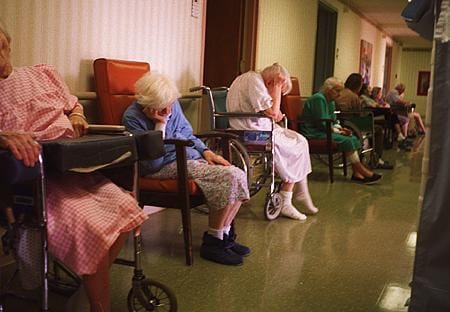
There have been so many inquiries, reviews, consultations, think-tanks and task forces that have provided mounds of evidence of inadequate personal care, negligence, neglect, abuse and assault.
These inquiries have resulted in a large number of recommendations, most of which have been ignored by successive governments.
Will the findings of the royal commission be similarly ignored?
Perhaps the most significant “un-actioned” part is recommendation 14 in the 2005 Senate Inquiry into aged care: Quality and equity in aged care.
It asked “that the commonwealth, in consultation with industry stakeholders and consumers, review the accreditation standards to define in more precise terms each of the expected outcomes”.
Acting on this recommendation would have enabled the accreditation process to play an important part in monitoring the standards of care in all aged care homes, including Oakden Older Persons Mental Health Service.
Unfortunately, vague phrases such as adequate nourishment and hydration, effective continence management, optimum levels of mobility and sufficient staff continued to be used.
As a result, Oakden passed three accreditations during the past nine years, despite relatives’ ongoing allegations of poor standards of care.
In fact, Oakden received a perfect score (ie passing 44/44 standards) at all three accreditations.
Rigorous evaluations of any health or community service require the standards to be both explicit and measurable.
Yet only last week, federal parliament passed the new aged care standards that are both vague and impossible to measure.
How will a provider demonstrate that “Each consumer is treated with dignity and respect”?
Rather than a royal commission that will once again be dominated by providers’ “expert opinions”, we need to act on empirical evidence. The Quality Agency and the health department has the evidence.
Now we need action.
Government also needs to start listening to grassroots advocacy groups instead of the usual committees and groups who are part of the broken system that has failed Australian elders so badly.
If you need assistance with an aged care concern, the Older Person’s Advocacy Network (Opan) provides free advice on 1800 700 600.
This article was originally published in The Guardian.



Was the photo taken in Amana Transition Care,Mosman Park WA? The woman in white was my mother. She’d been in a few places. I remember people sitting like this in Amana.