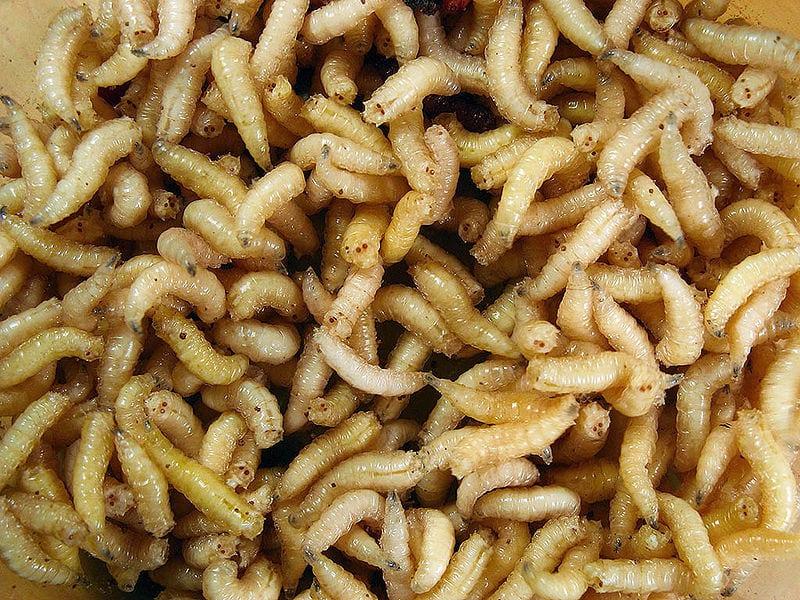
Maggots were found in the mouth of a Broome aged care resident, they royal commission has heard.
On 26 January 2018, a Broome nursing home received an anonymous complaint that a 62-year-old female resident had maggots in the side of her mouth and under her tongue.
After receiving the information, staff immediately investigated, and found the complaint to be true. They notified the clinical nurse manager, and began treatment at once under her guidance.
Sadly, later that day the woman passed away.
Rejane Le Grange, acting business manager at the facility, told the royal commission, “I don’t know if it happened at night-time, but I do know that there’s an incubation period of about eight hours.
“I know that the resident had poor ability to chew so there was food pooling and moisture pooling in her mouth.”
Leading up to the complaint, staff and a speech pathologist had found maintaining the woman’s oral hygiene was “extremely difficult” because food was pooling in her mouth, she had advanced dementia, she was clenching her mouth, and had almost lost the ability to swallow, according to a copy of the letter sent by the Aged Care Complaints Commission to the nursing home after the incident, which was tendered to the royal commission.
Staff were concerned about forcibly cleaning her mouth while it was clenched.
“The mouth cavity of a human is an ideal place for a fly to lay her eggs, especially if that person is gravely ill or diseased,” Dr Frank Stadler from the School of Medicine, Griffith University, told HelloCare.
“Saliva, unswallowed food, and dental decay or other oral health problems can provide ample nutrition for… maggots.”
Critically ill patients who are unable to swallow, eat, drink, or clean their teeth unaided, are most at risk Dr Stadler said, because these activities normally remove fly eggs and maggots from the mouth.
In the vast majority of cases, maggots do more good than harm in chronic wounds because they eat the dead flesh, control infection, and stimulate wound healing.
Dr Stadler said ‘maggot therapy’ – when sterile maggots are purposely placed on wounds – can sometimes be used to aid healing.
“The presence of maggots is not necessarily a sign of neglect, especially if the maggots are spotted early in their development. Fly eggs and maggots develop very fast,” Dr Stadler said.
“Under favourable conditions and at temperatures one might expect in a patient’s mouth or wound, fly eggs can hatch within eight hours. Once the maggots have hatched they shy the light and will in all likelihood retreat to places in the mouth cavity where they are not easily spotted.
“There, they can grow rapidly within 48 hours to maturity. It is at this stage when maggots are most easily noticed because they will be fairly large, very active and leave the food source to find a place to pupate and turn into a fly.
“They would not want to do this in a wound or in the mouth of a patient,” Dr Stadler said.
The letter sent by the Aged Care Complaints Commission to the nursing home after the incident, which was tendered to the royal commission, stated the death was not related to the maggots.
“While she died at 12.30pm, there was no correlation between this incident and her death,” the letter says.
The letter also said the commission was satisfied the nursing home’s responses to the complaint were “reasonable”.
After the complaint was received, the nursing home conducted an investigation into what occurred, and put in place systems and procedures to try to prevent something similar from occurring again in the future.
The details were included in a complaint resolution report, which was tendered to the royal commission.
The investigation found that during the wet season, when the incident occurred, there was a huge increase in the fly population across Broome. This finding was corroborated by a local pest expert.
The investigation also found that residents and visitors often leave doors open, letting flies in, and spraying would not prevent flies from entering the facility.
It was also identified that finding staff around Broome, particularly during the wet season, was difficult, and some staff did not have the appropriate training.
The nursing home took steps to address the gaps in care that were identified, including only employing staff with certificate III training, increasing staff numbers, buying mosquito nets for residents, using additional fly traps and personal repellant, and training for staff in how to perform oral hygiene, especially for those living with dementia.


