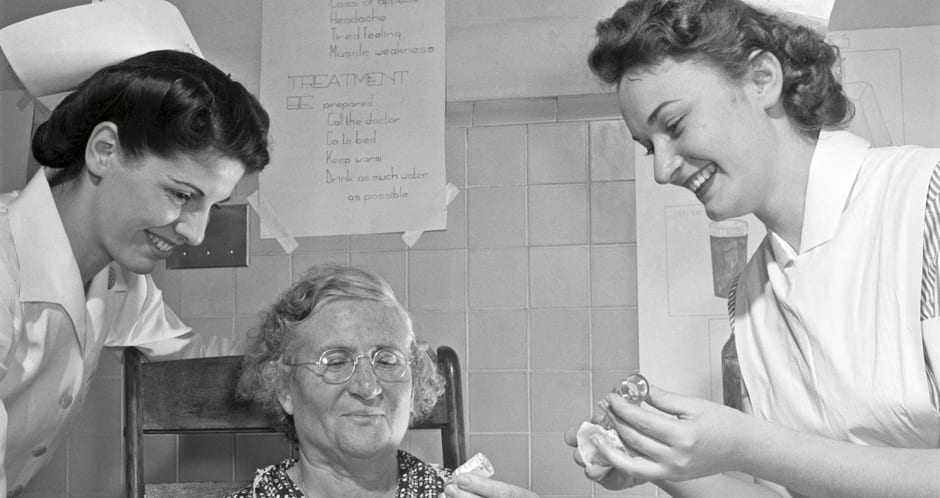
Nurses are “forgotten heroes” in society. They work incredibly hard and tirelessly round the clock to care for others, often on little sleep and food and receiving little thanks.
New research by The Whiddon Group has shown that Australians are overlooking the important role nurses play.
The study revealed that less than one in three people could name a nurse who had cared for them in the past.
This was a stark contrast for doctors, where more than twice as many people could name a doctor who had treated them or a loved one in the past.
The research also revealed that women were only slightly more likely than men, 35% versus 26%, to be able to name a nurse who cared for them or a loved one during their life.
Having children, who may have needed medical attention in the past, also appeared to have a role in the value people gave nurses. Parents were more likely, at 38%, to be able to name a nurse than those who do not have children.
A large majority of the respondents, 78% of them, agreed with what the survey showed – that the nation’s nurses are were not appreciated.
It was also suggested that younger people did not value nurses more than older Australians. 83% of people over 50 thought nurses were undervalued while only 72% of people under 50 thought so.
The Whiddon Group hope to change this and help the public show their appreciation and recognition to the nurses of Australia.
And what better day to commence than on International Nurses Day? This day is an annual commemoration which celebrates the work of nurses around the world.
It happens every year on May 12, the birthday of Florence Nightingale who is credited for founding modern nursing.
As a part of International Nurses Day, Whiddon has launched the ‘Share that you Care’ social campaign.
This new initiative is a two week campaign designed to encourage the public to make an online declaration of their thanks.
And in doing so, raise awareness and appreciation for all the work nurses do and the value they bring to society.
The campaign is simple – share a picture of yourself, a loved one or a nurse on Instagram with a caption thanking nurses for their contribution and the hashtag #ShareThatYouCare.
CEO of The Whiddon Group, Chris Mamarelis has expressed his gratitude to the nurses not only working at Whiddon, but in all fields.
“Nurses are not only at the very heart of our care services, but of our communities as a whole. They continually go above and beyond and do not expect any special recognition for the outstanding work that they do.
“Over the next two weeks, we think it is time to show our appreciation and say thank you to them – that is why we are thrilled to launch the ‘Share that you Care’ campaign – whatever your nurse story may be, we want you to share it.”


