Key points:
At this time of year, older people are turning on their heaters, electric blankets, and fireplaces to keep warm. Although these appliances bring some comfort, they also bring more risk of a fire starting.
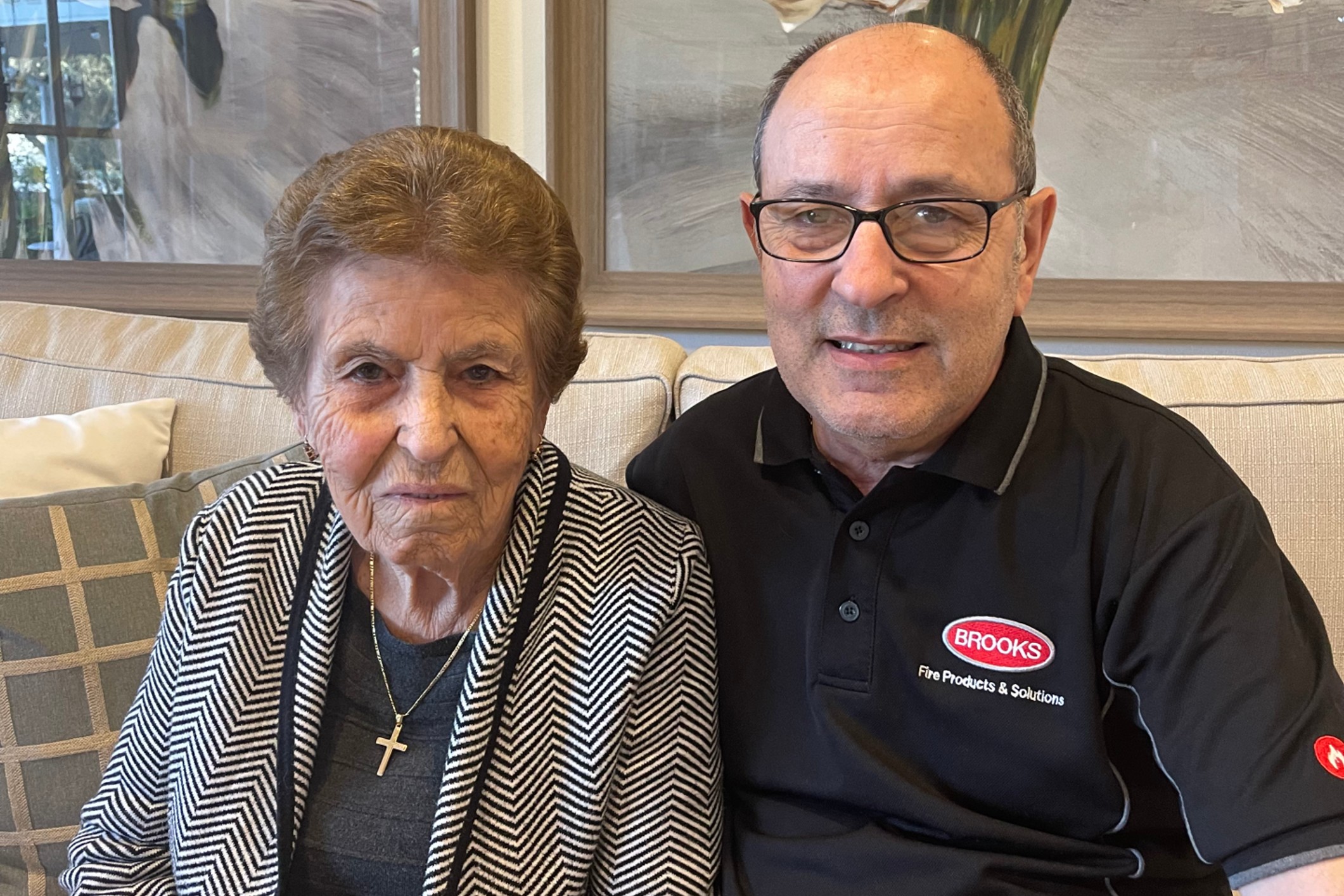
After his older mother almost started a housefire, Jim Tsanidis knows these risks all too well and had feared his mum would sleep through the sound of her smoke alarm in the event of a fire.
Simela is almost 90, has hearing and mobility issues and lived alone in her Sydney home when she left the room with the stove on. The kitchen subsequently filled with smoke, sparking the smoke alarm to go off, and Simela was luckily able to put it out in time.
But had this happened in the evening, when Simela takes out her hearing aids, she may not have been so lucky and Jim wasn’t prepared to gamble with his mum’s life.
“Smoke alarms are there to save lives but if people can’t hear them, then they’re really not doing anything. That’s why we looked for anything additional that can help in that situation.”
Earlier this month, an older couple died in Sydney after being pulled from a fire in their home which was not fit with any smoke alarms.
A consultant at smoke alarm business, Brooks Australia, Jim installed specialised alarms that come with a vibrating pad to go under their pillow and a strobe light that is linked to the home’s smoke detectors to ensure his mum would be notified of a fire – even if she was asleep. The system also came with a remote that allows older people and those with mobility issues to test their alarms from the ground.
With her mobility issues and hearing loss taking a turn at the end of last year, Jim and his wife made the decision to have his mother move in with them and have since installed the same systems in his home for her safety.
He said while this decision may be a financial outlay for some people, you cannot put a price on someone’s life and their safety.
“Generally with elderly people or people that have mobility issues, you really need to see them as if you’re in their world and then you can suddenly realise you’re missing a lot of stuff they’re not capable of doing,” said Jim.
The key thing to remember is to frequently test whether your smoke alarm is working and operational. Jim recommends older people test their smoke alarms at least once a month.
Now, in the event of a fire, Simela knows to listen and watch for the alarm systems and to make her way to the nearest exit.
It is important you and anyone you live with create a Home Fire Escape Plan for if or when a fire occurs.
You should ensure everyone in the household knows what to do, which can even include conducting fire drills to practise.
Make sure everyone knows two ways out of each room in the home, and establish a meeting place outside for everyone inside to flock to. Once safe at the meeting point, do not go back inside and call triple 000.


