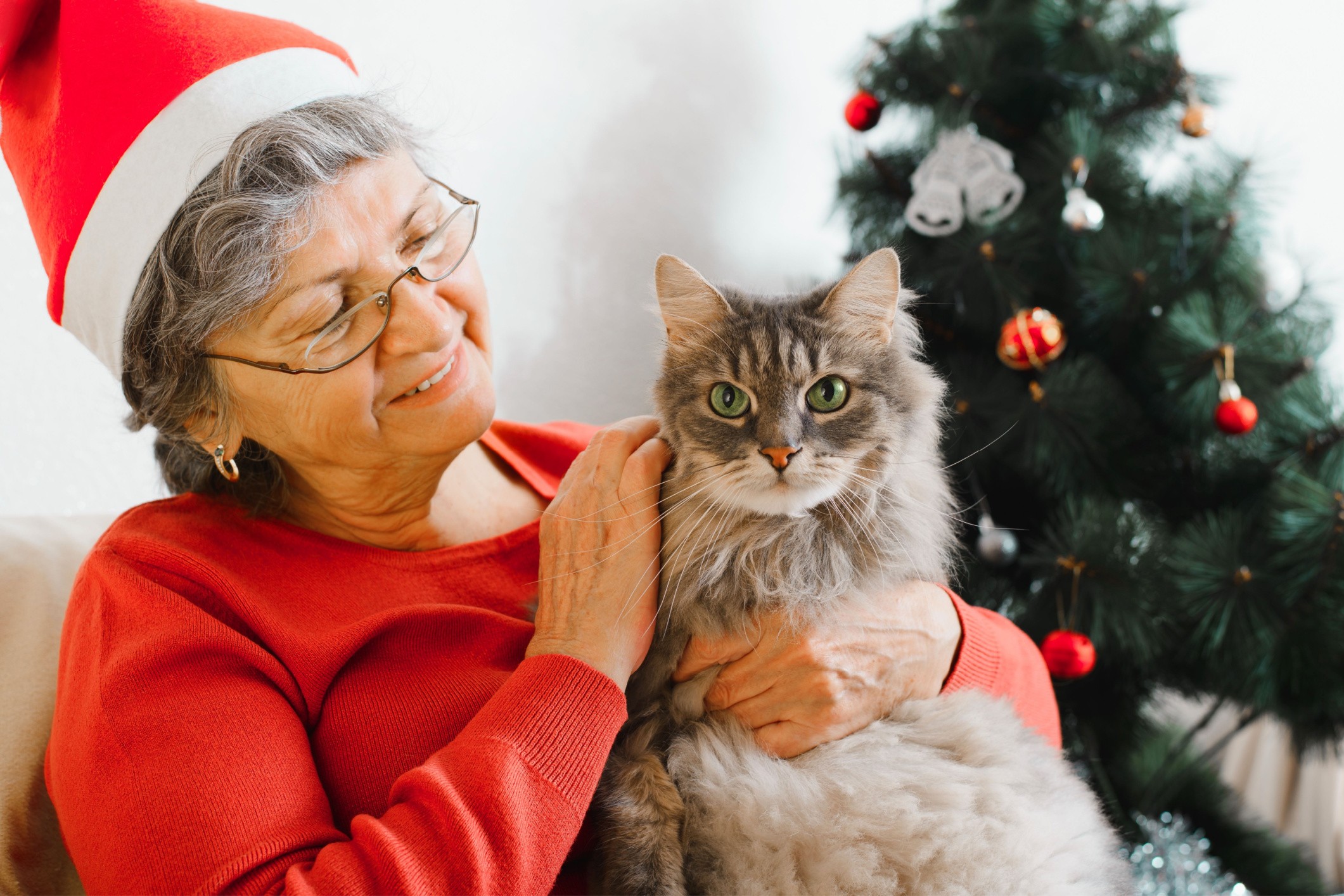
Do you have older relatives who are battling loneliness? Stumped on what to get them this holiday season? Consider the best gift of all – love and companionship from an older furry friend!
During the holidays, our society often sees pets purchased and given up for adoption a few months later, leaving them for shelters and rescues to look after. Unfortunately, senior animals also tend to wait a longer time to be adopted than younger animals. But these animals are in the prime of their life and are often much more manageable to own for older humans.
While there are many reasons animals end up in shelters, with older pets it’s often because their previous owners have fallen ill, or are no longer able to care for the animals themselves. Some owners have moved into residential care where animals are prohibited, while others have passed away.
The benefits of pets and their unfortunate surrender when their owners go into care is not new knowledge. Earlier this year, Companion Animal Network Australia (CANA) Chief Executive Trish Ennis and her colleagues called for Government-funded pet care support to be introduced as part of home care and residential aged care packages to keep older people and their pets together to ease loneliness and prevent unnecessary surrenders.
While our older population grows and experiences higher rates of loneliness – particularly over the festive period – it is a timely reminder animals need love and attention too!
Studies show pets offer myriad physical and mental health benefits for people, such as reducing stress, providing companionship, and encouraging social interactions, and older animals are no different.
Just because older animals have lived most of their lives with someone else, that doesn’t mean they are going to love living with you any less.
For older Australians, an older pet might just be the perfect match. An older cat or dog is often physically less demanding and most are content to curl up on your lap and enjoy a pat, or to find a nice sunny spot to rest.
However, even though older animals can be more placid, they still like to have fun with their owners. In fact, they can still push older people to keep active. Dogs, for example, need their daily walks and being outdoors in the fresh air is good for everyone!
Currently, RSPCA NSW offers an initiative called the Seniors for Seniors promotion. In this promotion, older people receive a 50% discount on pets for Senior Card holders if they adopt one of their ‘golden oldie’ animals or dogs and cats aged over eight years old.
Along with the reduced adoption fee, the Seniors for Seniors promotion grants older people access to their Home Ever After (HEA) program. HEA is a tailored, future care plan for pets, should something happen to their owner.
This offer is available at all RSPCA NSW shelters and Care Centre. It is not available at RSPCA NSW Volunteer Branches or Petbarn adoption locations.
To find an older animal up for adoption, visit your local shelter, rescue or the RSPCA website here.


