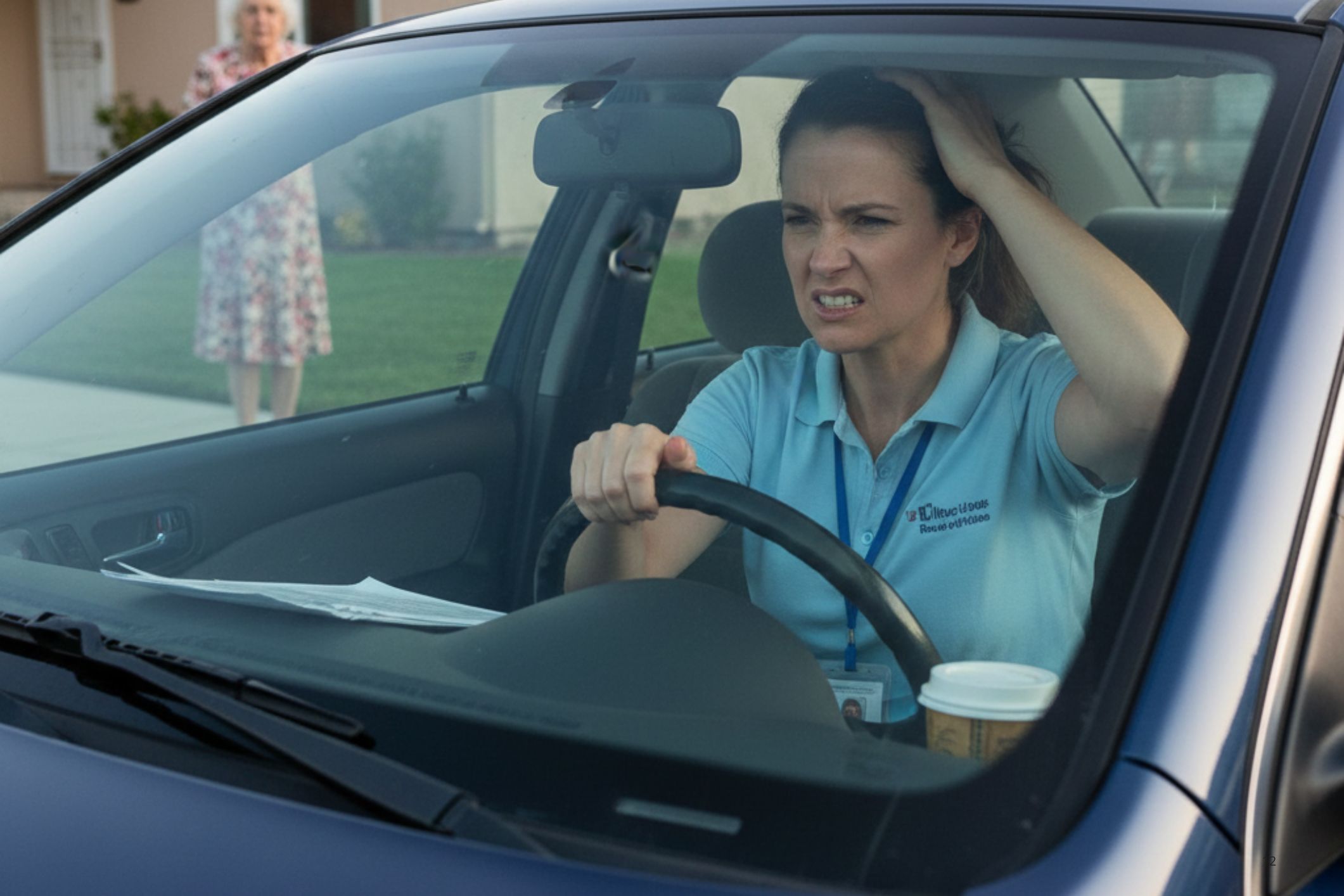
Frontline home care providers across Australia have issued a direct warning to Aged Care Minister Sam Rae, voicing deep concerns about the early rollout of the Support at Home reform. The feedback, collected through an open letter informed by discussions on the QANDA forum run by Invox, reflects the experiences of those working closely with older Australians.
Many providers say the government’s promise that existing clients would not be worse off is not being met. New co contribution rules have left some older people facing difficult choices about reducing essential services or paying fees they cannot afford.
Those who rely on short but necessary visits are particularly affected. In rural and remote areas, the problem is amplified by the removal of regional loadings, which has made service delivery financially unviable for some providers. Clients with complex needs are also being caught in the upheaval. Reassessments intended to correct funding gaps are creating lengthy delays and uncertainty, leaving many feeling unprotected by a promise that was presented as far more robust than what they are now experiencing.
A major source of frustration is the new assessment system. Providers report that assessors are being overruled by an algorithm that produces outcomes they cannot explain or adjust. There are cases of thorough in home assessments being followed by unexpectedly low classifications, such as CHSP only eligibility or even findings of ineligibility despite clear need.
This lack of flexibility is undermining confidence in the system. Many believe the algorithm is not yet tuned to produce fair or transparent results and fear the small number of official reviews reported so far does not reflect the broader reality.
Financial pressure is also building. Providers argue that the ten thousand dollar transition grant barely scratches the surface of the true cost of implementing the reform. Workforce training, IT upgrades, administrative restructuring and extensive compliance work are all straining budgets. Many organisations are absorbing large expenses simply to maintain existing service quality.
They want the government to acknowledge the real burden and work with them rather than expecting providers to carry the load alone.
Geographic inequity is emerging as a serious problem. Providers in rural and remote areas say they can no longer accept new Support at Home referrals because travel costs and rigid pricing models make service delivery impossible.
This means older people may be approved for care but unable to access it. Providers are calling for solutions such as block funding to prevent remote communities being left without support during the transition.
The new co contribution rules are also creating distress for some of the most vulnerable clients. Full pensioners facing combined contributions of five per cent and seventeen point five per cent are reporting financial hardship, including older people in end of life care who cannot afford daily support unless granted an exemption.
Providers worry the hardship processes through Services Australia are too slow and cumbersome to offer real protection when needed.
System inconsistencies and data errors are adding to the turmoil. Providers describe assessment results that do not match what appears in My Aged Care, shifting priority levels, and contradictions in assistive technology listings.
These issues are generating extra administrative work, unresolved disputes and delays at a time when stability is crucial. There is also growing concern about the increasing reliance on Support Plan Reviews to correct flawed assessments. Many fear this will create a substantial backlog, with some assessors predicting a sharp rise in reviews by early 2026.
Another emerging issue is the widespread use of interim funding for new packages. Almost all new Support at Home packages are being allocated at only sixty per cent funding, yet providers must meet full standards for up to seventeen weeks. This gap between responsibility and resources is seen as one of the most serious risks facing the reform. Providers warn that clients may be left without adequate support during this period.
Despite the frustrations, the message from providers is not one of resistance but of urgency. They want the reform to succeed and have offered practical, workable solutions, including transparent assessments, better funding for transitions, hardship relief for vulnerable clients, tailored support for rural areas and improved data consistency across systems. They are not simply raising concerns but documenting problems and proposing fixes.
Their message is clear. Without swift adjustments, the reform risks failing the very people it is intended to support. The coming months will be critical, and providers are urging policymakers to act while there is still time to correct course and protect the dignity and independence of older Australians who rely on home based care.



Thank you for a very clear outline of the “Support at Home Reform”” and all of its problems. Seems like this is another Labour success story with the accompanying excellence in Failure award!
I am in the process now finally getting this straightened out for our package. When my husband had a stroke, we had to close down our plumbing business. All of the assets were transferred back to us, and the final tax return was submitted, ASIC was notified, and the value of the business was then 0. Centrelink has assessed us with an additional $100,000 dollars that does not exist. With some help from Jacqui Lambie’s fine staff, looks like it will be straighted out. I have had 4 separate assessments that came (after a 10 day wait) from Centrelink. The staff where pleasant, but they could not see that 52 divided by 2 did not equal 75. Thank god for the intervention of a politician to get them to fix this. Such a waste of everything. If we have $10,000 we should be able to acess that amount, not have to pay the 17-50% each time.
I’m thinking of ceasing our SAH package. For very few services it’s costing over $300 a month. I could use the $300 and pay for services my husband needs myself. I have to pay $1300 a month to have the package managed then $90 portal fee then other co contributions for compression stockings.
I think, We would be better off without these ongoing costs.