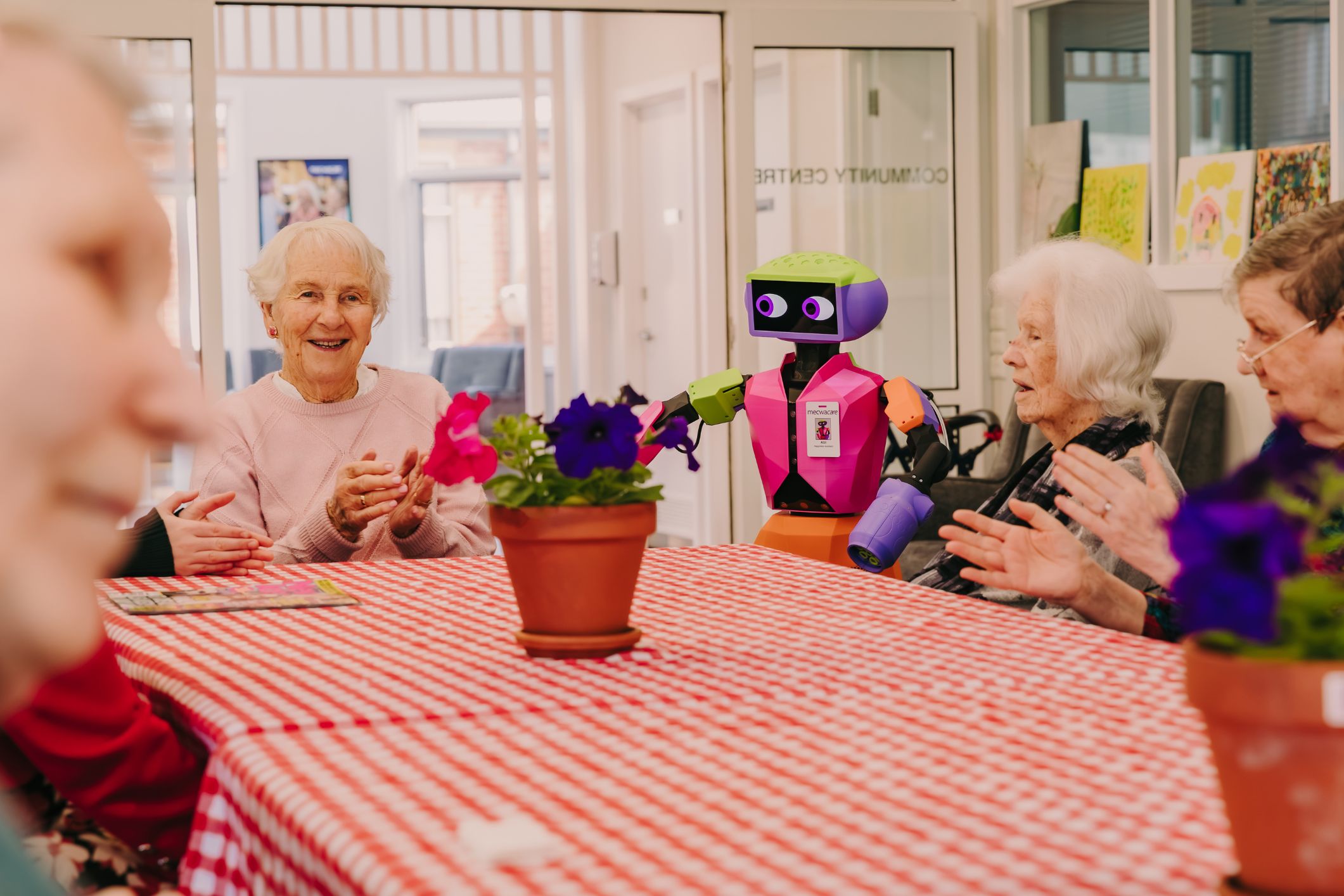
A major new deployment of humanoid companion robots across Victorian aged care homes is being hailed as a significant step forward in tackling loneliness and supporting overstretched care staff.
Melbourne-based Andromeda Robotics, in partnership with not-for-profit provider mecwacare, has completed what it describes as the largest rollout of empathetic humanoid companion robots in Australian aged care. Twenty-two Abi robots are now operating full-time across all mecwacare residential homes, supporting more than 1,500 residents.
The rollout comes as the aged care sector grapples with rising demand, increasing complexity of care needs, and ongoing workforce shortages. It also reflects a broader push to explore how emerging technologies can complement human care in residential settings.
The Abi robot has been co-designed by Andromeda Robotics and mecwacare clinical and lifestyle teams since early 2025. It has been tailored specifically for aged care environments, with a focus on residents living with dementia and those from culturally and linguistically diverse backgrounds.
Andromeda Robotics co-founder and chief executive Grace Brown said the aim was to address loneliness at scale while supporting care teams.
“We designed Abi to address the real and growing problem of loneliness and social isolation. We are proud to achieve this milestone with mecwacare, who share our goal of using innovative technology to support aged care residents in ways that are personal, social and deeply human,” she said.
Abi has been designed to complement rather than replace staff, providing companionship, conversation and engagement activities such as storytelling, music and dance.
The company says the long-term ambition is to help “replace one billion hours of loneliness with meaningful connection”.
Internal research conducted by Andromeda Robotics, based on staff feedback, suggests the technology is already having an observable impact in residential care settings.
According to the findings, 74 per cent of staff reported a reduction in resident agitation when Abi was present. Staff also rated the robot highly for resident enjoyment and wellbeing, with scores of 8 out of 10 for enjoyment, 8 out of 10 for overall wellbeing impact, and 9 out of 10 for overall satisfaction.
While the research is internal, it has been used to guide further development of Abi’s features and its integration into daily care routines.
Abi’s latest version includes a range of features intended to support communication, comfort and engagement in residential care.
These include the ability to communicate in up to 90 languages, dementia-friendly interaction modes, and improved real-time conversational responsiveness. The robot can also recognise and remember residents it has interacted with, including personal stories shared during conversations.
Other enhancements include improved audio designed for older hearing profiles, LiDAR-based navigation for movement through care environments, and an adjusted physical design to support more natural eye-level interaction.
In practice, Abi is used for a range of activities including music, storytelling, movement sessions and culturally familiar conversations, with the aim of encouraging participation and social connection.
The rollout comes against a backdrop of significant workforce challenges in aged care, with projections indicating a national shortfall of more than 100,000 workers by 2030. At the same time, rates of dementia and social isolation among older Australians continue to rise.
Proponents of the technology argue that tools like Abi can help reduce pressure on staff by supporting engagement and providing additional forms of companionship for residents, particularly during quieter periods of the day.
mecwacare chief executive Anne McCormack said the robot had quickly become part of everyday life in residential homes.
“Our residents see Abi as part of the circle of care and our staff refer to Abi as our Happiness Assistant,” she said.
“She is lifting moods, reducing physical, social and linguistic isolation, encouraging connection and helping people express themselves in ways that feel natural and comfortable. For families, seeing their loved ones laughing and engaging is incredibly powerful.”
Residents have also responded positively to the rollout. A mecwacare Wahroonga resident in Ballarat described Abi’s visits as “the best part of my day”, noting the emotional impact of music and interaction even while being bed-bound.
Andromeda Robotics says the deployment across mecwacare homes marks an important milestone in scaling companion robotics in aged care settings, with further refinements expected as usage expands.
The company maintains that Abi is designed to work alongside care staff, not replace them, positioning the technology as an additional layer of support in an increasingly complex care environment.



Where could I watch a video of Abi interacting with clients