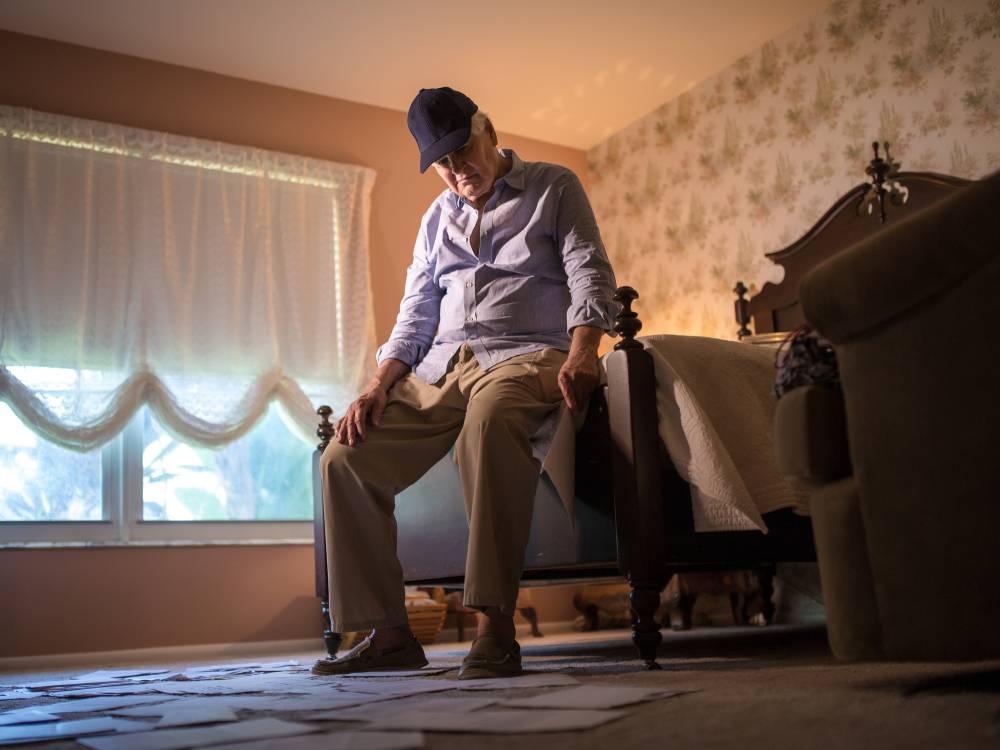
Aged care residents across Central and Eastern Sydney PHN are improving their independence and quality of life through a free program offering personal mental health support for people experiencing the early signs of anxiety and/or depression.
Bolton Clarke delivers the NewAccess early intervention mental health coaching program in residential aged care facilities within Central and Eastern Sydney PHN, which is funding the project.
There are 150 residential aged care communities across the region, which stretches from Bondi to Sutherland and Strathfield. The NewAccess aged care program, which launched earlier this year, has already supported residents in 11 communities.
Developed by beyondblue, NewAccess is a free service that provides support for people experiencing anxiety and/or depression due to issues including loneliness, grief or physical ill health, often at key transitional times such as the move into residential aged care.
Australian Institute of Health and Welfare figures show about 45 per cent of people have mild symptoms of depression when first admitted to residential aged care, and more than half of all aged care residents have symptoms of depression (women 53 per cent, men 51 per cent).
New residents with symptoms of depression are twice as likely to have behavioural symptoms that affect their care needs.
Family members can also experience anxiety and depression around the decision to move a loved one into residential care.
Signs of anxiety and depression in older people can be masked by dementia. Symptoms often develop gradually and can significantly affect the person’s ability to successfully adapt to their new lifestyle.
Symptoms of anxiety in older people can include increased heart rate, dizziness, withdrawal from or avoiding situations, muscle tension and pain. Symptoms of depression can include withdrawal from family and friends, loss or change of appetite and not enjoying regular activities.
“Depression and anxiety amongst older people can be easily missed,” Bolton Clarke’s NewAccess aged care coach Corinna Borg said.
“Symptoms that would cause concern in a younger person, such as insomnia or social withdrawal, may be disregarded in older people as ‘just getting older’.
“We know that depression can affect memory and concentration too, and people sometimes assume that problems with memory or concentration are due to age-related changes in thinking.”
Mrs Borg said simple changes could make a big difference to the mental health and overall wellbeing of aged care residents.
“Ultimately, mental health is about being cognitively, emotionally and socially healthy,” she said.
“It is vital that aged care residents have access to quality mental health support that is affordable and easy to access.
“Like many physical health problems, the sooner people seek treatment for their mental health issues the sooner they get back to feeling their best – happy, healthy and engaged with their families and community.”
NewAccess coaches provide private, one-on-one sessions with each resident and help them understand the issues causing their distress.
Over six sessions, coaches give residents the skills to manage those issues during the treatment phase and in the future.
Coaches develop a tailored recovery program for each person after their first appointment.
The NewAccess program is also available to families experiencing anxiety after their loved one enters residential care. It is also available to people working in the aged care industry.
To find out more about the NewAccess residential aged care project, phone 1800-010-630 or visit website.


