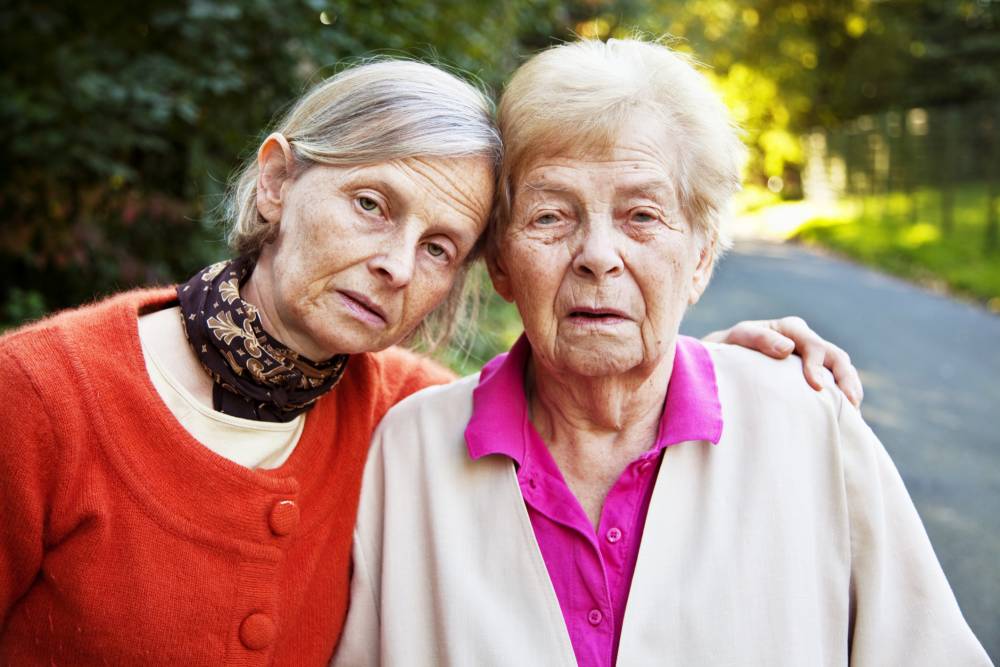
Why is it that when family members become elderly, and eventually require care, the responsibility for that care usually falls to women?
Think about your own family: is there an expectation, even if unspoken, that a daughter – or daughters – will take on the responsibility of caring for elderly parents?
Of course, it’s not always the case, but more often than not, it is. I suspect in my own family my sister and I will care for our mother when the time comes.
There are 2.7 million unpaid carers in Australia – the equivalent of 12 per cent of the population – and more than two thirds of those carers are female, and more than half are over the age of 55.
“In many families and communities, women are expected to take on caring responsibilities for people in need of care,” says Carers New South Wales.
Though caring can be hugely rewarding, providing unpaid care can also be socially isolating, lead to poor health, stretch finances, and have an adverse impact on overall wellbeing. Some of the negative impacts of caring are more strongly felt by female carers, according to Carers NSW.
The government should be encouraged to introduce policies that recognise the importance of the work that carers do, and therefore acknowledge the huge service they provide not only to our communities, but to the economy.
According to research by Carers Australia, the replacement value to the government for the work that unpaid carers do would be $60.3 billion.
The government could increase the amount of carers leave workers are entitled to. In Australia, we are entitled to take 10 days’ personal / carer’s leave a year, and up to two days’ paid compassionate leave. It could be better – in the US, employees have the right to 12 weeks’ unpaid leave to look after an ageing parent.
Secondly, government could increase the carer’s allowance – which currently stands at $127.10 per fortnight.
We need to start thinking about what we want unpaid care to look like as we face the realities of an ageing population, and to consider in particular the implications for women.
And think about your own situation – how can your family share the caring responsibilities more evenly between both sons and daughters?



I am female, aged 59, had to give up full time work to care for my father who is immobile and frail aged and his wife who has mental illness, intellectual impairment and dementia. I live a few houses down the street and I am the only family member supporting them. I average 30 hrs per week supporting them, work 3 days a week, have a husband with a severe brain injury and have no,life. I cannot get a carers pension for my father or his wife as they have too many assets but they will not pay me either. His wife gets the carers allowance as she told Centrelink she does the caring and they believe her. I feel used and abused and my siblings think I should do the caring as I am the daughter and I live nearby. My brother bought the house for my father and his wife to live in as they come off a cattle property and needed to live in town due to health concerns.