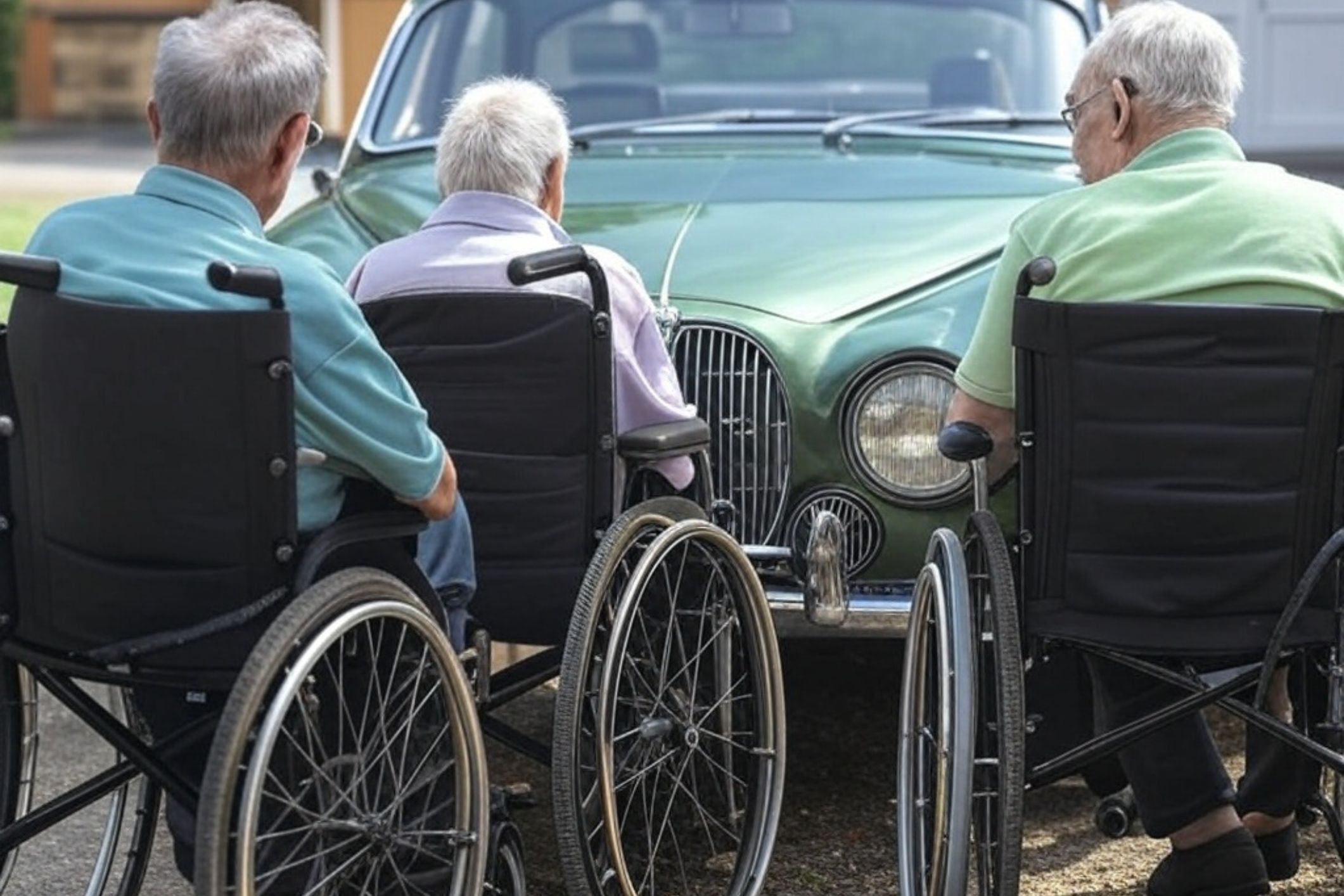
Driving into the car park of the aged care facility where I work, I noticed a group of men looking through the window, pointing and smiling at my car as I pulled into
the drive.
I was curious about what was amusing them, so we all sat down with a cup of tea, only to discover they were admiring my X-type jaguar. Dan told me there is only one distinctive colour for a Jaguar, British Racing Green, which happened to be the colour of my car.
I asked around who could remember the first car they owned. Ray promptly told me he owned a beautiful red Ford Zephyr, his pride and joy when he passed his driving test at eighteen he jokingly said it was a “chick magnet” and caught the eye of many young women, including the woman he married, Maureen.
Joseph told me that his father had an Austin Eight car that had to be cranked up to start the engine, a method of starting a car by a mechanical rod inserted into the piston engine.
Joseph was laughing about how cold his dad would be trying to start the engine from outside in the freezing English winter, cursing ever so often when the car would not start.
A young Joseph was seated in the back on cold leather bench seats, windows frosting up, and Mum was puffing away at her cigarette and becoming impatient.
In those days, Dad would drive to the pub to have a few beers, Mum would have a shandy, and the kids would have lemonade and a bag of crisps. Ray added that this was the norm back then.
At the end of the night, Dad would drive everyone home. There weren’t as many drink-driving accidents, although fewer cars were on the roads and no breathalyser test until the Road Safety Act in 1968.
At eighteen, Tony proudly purchased a sleek white MG with a black interior as his first car. However, his joy was short-lived, as he crashed it into a wall just five months after passing his driving test, resulting in its unfortunate write-off.
All agreed that Sunday afternoon was when they tinkered about with the engine and polished the exterior.
I could see on everyone’s faces that the conversation was evoking nostalgic memories that led to talk about the benefits of joining the AA (Automobile Club) or the RAC (Royal Automobile Club); a heated discussion began about the merits of both of these early day roadside assist companies.
All agreed that modern automatic cars with advanced electrical devices are an improvement, but enthusiasts believed manual gear stick models provided a more authentic driving experience.
I could see the excitement and adrenaline building around the table as the discussion continued. I suggested having a car enthusiast club meeting each week to reminisce over a mug of coffee about their years of vehicle ownership.
Everyone agreed this was a good idea; Ray suggested that they could share photographs of their cars. In particular, he would welcome sharing stories about his “Chick
Magnet” with the guys.



How lovely to evoke memories of their first cars, reminded me of mine, a four door (no less) A35 that cost £60 from a friend. Even decamped from Scotland to London in it and it did great service on journeys home to visit family. Your weekly meeting will be joyous, especially seeing the chick magnet, bet many of those cars drew attention.
Thankyou Cath,
My Dad use to have a royal blue jaguar,never thought I would get the chance of having one myself. I bought the Duchess as I call her 7 years ago with 23,000 kilometres, now only 58,000.My pride and joy.
Best wishes,
Michael