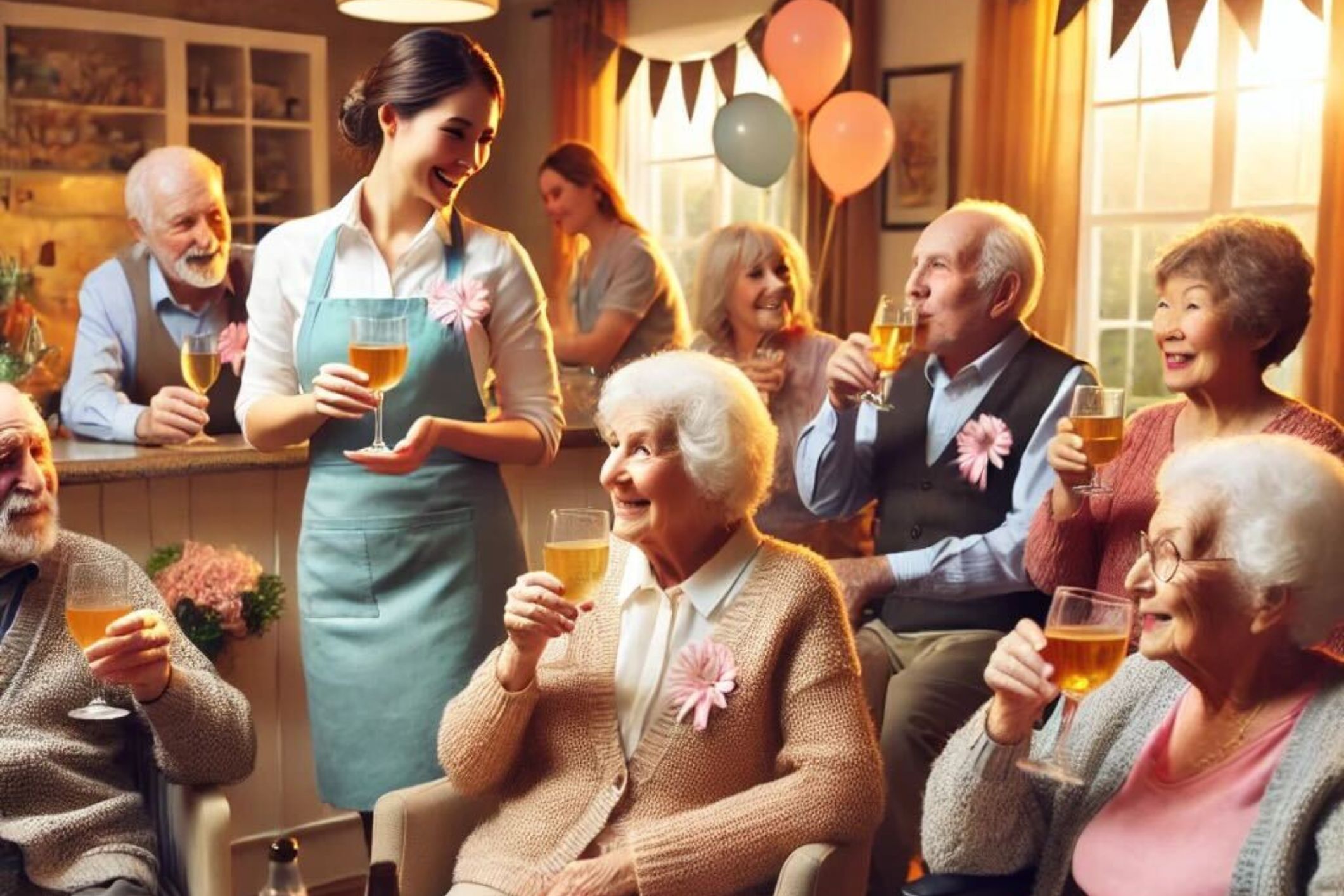
‘Happy Hour’ in aged care homes is a much-anticipated and enjoyable experience for residents. However, questions have recently been raised about the legal requirements for aged care workers when serving alcohol, including whether they need an RSA certificate to do so.
The term ‘Happy Hour’ was initially coined by bars and restaurants to advertise cheaper drink prices during certain times of the day or week.
However, some aged care facilities hold ‘Happy Hours’ to highlight to residents that alcohol and snacks will be available at a certain time. These ‘Happy Hours’ may be regular such as once a week or may be held for special occasions.
As the supply of alcohol depends on relevant state and territory laws, whether a person requires a Responsible Service of Alcohol certificate is determined by the local government.
For example, hospitals, nursing homes and retirement villages in South Australia do not need a liquor licence to sell alcohol if the sale is made between two adults and the alcohol is consumed on the premises.
Additionally, aged care homes and hospitals in New South Wales don’t require a liquor licence ‘to sell alcohol to an adult who is receiving care in a nursing home, or a patient in a public hospital, private hospital, or medical facility,’ according to Liquor and Gaming NSW.
However, as liquor licence requirements may vary between states and territories, aged care providers must ensure they comply with relevant legislation.
Aged care workers who are unsure about their providers’ practices can phone the Aged Care Quality and Safety Commission on 1800 951 822 or visit the Aged Care Quality and Safety Commission website.
There is also debate as to whether older Australians in aged care homes should be allowed to drink wine and if drink limits should be enforced.
Dr Harry Nespolon, who was previously the president of the Royal Australian College of General Practitioners, was interviewed by Hello Care and recommended that a “common sense approach” should be used.
Read more about Dr Nespolon’s thoughts about alcohol in aged care homes in this article: Alcohol in nursing homes: How much is too much?
Although checking with your local government about laws regarding the supply of alcohol to people in aged care homes, people looking to get their Responsible Service of Alcohol certificate should find an approved training provider.
For example, in South Australia, the Commissioner of Consumer and Business Services must approve training providers, with some of the current companies including Clear to Work Pty Ltd, Skills Training College and TAFE SA, as per the Government of South Australia website.
However, providing alcoholic drinks to older Australians in aged care homes isn’t the only option. Alternative ideas for providing alcoholic drinks to residents can include the incorporation of mocktails.
These alcohol-free alternatives may be fruit or milk-based and can be served in plastic cocktail glasses with bite-sized snacks on the side.



I am interested to know, if the ACF is not selling the alcohol, but giving it to residents, does that obviate the need for RSA?