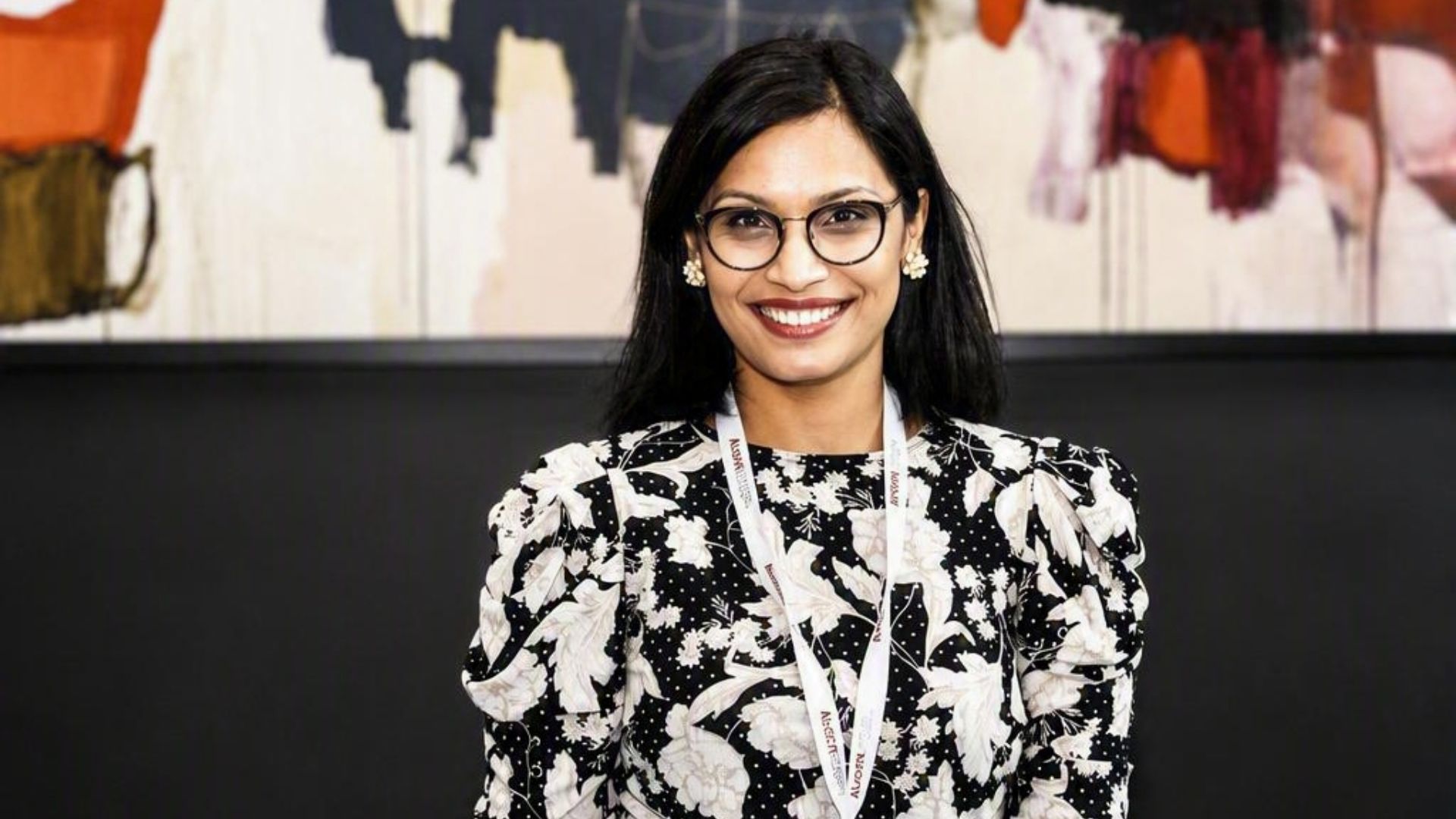
Songs let us know that the journey is as big a deal as any destination. Within five words, ‘Take Me Home, Country Roads’ sinks into our minds, sometimes not to be removed for days. But its popularity touches on something precious and precarious about the human condition. Humans are all traveling to final rest. Dr Priyanka Vandersman, a registered Nurse and digital health technology researcher, has made a career studying the reality of our ultimate journey and destination, “in the end, everyone’s going to die, that’s one thing that’s guaranteed”. But as she’s found, “death is not just the pointy-end, it’s the journey to it”.
Vandersman didn’t come to palliative care from arm’s length. It was her top pick. “Palliative care was my first choice in my RN graduate program, other staff were astonished, ‘you could have done theatre or ICU?’”
“In the culture I was born and raised in, ageing is not only respected, it’s revered. I found the attitude to choosing palliative care astounding. People saw I was clever, and so they expected me to choose another specialty”, she shares.
“Everyone is going to die, so why should the people who are dying not get care from clever and kind people?”
Aged care’s system support for dying
From her character and career Vandersman asks a simple and needed question, “how do we look after people in the last year, years of life in a really good way?” This flings wide who this touches, and hones towards the privilege of aged care’s decision makers. The answers given by Australia’s systems impact any and all who are alive. That’s a lot. The stakes are high.
“At a service level, at a process level, at a policy level, at the board strategy level, how are we putting end of life as an agenda item to be worked through well? How are we putting the focus on the care that we provide to people who are on the journey to death?”
Vandersman is in the business of observation and now also, permission. Permission to discuss death in management, as staff members, in academia, in society, in families, as humans who will with certainty, one day face it.
Life stories are care planning
“People are declining and dying every day. The fact that everybody who was born will die, and in all our communities, death is a part of life and yet, so many of us can’t talk about it. Unless we socialise ourselves to talk about it, it will remain a societal problem. It’s actually not a problem, it’s a challenge. It should be an agenda for the whole of society”.
In her research Vandersman has found, “talking about it helps us plan for it better. We plan for birth, we plan baby showers, we plan for birthdays, we plan for weddings. Why don’t we plan for death? Because it’s going to happen anyway”.
“Birthdays come every year, death comes once”. Our stories, our lives, our preferences deserve space, to plan and shape, as much as we can, how we want to journey to death.
The proof is in the project
Vandersman’s eyes light up as she recalls a project she was a part of three years ago, “we ran a small strategic campaign for the sector”.
“It was very simple, we reached out to aged care leaders and clinical staff, and invited them to enter a Coffee Cart Competition. The end prize was a barrista-level coffee cart organised by us to the care home.”
“Participating homes were invited to hold a morning tea”, she shares, “where staff were invited to talk openly about end of life and palliative care and quite simply, death”.
“The competition was to offer permission for staff to openly discuss death, and that end of life is a part of life’s journey, and with palliative care being a core care, and what best they wanted for that care”.
In a twist of opportunity, she shares the openness and inclusion at the heart of homes, “we intended it to be staff morning tea and chat, and many services ran it that way- but many services also opened it up to residents as well”.
Vandersmans shares, “we sent instant coffee supplies, and posters, and amazingly we had 50 services actually register with the services commission, we posted all the goodies, and the ‘entry ticket’ was a picture of the morning tea.”
“We received 50 incredible pictures of humans simply having conversations together but the main thing is that the services found that seniors and staff were completely willing and up for having a conversation about end of life, and death being a part of what humans do. They just had a chat about it”.
“We made a book of all those wonderful pictures and feedback. The morning tea was simple really. It was a structure and it was permission for people to talk about death and dying, that’s all it was”.
Vandersman chuckles as she respects and remembers regional distances, “it took three hours for the coffee cart to get to the rural service in South Australia that won but they made it and those photos were powerful too.”
“It all sounds so simplistic but really meaningful things in life sometimes are just simple. And it comes down to: we need to be able to have those conversations”.
Holistic end-of-life care
“Palliative care is not just you’re actively dying, when people are lapsing in and out of consciousness, when breathing is catched and laboured, it’s not just that.”
In her work, Vandersman pushes for a wider and deeper definition, to expand the depth that the system’s care can reach.
Opening up what palliative care is, can mean pushing through awkwardness or perceived protocol, “this is about building the scaffolding of holistic palliative care”.
“Talking about it builds culture, in communities and in the sector. With the conversations I’ve had with the sector, it’s been about giving them permission to pause on focusing on doing the pointy-end palliative care, and taking time to navigate the whys and hows of journeying to death. To support clinical staff, and how they relate and fully engage with those on the journey to death”.
The sector has a trend, Vandersman notes, “when you talk about end-of-life care or palliative care, people go immediately to the pointy-end”.
“The sector does a relatively good job at identifying when people get to the very end. The real hard work is actually about identifying as people decline, as they start to have, for example, a few more pneumonias this year, they start to fall a little”.
For Vandersman, picking up on these factors, increasing support, knowing what support is best, can only come from having built up trust, of having talked about death and how they want to journey to it.
“Sometimes in the sector, we talk about end-of-life caring, and we immediately switch on to, ‘what do we need to do?’ [clinically]”.
“I think we need to talk about the why, and you need to have conversations for that, I know I’d want to talk about it”.
Dignity underpins holistic palliative care
“I remember interviewing a clinical staff member, and they said to me, “oh but conversations about death with seniors is difficult’, and I said, ‘difficult for who?’”
Vandersman has seen in her research a resilience and even relief from seniors when staff members are clear and open in listening about death and the journey to it.
She encourages the sector to ask, “’is it difficult for the senior I’m talking to or am I projecting awkwardness on my part?’”
Clever is a good quality of aged care’s staff. Courageousness is too. In approaching the conversation of death, both are needed, “have we taken the time to ask the senior if they want to talk about death, we must acknowledge that maybe the discomfort is coming from us as staff, and not the senior in their late 90s who is aware there is one way out of care”.
For seniors, advocates and research staff, the data is clear, there is dignity in respecting the awareness, self-possession and intellect of those in residential care. That means honouring that many know death is close.
Imagining herself in RAC, it would be respecting what she could plainly see, “I would say me and many in that age bracket would know that they have more sunsets behind them than in front of them.”
Operational substance – upholding the journeying to death well
“That’s the ultimate end goal”, Vandersman shares, “to die well”.
Vandersman sees kindness, assertiveness and professionalism in the sector. From within them she poses a question that can be wrestled with, in all hats, as an executive, as a clinician, as a mother, father, son or daughter, “we must ask, is it important, and do we value, giving people good quality care at the end of their life and in the last year of their life?”
“While humans are alive with us, is it a strategic priority? How do we operationalise this? How do we answer this with business sustainability?”
Part of this wrestling is the pragmatic needs of upholding aged care to last, “if dying well, and supporting dying well, is perceived as something of value, then it’s about creating the operations and building the vital culture that completes it”.
The holistic palliative aged care – knowing and being known
“The question is not just about having delicate conversations about death”, Vandersman shares, it’s about clarity and respect. “What I would actually want is people to have conversations with me, as a senior, and ask me what are the choices and preferences in different points of decline”.
She would like to be asked, “do I want to go to the hospital if I have a rotten tooth for antibiotics? Yes. If I get a severe pneumonia or COVID, do I want an antibiotic to magically revive me at 98? Probably not.”
Working towards holistic growth, “our system, our staff, must be supported to have care conversations along that way, to partner in the journey and to know life stories, to open space for doubts, wishes and even changed preferences”.
Holistic palliative care heavily relies on the partnership journey, “what I would like is the plan, it’s the journey. It is very tempting to get to the pointy-end, and the death. And when death comes, death comes.”
“But how the death comes, and how we care for people, in the proximity of death, is very much reliant on what we have been doing through the journey”.
Holistic palliative care is collaborative partnership at all levels
“I think that’s what I would want when I get to 100”, Vandersman says, “I would likely need care from quite early on. Staff, who are humans and people too, who are providing, coordinating, delivering, demonstrating the care they have given to me, I would want them to be part of my journey to death.”
The test of holistic palliative care may lie in the substance of simple conversations, “to talk to me, knowing that, sometimes, there will be side quests like, a tooth is rotten and you need to go to the hospital to have that taken out. That’s an invasive procedure, but yes, I don’t want to die of that rotten tooth”.
“But if I get a massive chest infection with limited prognosis afterwards, don’t pump me with IV when I’m 100. You’re going to have to let me go with something.”
Partnership is at its core. Seniors and staff, staff and management, public and private. Staff must be supported, homes and hospitals must be enriched places of culture where conversation can uphold the palliative care route, in all its twists, turns and side-quests, “we need to ask, does the service level policy actually encourage, enable or even allow them [staff] to have those conversations?.”
Avoiding lip-services is through staff who are supported to stick around. Through complete medical notes of a life lived, preferences shaped, making a full picture, “is there present, encouragement and facilitation of staff to actually have the conversations we’re asking them to do?”
“These are important conversations, they’re delicate conversations. They’re not difficult, or vulnerable, they are delicate. Training is important and so is the substance of role modeling, and the culture that protects having these conversations.”
Holistic palliative care is knowing someone amidst change. Consistent, personal and professional conversations, from a culture of care, bolstered by all levels of the system, allows “a story to guide care”. In the end, to know the difference between, “a rotten tooth and a chest infection”.


