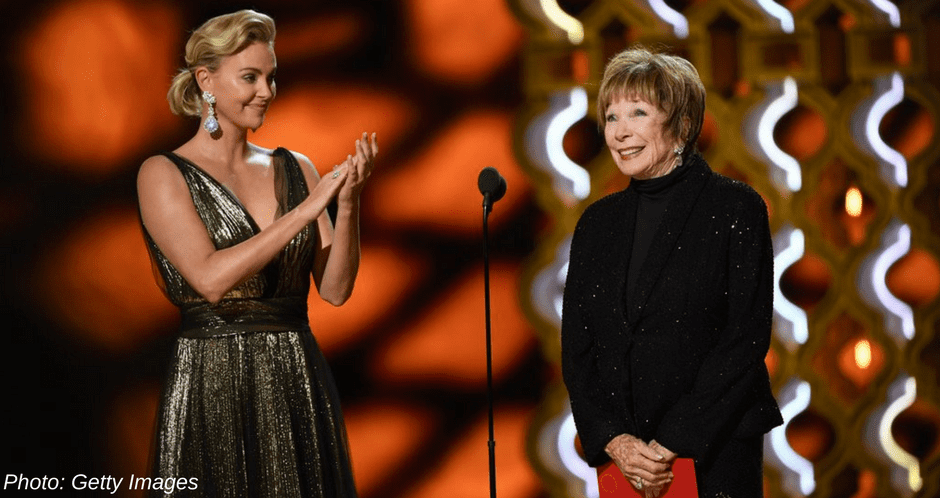
It’s no secret that I’m a dyed-in-the-wool movie junky. So much so that I sit through the whole of the Oscar ceremony each year, however high or low its standard goes. This year, I’m happy to report, it was quite successfully reaching for the stars. And for me, the best part of how it did that was through a new series of “inspiration” segments that certainly bear repeating, and reporting on.
In each of these segments, interspersed through the ceremony, a well-known actor – in their 30s or 40s – spoke about a performer who had inspired them when they were young. The first lovely thing was that accompanying their story were extracts from a seminal movie that had been instrumental in moving them emotionally, and in helping them to understand the gift of performance. And that was especially lovely for we older members of the audience because it brought back memories of films that we had enjoyed in our younger days.
And the second and even lovelier thing was that each of these actors then came on stage with the source of their inspiration, who then presented one of the awards. The Oscar audience loved that. Those of us watching on television loved it. The honouring of now more venerable actors, each of them still very much plying their trade in diverse ways, was a highlight praised by many.
So, first of all we had 41-year-old Charlize Theron having been inspired by Shirley MacLaine – now 82 years old – in The Apartment. Later came 47-year-old Javier Bardem, who spoke of being inspired by Meryl Streep – now 67 – in The Bridges of Madison County. And finally, 34-year-old Seth Rogen gave his homage to Michael J Fox, now 55 and increasingly involved in being an activist for research into Parkinson’s disease, which he had had since the age of 29, but which has not stopped him from also performing in a diversity of roles, which – back in the day – included starring in the film introduced by Rogen, Back to the Future.
It was a great way of combining nostalgia with an affirmation of older stars continuing to do their thing. That, in an industry notorious for its emphasis on youth, is definitely deserving of an Oscar.
But wait. In another sector of the media has come a different form of appreciation of a number of older people, this time focused explicitly on their current contribution. And this, too, is one that is well worth noting. In the March issue of The Australian Women’s Weekly there is a feature on “10 Women We Admire: Celebrating International Women’s Day.” And, happily, in that group of 10, with ages ranging from 22 to 93, a full 50 percent are ably shading towards old age, or already there. Three are in their 60s: Angela Merkel, Meryl Streep (again) and Hillary Clinton. Irish Mary Robinson is highlighting climate change issues at the age of 72. And the 93-year-old is the indefatigable Dr Catherine Hamlin, who is still working in Ethiopia, on her mission of transforming maternal healthcare there.
It is, simply, great to have such veteran heroes being publicly recognised, in and out of the entertainment industry.
Anne Ring 2017©





