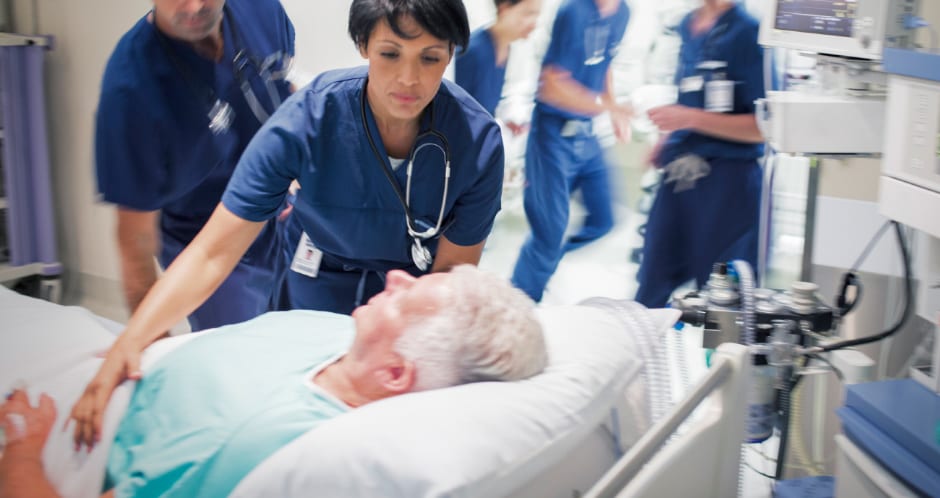
When residents at aged care facilities need medical help it can be a bit difficult for them if they have to go the emergency department of the local hospital. This quite often happens if they require medical help outside of normal hours, such as at the weekend or at night. Frequently they have to wait a long time to be attended to and lying on a hard, metal trolley is uncomfortable and unpleasant for anyone but for a frail, aged person it is even worse and can be distressing for those who have dementia.
Some aged care facilities have come up with strategies to try and minimise the number of emergency hospital visits for their residents. A trial in Brisbane, Queensland is working with an outreach service in association with the Prince Charles Hospital, TLC Aged Care in Victoria have onsite medical centres with GPs and BUPA Victoria have onsite GPs who provide regular health reviews as part of a preventative medicine strategy.
CEO of TLC Healthcare, Mr Lou Pascuzzi, says their model of community health hubs integrated into their residential aged care homes offers many advantages for TLC’s patients, residents and the wider community. He explains that these days many GPs find it untenable to travel to aged care facilities as Medicare benefits do not compensate for travel and time away from their practices.
As an Aged Care Placement Consultant when I am assessing aged care facilities I want to know that my clients will be well looked after once they move into an aged care facility so I am always keen to see any improvements in delivery of care. So, it is with interest I read about the trial in Brisbane.
The initiative follows a call for medical outreach services from aged care providers at an event hosted by Brisbane North PHN last year. During the trial, general practitioners and residential aged care facilities in Brisbane’s north could call a new Geriatric Outreach Assessment Service (GOAS) at The Prince Charles Hospital for assistance with managing the acute care needs of their aged care residents.
Brisbane North PHN board chair Dr Anita Green said “Our data shows there has been a significant increase in aged care residents presenting to the emergency department over the past five years.We know hospitals have specialist expertise in the treatment of elderly people, but we needed a better way for GPs and aged care residents to access this expertise.”
The outreach service means older patients can receive timely and appropriate medical care without having to leave their home environment. I hope this trial proves worthy and can be rolled out across the nation.



Don’t get your hopes up…
The Dept’s trial of Nurse Practitioners working in residential aged care in 2011-14 demonstrated the value they added to safe and quality care as well as the significant reduction in referrals to Emergency Departments.
The study showed:
* NPs spend more time with residents than GPs
* NPs conduct more comprehensive assessments
* NPs ordered diagnostic tests and prescribed medicines, providing more timely care
* Improved continuity of care
* Improved quality of care
* reduced hospitalisations
* Improved chronic disease management
* Improved palliative care
* Comorbidities and increasing acuity could be managed on site
* Significant reduction in new pressure injuries
* Management of IV therapy, wound, catheter and palliative care
* Diagnosis of disease and acute conditions
* Improved staff clinical skills through education by NPs
Yet the Dept does nothing to facilitate or even support their employment in aged care.
Hello Jamie,
I’m very interested in reading the trial report examining the NP role in residential aged care. Are you able to send?
Many thanks