
The federal government has launched a campaign to get more older Australians playing ‘walking football’, a non-contact, low-impact version of the game.
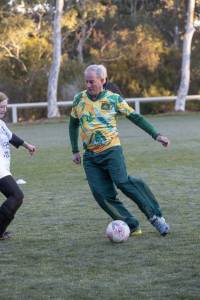
Walking football programs will be rolled out in NSW, Victoria, Queensland, Western Australia and the ACT, and pilot programs will begin in South Australia, Tasmania, Northern Territory and Northern NSW.
There will be 110 walking football ‘hubs’ established over the next year, with the number increasing to 148 the following year.
Walking football is already hugely popular overseas, with around 800 clubs already in operation in England.
Walking football is intended to be easy for all to join in, and overall a lot of fun. Matches are played with modified formats (5v5/6v6) on smaller pitches, with shortened game times. There are no ‘referees’ as such, with participation prioritised over competition. The rules of walking football are also kept pretty simple:
Minister for Aged Care and Senior Australians and Minister for Youth and Sport, Richard Colbeck, said walking football is a great way to help older people be more active.
“Walking Football is a game designed to expand participation among senior Australians who love their football, or those who just want a fun new way to get active,” he said.
“The fun and social aspect is just as important as the physical health benefits.
“Pilot programs have shown it’s a great way to make new friends and reduce social isolation, with many of the participants meeting up outside game times.”
Each hub will run matches, and will employ activity coordinators to help participants with exercises they can do at home.
“With structured matches and the at-home exercises, we’re aiming to deliver more than one million active hours across Australia,” Minister Colbeck said.
Football Federation Australia CEO, David Gallop, said walking football is adaptable and affordable.
“The time, location, venues and numbers on each team can be adapted depending on the needs of participants in each area,” he said.
“We also want to make this program affordable to encourage as many older Australians as possible to participate. It’s all about getting active, having fun and making new friends.”
The campaign is being funded with a $1.8 million grant through the federal government’s program ‘Move It AUS – Better Ageing’, and is a joint initiative between Football Federation Australia and Active Ageing Australia.



Walking football has been going in Brisbane for a couple of years, and its very popular with the active seniors
see Walkingfootballbrisbane .com.au