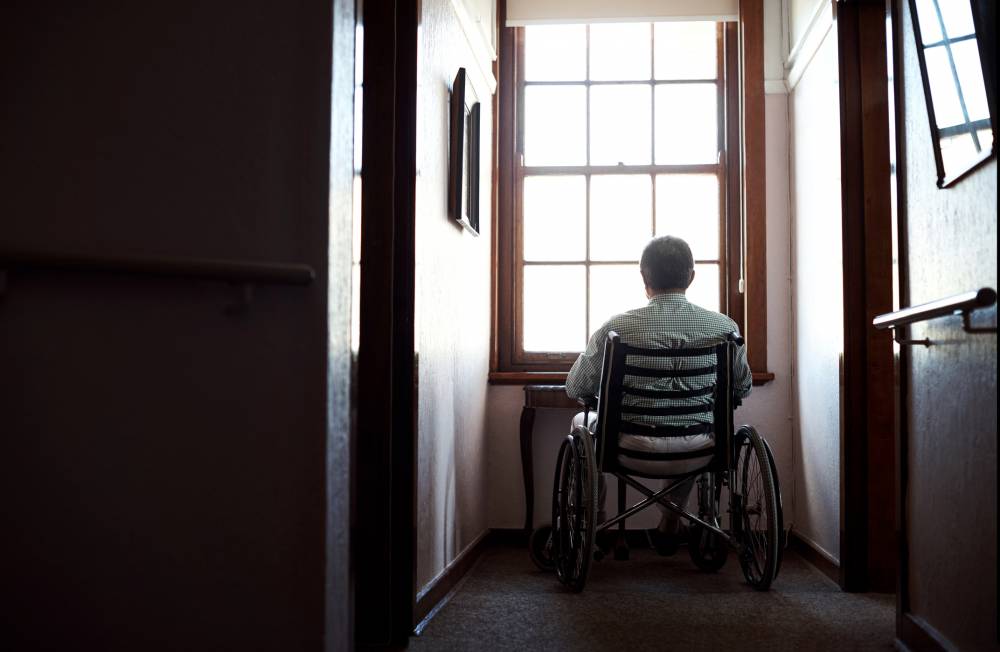
A wheelchair-bound sex attacker who pleaded guilty to the sexual assault of an 80-year-old resident now has a new home, and staff in his new facility have not been told about his history of sexual offending.
Sean James Mulcachy, 62, received the paltry sentence of a two-year good behaviour bond and a $2,000 fine for sexual assault after being captured on CCTV committing the crime on June 29 last year.
The family of the 82-year-old victim is now set to pursue legal action against the Bupa facility after accusing them of not doing enough to protect her from the assault that occurred in the communal lounge of the Woodend nursing home.
According to the victims family, the 82-year-old was living with severe cognitive impairments as a result of a diagnosis of dementia and was a highly vulnerable person.
Unbelievably, Mr. Mulcachy actually remained living in the home alongside his victim for three months after the assault took place, and was instructed to stay at least 10 meters away from his victim as an agency tried to find alternative accommodation for the sex-attacker.
According to the Herald Sun, Mr. Mulcachy has now been living in a facility somewhere in the Victorian suburb of Meadow Heights since September of last year, and staff at the facility were unaware of his sexual assault history.
Should Aged Care Staff Be Informed of a Residents Criminal History?
Aged care workers take on the responsibility of providing care and creating the safest possible environment they can for their residents. The job itself can be extremely rewarding, but there is no denying the difficulty involved with a task of that magnitude.
We ask these people to absorb as much information as they can regarding the people that they care for, and we do this because having understanding gives them insight into the nuanced issues and environments within an aged care facility and how they relate to an individual resident.
Some people prefer to watch tv, some prefer peace and quiet, some like to socialise and others may prefer to be alone.
But due to frailty and vulnerability of a number of aged care residents, a very large aspect of residential aged care is risk management. And you can only protect people from risks if you’re aware of the potential for problems.
Residents with a history of violence and sexual abuse are a very real threat to others within their facility, and if these residents are going to be housed alongside people who are vulnerable, surely staff need to be made aware of their history in order to minimise the risk to the rest of the facility.
While it is appalling that Mr. Mulcachy was allowed to live in the same facility as his victim for three months after the attack, it is quite understandable that an agency would have trouble finding a home for him.
But the problem has not disappeared, it has simply been given to someone else to deal with.
And the staff at Mr. Mulcahy’s new facility should be entitled to understand the potential problem that they are inheriting by having him in their facility.


