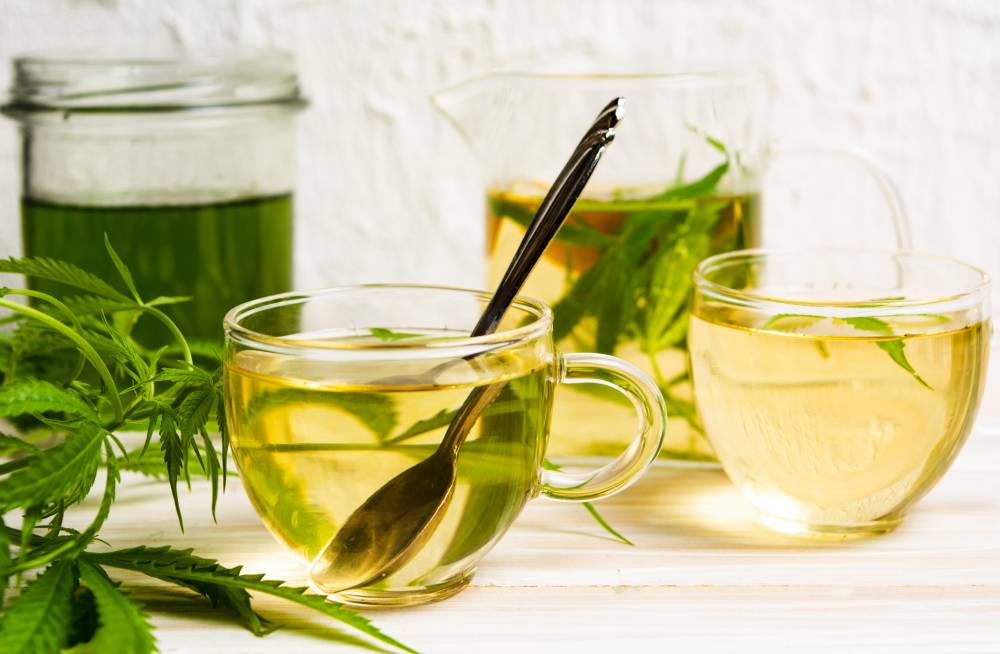
Sometimes, when Kate* can’t sleep, when it seems her anxieties will keep her staring at the ceiling for another long, sleepless night, she gets up and makes herself a cup of tea.
She uses a tea bag her family has made themselves and brought to her – a tea bag filled with cannabis.
Kate lets the ‘tea’ brew, and stirs in a large teaspoonful of honey.
The tea eases Kate’s worries, and that night she sleep soundly.
Kate has been living in residential aged care for several years; she has multiple sclerosis.
Staff are not aware she occasionally drinks cannabis tea. Most staff would not let Kate drink the tea if they knew about it.
Kate’s family, who spoke to HelloCare on the condition of anonymity, say they are not encouraging others to do what they are, because it is illegal.
However, the person we spoke to said the cannabis calms Kate and reduces her anxiety.
The family believes that the risk of any possible harmful side effects from taking the cannabis are outweighed by the benefits to Kate of reducing her anxiety and getting a good night’s sleep.
Medicinal cannabis is still not being widely used in Australia, even though it can legally be prescribed by doctors.
Only 56 doctors have been authorised to prescribe medicinal cannabis in Australia, a spokesperson for Therapeutic Goods Association told HelloCare. Of these, 11 are known to be general practitioners.
As many as 4,200 patients have been authorised to access medicinal cannabis under the Special Access Scheme.
Associate Professor Vicki Kotsirilos, on behalf of the RACGP, told HelloCare, “It is not very common for Australian GPs overall to prescribe medicinal cannabis.”
She said the process required to issue a permit to GPs to prescribe medicinal cannabis is time consuming, and the limited research done in the field remains inconclusive.
“The uptake has been overall low due to the permit process being difficult and time consuming, and it is still a new emerging field with limited research,” she said.
Assoc Professor Kotsirilos said doctors are usually prescribing medicinal cannabis as a last resort, and for a range of issues, including pain and sleep disorders.
“Most doctors are prescribing medicinal cannabis as last line treatment when all other treatments have failed. Especially where there is some evidence for medicinal cannabis,” she said.
“Medicinal cannabis is most commonly used for treatment of chronic pain in adults eg. chronic neuropathic pain associated with diabetes, nerve damage, spinal injury etc, cancer pain, palliative care, chemotherapy-induced nausea and vomiting, and spasticity associated with multiple sclerosis.
“There is moderate evidence for secondary sleep disturbances with chronic pain, multiple sclerosis, fibromyalgia.
“Some doctors are prescribing multiple sclerosis for fibromyalgia as it is a difficult condition to treat,” she said.
“There is limited evidence for epilepsy but MC may be useful for these patients when difficult to control their epilepsy with usual anti-epileptic medication,” Assoc Professor Kotsirilos said.
The TGA spokesperson told HelloCare medical cannabis has been approved for: chemotherapy-induced nausea and vomiting, refractory paediatric epilepsy, palliative care, cancer pain, neuropathic pain, spasticity from neurological conditions, anorexia, and wasting associated with chronic illness (such as cancer).
“Each application is considered on a case-by-case basis and there is no restriction on patient type or condition for which medical practitioners can apply to use medicinal cannabis,” the TGA spokesperson said.
The legislation for obtaining a permit to prescribe medicinal cannabis to patients “has improved significantly”, Assoc Professor Kotsirilos said.
“It is now an online application for all states except Tasmania, and approvals with permits are coming in within 48 hours of filling in the application,” she said.
“This is a vast improvement which was a difficult bureaucratic process in the past.”
But Assoc Professor Kotsirilos said the process is still time consuming for often time-poor doctors.
“It still takes the GP about 20-30 minutes to fill out the online application as we have to provide the clinical justification for each patient. Even this is time consuming for busy GPs,” she said.
Assoc Professor Kotsirilos said she would like to see more research into the effectiveness of medicinal cannabis.
“More research on medicinal cannabis is always a good thing,” she said.
“Research helps guide GPs which medicinal products are best for which conditions, risks associated with their use, especially long term use, and what warnings to give patients.
“Research ensures GPs are prescribing medicinal cannabis safely and appropriately.”
The TGA spokesperson told HelloCare, “Products available through the black market contain unknown ingredients at unknown strengths and may be contaminated with pesticides, toxins and heavy metals and therefore can pose an unacceptable risk to health.”
The TGA “strongly recommends” that patients who wish to access medicinal cannabis consult their doctor who can apply to access medicinal cannabis through the appropriate pathways.
While Kate is relying on home-made tea bags brought to her by her family, safety and certainty is something she is having to do without.
* Not her real name.
Please note: This image does not refer to actual people or events. Image: iStock.


