Sue* is a regular commenter on HelloCare articles. Today she shared her story of the sixteen difficult years she spent caring for her husband, John*, at home.
Twenty years ago, John had an accident at work which resulted in his spine being fused. Soon afterwards, he was forced to have a quadruple heart bypass, and from that point on, John was bedridden.
Sue was forced to give up a job she loved to stay home and care for John.
“I had a job as a bank teller, which I loved, but I had to give it up to look after him,” she told HelloCare.
“I loved my job. I got on really well with the customers. I loved the social part of it.”
Having given up work, Sue was entitled a carers pension which amounted to around $120 a fortnight. “It was unbelievable,” Sue said, and they struggled to get by.
Sue felt she wasn’t a natural carer. She said the pamphlets she read said anyone can be a carer, but Sue wasn’t so sure.
“I was never that way inclined. I think you have to be a certain type of person to be a carer, and I’m just not one of them,” she said.
Sue had no medical training or background, and to make matters worse, John was a difficult patient.
Of her four daughters, two helped a little, but two didn’t help, so Sue was largely caring on her own.
Regardless, Sue cared for John for almost two decades, but it was an unhappy time in her life.
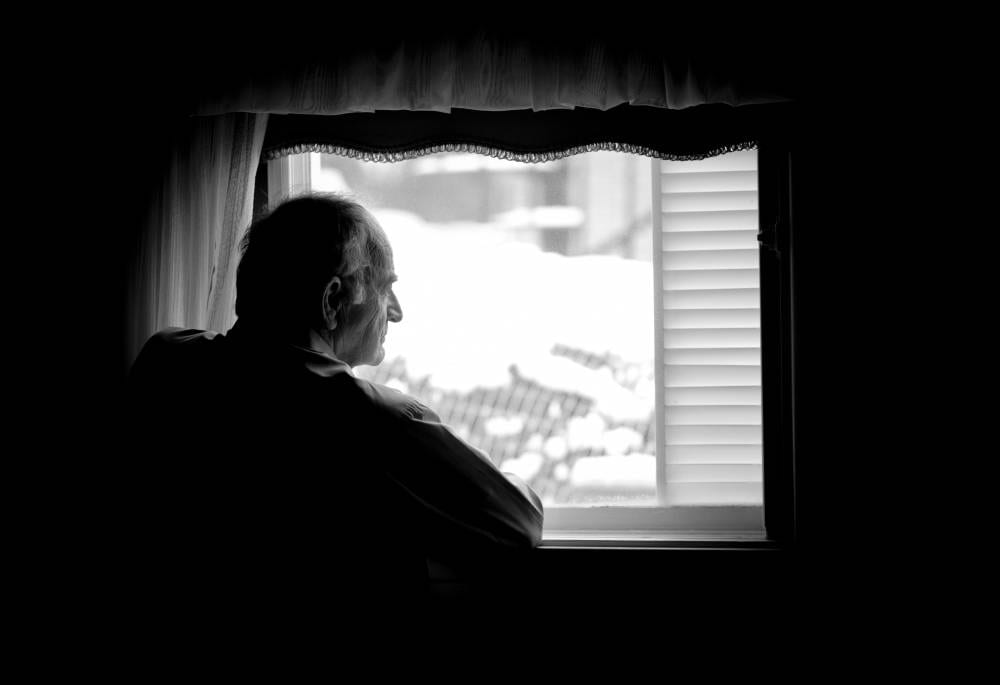
John remained in his room with the blinds drawn. He didn’t want anyone else to shower or feed him, but he didn’t want to go to a nursing home and would not consent to moving. So Sue was caught, caring for a difficult patient, alone, and with few prospects of relief.
Despite Sue doing her best to feed John, he dropped from 87 kg to 40 kg over time. “He was like a skeleton,” she said.
Even when Sue broke her wrist and then her elbow, John would not accept other help.
Eventually, John began having hallucinations that were so extreme, Sue often feared for her life. Sue admitted to sleeping on the sofa so, if John attacked her during the night, she could exit the house quickly and easily.
Doctors advised Sue to “go along” with the hallucinations, and not to disagree with him. But as time went on and his hallucinations worsened, John become more difficult to handle. He once became furious and accused Sue of spying on him. Another time he insisted their neighbour was murdering people and buying them in the back garden.
Sue was struggling. “I was left with him 24/7. I thought I was going to go before him – the anxiety, the nerves. I feared for my life. It was really terrible,” she said.
“I ended up having a nervous breakdown and started seeing a psychologist.”
It came to a point that Sue said she couldn’t cope any longer. One of her daughters organised for John to go to hospital for respite care. He stayed there for nine weeks. Sue was happy during those weeks.
John was then in and out of hospital, sometimes even leaving without being discharged and arriving home unexpectedly.
One day a former patient with John in the hospital came home and set fire to his house. “That could easily have happened to me,” Sue said.
John was agreeable to going to hospital because he knew it meant he would be given more of the oxycontin he had been taking, Sue said.
Eventually, about four years ago, Sue had to go into hospital herself.
Her daughter looked after John for a week, but he then moved into respite care. He stayed there for five weeks.
And then “a miracle happened”, Sue said. John signed the papers to be admitted permanently into the nursing home. He had agreed to stay in care. Three doctors agreed he should be in a nursing home because he had dementia.
Sue hasn’t seen John for two years after he told her he was seeing prostitutes in the nursing home.
Sue said she “feels sorry” for other carers who find themselves caring for a difficult patient living with dementia. “I really do,” she said. “I don’t think there’s enough help for them.”
“I think the law should be changed that if the carer can’t cope, [their loved one] should be put in a nursing home,” Sue said.
“He should have been put into a nursing home years before, but because he didn’t want to, he didn’t have to.”
“I wanted him in a nursing home,” she said. “But I couldn’t do it.”
Sue told HelloCare she’s now loving life.
“Since he’s been in the nursing home I’ve been on two cruises. I can go and do whatever I want now. I’m just sorry I’m so old. I’m 70. I’m really enjoying life now. I wish this had happened years ago.”
* Names have been changed.
Image does not represent actual people or events. Source: iStock.


