
When George Moran moved into Regis Blackburn nursing home, he was greeted as family. He lived there for seven years with his wife, Betty, and his brother Lindsay, who is deaf.
George had motor-neurone disease, and sadly he passed away on Sunday.
His son, Matt, has shared with HelloCare the story of George’s pioneering life as an educator.
On Monday, staff at Regis Blackburn wore beanies in George’s honour.
George was born in 1944. He grew up in Eltham and his parents ran the Post Office/General Store. He studied PE at Coberg Teachers College under a scholarship, after which he taught in several schools including Essendon Grammar School, Port Melbourne Primary School, and Carey Baptist Grammar.
George was married to the love of his life in 1969, just two days after finishing a theological degree of divinity. George and Betty brought their three kids to Central Victoria where George and his growing family started the first of 10 Christian Schools, four of which are still in operation today. He supported and influenced many more schools across the country.
In 1982, George started a teacher’s college in the family home, which for the next five years trained and influenced a powerful group of passionate teachers.
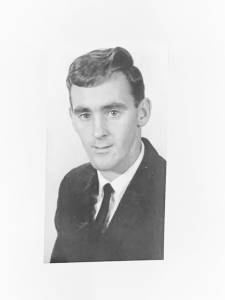
George then went on to work as a teacher, principal, and pioneer at Hillcrest Christian College for the next seven years. During this time he also Pastored a Church in Croydon, bringing vision and direction not only to the church community but the broader Maroondah area.
A pioneer at heart, George has been a great influencer of leaders both in the education sector and within the Church. George’s great passion was to see everyone around him grow to their fullest potential.
One of his outstanding achievements was with the Chin people in Burma and Australia. For over 10 years George invested in schools, leadership development, refugee support, and theological training colleges helping to re-establish struggling, war-torn communities. It was working with the Chin people that George first noticed some symptoms that were beginning to affect his work Stumbling, a husky voice, reduced fine motor skills all led to a diagnosis of Bulbar Motor Neurone Disease. Whilst devastated by the news, George always remained resilient, courageous, and grateful for God’s gifts in his life! His faith had sustained him through many adventures and now it would become his foundation to face his greatest challenge yet.
The last four-and-a-half years have been filled with visits to the phenomenal staff at Calvary Health Care Bethlehem in Caulfield, along with many wonderful home care assistants. The progression of MND was surprisingly slow. Because of his love of sport and running, this caused many George to have many falls, some requiring hospitalisation. Learning to become a spectator rather than a participant was difficult and the persistent decline of George’s abilities meant that he was consistently adapting to his new circumstances.
MND Victoria was an incredible support providing many assistive technologies that enabled George to live at home with Betty in Chirnside Park through it all.
In September 2019, George moved into Regis Blackburn and was welcomed as family. Embracing the curated activities, social interaction, and sincere care provided by the team at Regis Blackburn his days were full indeed!
The lifestyle team, who were big fans of George and his approach to life, decided to join together in a fundraiser for MND by having all the staff purchase and wear MND beanies! Many of the residents were also inspired to join in the good cause.
Sharing the final days with his wife Betty, also at Regis, and an endless stream of family and friends George remained thankful until the end.
Matt Moran
Image: George and Matt, the day before George passed away. Supplied.


