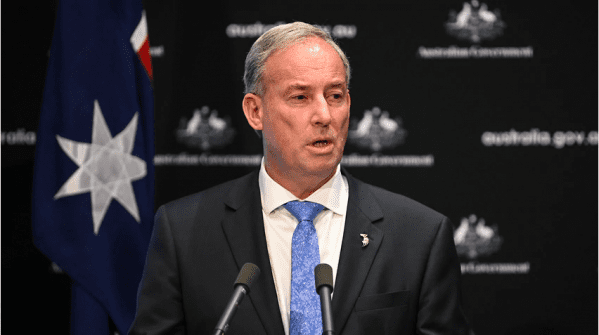
The Senate has censured Aged Care Minister Richard Colbeck for his handling of the aged care sector’s response to the COVID-19 pandemic.
The motion was moved by Labor senate leader Penny Wong, who said that in a senate hearing, Aged Care Minister could not recall the number of deaths in aged care homes during the pandemic. She said he failed to “take responsibility” for the failings in aged care’s response to the COVID-19.
The motion was approved by 25 votes to 21.
“(The Senate) censures the Minister for Aged Care and Senior Australians for: failing to recall the most basic and tragic facts about aged care residents, describing his management of aged care as a ‘high water mark’,” the motion said.
“Dismissing deaths as a ‘function’ of aged care, and ailing to take responsibility for the devastating crisis in the aged care sector, which has caused death, grief and untold trauma for vulnerable Australians and their families.”
According to the Parliament House website, “If there is dissatisfaction with the performance of a particular minister, a censure motion may be moved.
“Although a resolution of the Senate censuring the government or a minister can have no direct constitutional or legal consequences, as an expression of the Senate’s disapproval of actions or policies they may have significant political impact.”
Prime Minister Scott Morrison has continued to defend Mr Colbeck.
After Mr Colbeck’s censure, the Prime Minister said the upper house has censured people from Paul Keating to John Howard.
Mr Morrison said Senator Colbeck had brought federal and state governments together to tackle aged care outbreaks, and he was an advocate for increased funding to the sector.
He said many of the reasons the royal commission had been called were because of issues raised by Mr Colbeck.
“The many serious issues that require addressing in aged care, and particularly the unacceptable circumstances that occurred in a number of facilities, are the very reason why the Aged Care Royal Commission was called,” Mr Morrison said.
“It is the very reason why the government – in particular, at the strong urging and recommendation of the Minister for Aged Care – has continued to increase funding for aged care.”
“It is the reason why the Minister for Aged Care came to the cabinet and said we needed to do more in aged care in response to the COVID-19 pandemic, and did so in response to the plan that was first launched back in March.”
Image: Richard Colbeck website.


