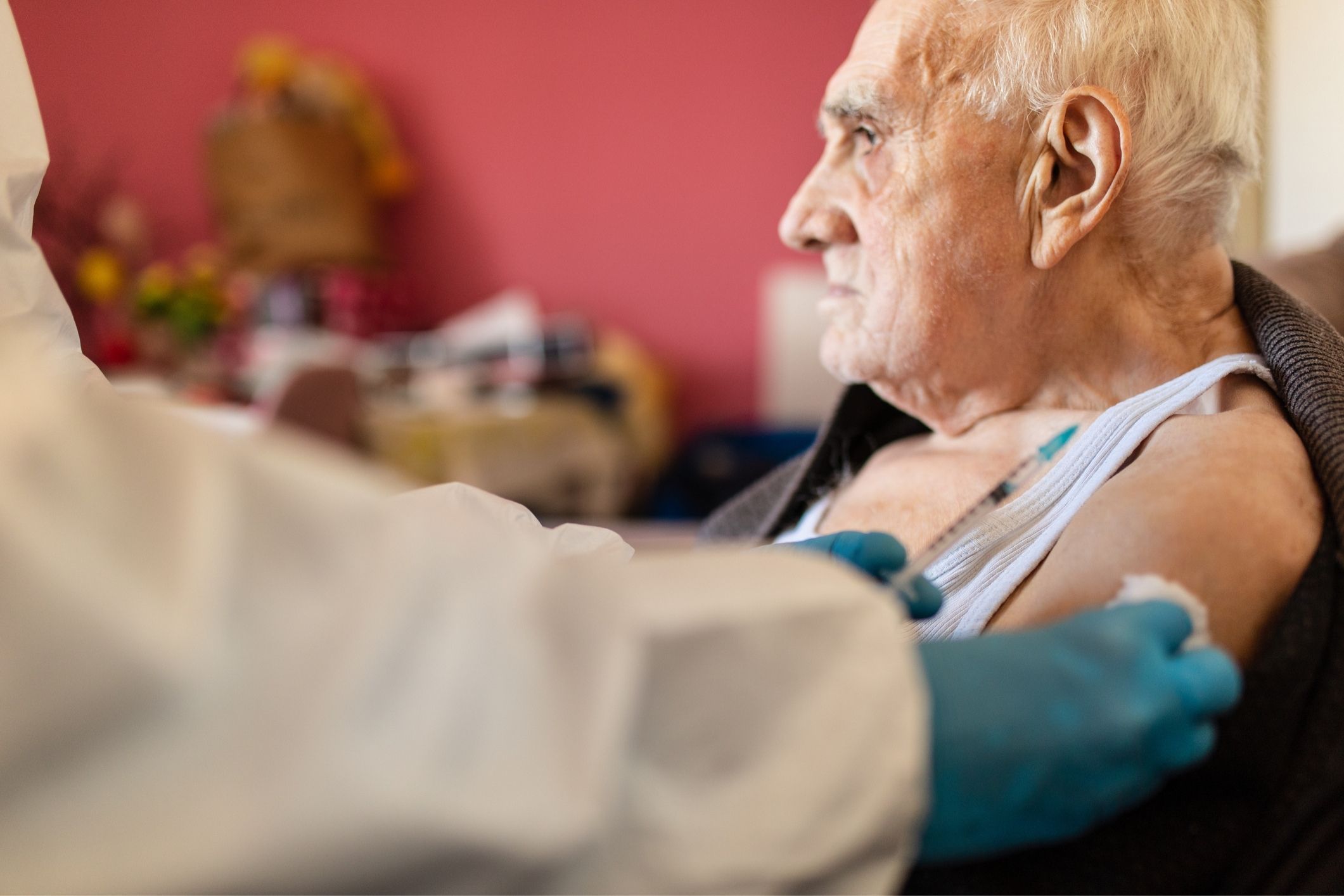
Results from the development of a vaccine to counteract Alzheimer’s disease has many scientists “hugely excited”, with findings suggesting it can reverse dementia in mice.
Described as a “transformative” treatment, researchers from the University of Leicester and Germany believe they have uncovered a way to prevent the advancement of the disease, perhaps even to prevent it completely.
The unprecedented approach, costing a mere $30 (£15) per single shot, functions by stopping the creation of harmful deposits of protein within the brain that have been connected to loss of memory.
Around 472,000 people are living with dementia in Australia, with the number set to rise to 1.1 million by 2058. However, experts in the UK say the new vaccine may be able to enter clinical trials with humans in the next two years.
While research continues into the exact triggers of Alzheimer’s disease, scientists believe that naturally existing proteins called amyloid beta give rise to Alzheimer’s, clumping together to create plaques in the brain.
These plaques are set in motion when individual amyloid beta protein molecules are shortened and subsequently unite to create clusters that negatively influence the functioning of brain cells.
Following this area of research, scientists have discovered an antibody – named TAP01-04 – which attaches to the toxic shortened form of the amyloid beta, stopping the molecules from uniting together and forming the problematic plaques.
Using this momentum, scientists set to work in developing a vaccine that encourages the body to create TAP01-04 antibodies, with the potential that this vaccine could very shortly be offered to persons highly at risk of Alzheimer’s.
Speaking to the greater potential of their work, the group of scientists say this unprecedented therapy highlights that Alzheimer’s disease may be able to be mitigated completely, instead of just treating plaques previously formed.
Speaking to the results of the recent trial, Professor Mark Carr, of the University of Leicester explained, “While the science is currently still at an early stage, if these results were to be replicated in human clinical trials, then it could be transformative.”
He continued, “It opens up the possibility to not only treat Alzheimer’s once symptoms are detected, but also to potentially vaccinate against the disease before symptoms appear.”
Confirming the study’s approach as well, co-author Professor Thomas Bayer, of the University Medical Centre Gottingen in Germany, noted, “In clinical trials, none of the potential treatments which dissolve amyloid plaques in the brain have shown much success in terms of reducing Alzheimer’s symptoms.”
Expanding on the novel approach taken in the study, Dr Bakrania of LifeArc highlights that, “The TAP01_04 humanised antibody and the TAPAS vaccine are very different to previous antibodies or vaccines for Alzheimer’s disease that have been tested in clinical trials, because they target a different form of the protein. This makes them really promising as a potential treatment for the disease either as a therapeutic antibody or a vaccine.”
Dr Bakrania added, “The results so far are very exciting and testament to the scientific expertise of the team. If the treatment does prove successful, it could transform the lives of many patients.”
The significant study was run in collaboration with LifeArc, a medical research charity. The scientists and researchers, whose findings were published recently in medical journal, Molecular Psychiatry, are currently seeking to partner with a commercial body to manage the therapeutic antibody findings and vaccine through clinical trials.



Hi there I am making enquiries as to how I can get my sister on this trial. She is 68 and has advanced Alhziemers. I would do anything to get her on this trial. Please help me out. Thank you.
Regards,
Suzanne