She initially went viral by sharing what most people say before they die and now another of her TikTok videos has drawn in huge views for sharing an insight into what many regret before they die.
Julie, from the US, has been a hospice nurse for many years. Initially working in the intensive care unit, she felt drawn to use her skills for the vulnerable in their end-of-life stage.
She decided that she would post videos on TikTok to help educate people on end-of-life care and death. She shares the valuable experiences of the seniors in her care, and makes sure to refute common myths when it comes to attitudes on seniors and end-of-life care.
Speaking kindly and openly in her most recent TikTok video, she goes through the main regrets that she has heard from her patients. She decided to post the video in the hope that anyone seeing it would be able to take the advice she shared, so they wouldn’t have the same regrets later in life.
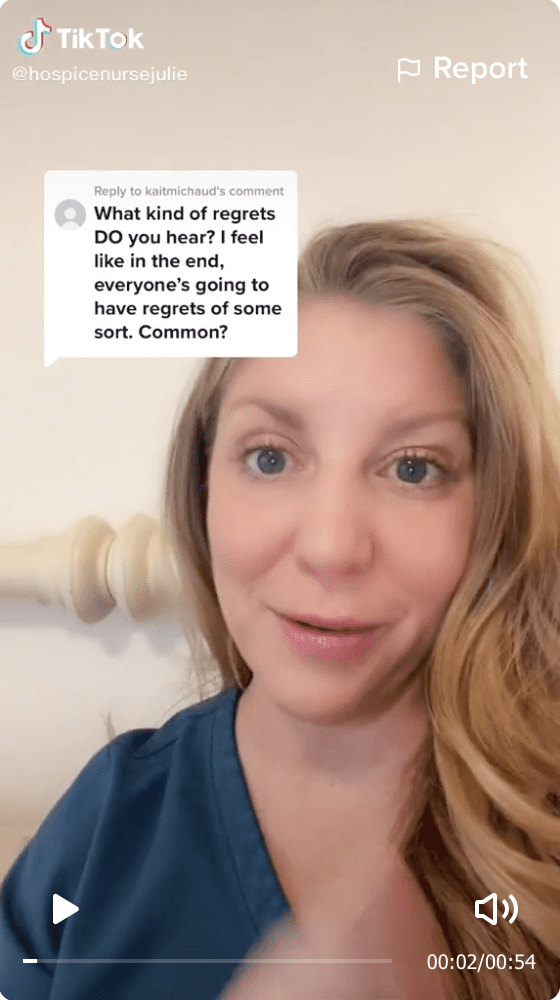
Responding to a question one follower asked: “What kind of regrets do you hear? I feel like in the end, everyone’s going to have regrets of some sort.”
She continues, “Not appreciating being alive, the little things.
“And not spending more time with family.”
In processing her patients’ regrets, Julie highlights she has learnt to, “Be in the moment, live presently, be grateful, don’t take for granted your health, and little things about living life.
“Don’t work your life away if you don’t have to, or make it so you don’t have to.”
The hospice nurse added, “Spend time with those you love, not necessarily family, but those you love and make you feel loved.”
Many viewers responded to the video sharing how grateful they were for the insight and guidance, with one saying, “Thank you I needed to hear that.”
Another wrote, “Maam, this was inspirational. Thank you for sharing your knowledge when you didn’t have to. It’s appreciated.”
And a third responded, “I needed to hear this today. Thank you, Julie.”



I too work in the home health field doing end of life care. What people don’t realize is how patients “rally “ towards the end.
They change their minds and don’t t want to die.
Everyone they haven’t seen comes around them. Cheering them on. It is like a car sputtering and running out of gas
And that is when they have the “bucket list .” The “ I have to do this before I die “ wishes .
And as a caretaker you help them. But it is sad
You build them up one more time. Because the soul is not quite dead.
It needs synchronicity with the body.
And that is what I have learned as a Visiting Angels’ CNA doing Hospice and Chronic patient care.