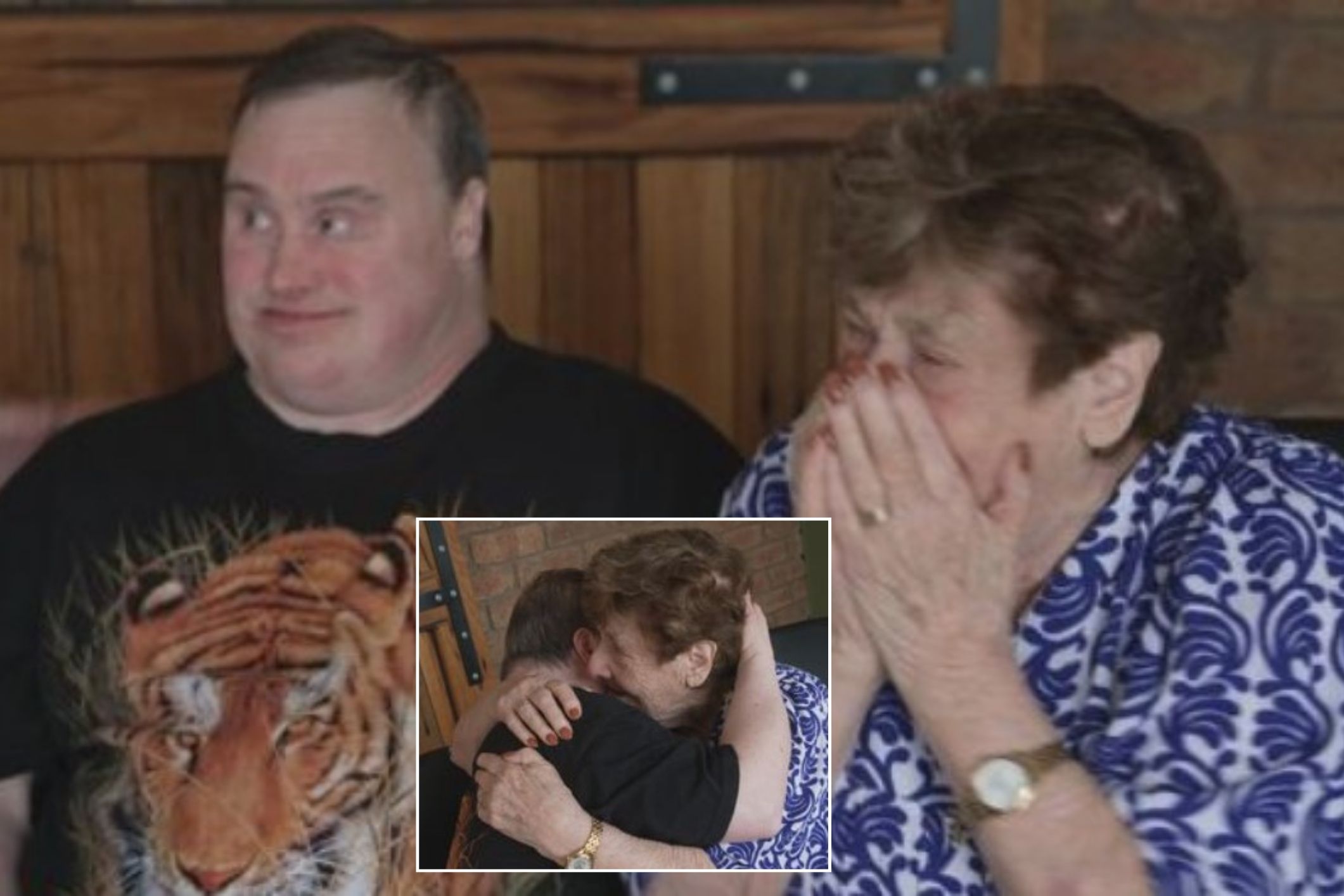
Mark Deans, 56, who has Down’s syndrome, will now live alongside his beloved mother Anne, 81, in a Geelong aged care facility, following a successful campaign that overturned an earlier government refusal. Their victory comes after months of lobbying and public pressure, with the family’s story gaining national attention on A Current Affair.
Anne and Mark share a close, unbreakable bond. They’ve spent a lifetime together—Mark has never known a home without his mum by his side. But earlier this year, their lives were upended when Anne moved into aged care. Initially, the family hoped Mark could join her, ensuring they could stay together in the new chapter of their lives. However, bureaucracy stood in the way.
Due to government policy stating that aged care is “not appropriate for people under 65”, Mark’s request was denied. His sisters Sharon and Michelle were stunned by the rigid rules. “It didn’t make any sense,” Michelle said. “Mum’s in her 80s, and people with Down’s syndrome often face ageing challenges earlier. Mark is already dealing with many of the same issues.”
The siblings turned to A Current Affair to shine a light on their plight, which prompted federal Aged Care Minister Anika Wells to revisit the case. The family argued that the unique nature of Mark’s condition warranted special consideration. “People with Down’s syndrome have a life expectancy of around 60 years,” Sharon said. “Mark should be with Mum—it’s the only home he’s ever known.”
Anne, too, was determined not to be separated from her son. “He’s not going anywhere. I’ve raised him all my life—how could someone just take him away?” she told A Current Affair with fierce resolve.
Following the intervention from the media and further assessment by the government, Mark’s case was reviewed, and the outcome was in the family’s favour. The good news arrived during an emotional moment captured by A Current Affair. “We got what we wanted,” Michelle said, her voice full of relief. “It’s worked out perfectly, just the way it should.”
Anne echoed her daughters’ joy. “I’m feeling great,” she said with a smile. “He’s staying with Mum, where he belongs.”
Sharon and Michelle hope their experience will encourage other families in similar situations to persevere. “If you know what’s right for your family, you have to fight for it,” Sharon urged. “Every situation is different, and that needs to be recognised.”
In response to the case, Minister Anika Wells acknowledged that exceptions to the under-65 policy are sometimes necessary. “While aged care is generally not suitable for younger people, we recognise there are exceptional cases where it may be appropriate,” she said.
Wells stressed that the government remains committed to reducing the number of younger people in aged care under the YPIRAC (Younger People in Residential Aged Care) initiative. However, she also noted that flexibility is needed in cases where no suitable alternatives exist.
For the Deans family, the resolution is not just a personal victory but also a hopeful message for others facing rigid bureaucracy. “Mark and Mum have been best mates for 56 years,” said Sharon. “Keeping them together is the most humane outcome, and we’re so grateful that someone finally listened.”


