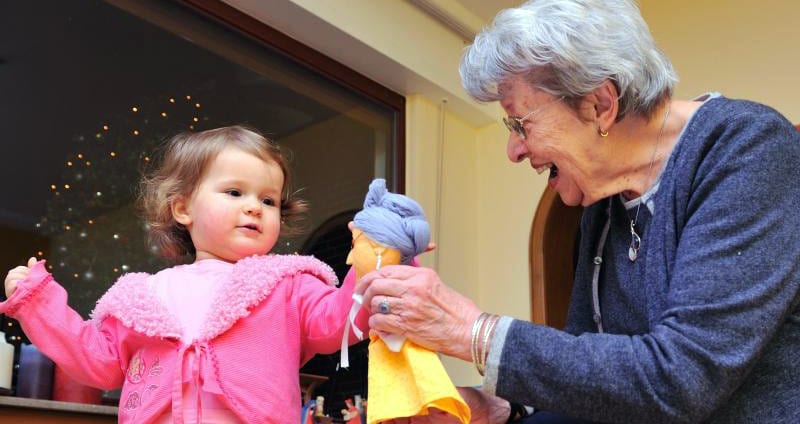
Society often undervalues older people, believing that they no longer have anything to offer in their later years. However, contrary to that, they can in fact be a great resource when it comes to caring and educating young children.
One Australian study showed that activities that include children and older adults in a daycare facility can increase self-esteem and promote friendships.
Globally, there are many projects that encourage intergenerational interactions. For example, in New Jersey there is an intergenerational orchestra that brings together musicians aged between six and 90-years-old.
Older people in retirement or in aged care, have so much extra time and still have skills that are often underutilised. Many of them have children themselves, so caring for children gives them a sense of nostalgia.
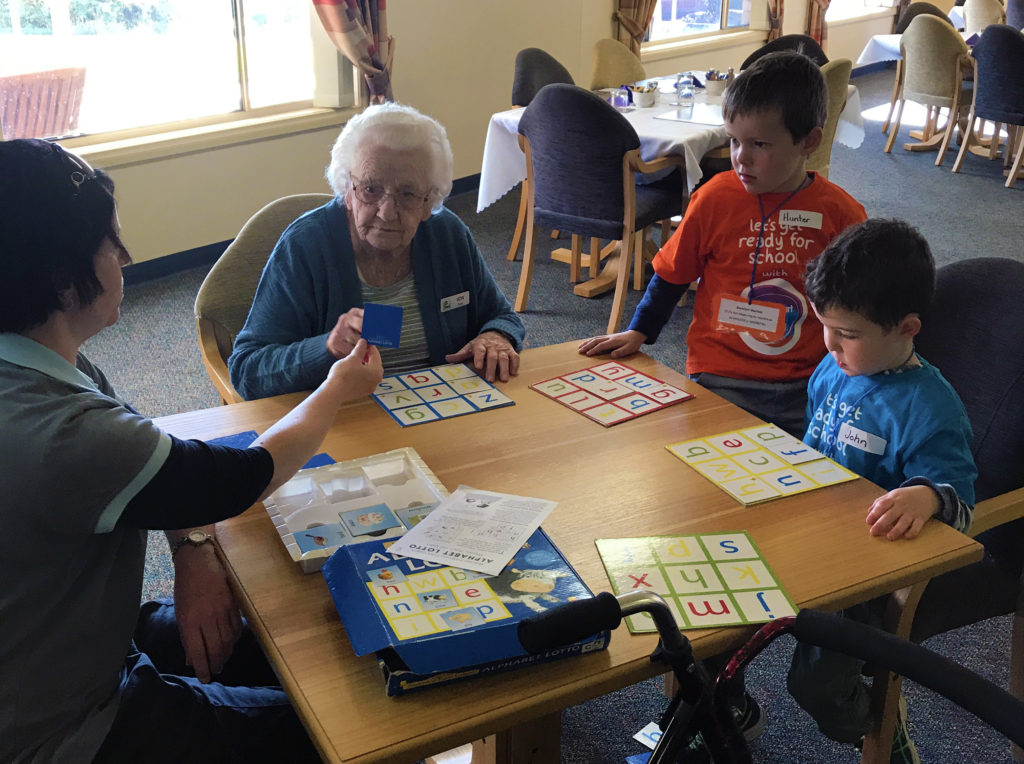
There are joint ventures like this happening all around the country. One such example is Riverina Gums Retirement Village and Goodstart Early Learning Glenfield Park, who have joined forces to prove that age is no barrier to fun and friendship.
A joint initiative has seen pre-school children making monthly visits to their more senior neighbours for learning and laughter.
Village Manager Ann Baker said the initiative is a wonderful way for the young and not-so-young to interact in a positive way.
“It has been a great partnership between the two centres, which both the children and residents enjoy,” says Baker.
Early Childhood Teacher Claire Lane, takes the group of around 20 children, aged between four and five years, to the village once a month.
Lane says the aims of the initiative were simple, “our main goal is to get our children out into the community and to increase their social skills through interacting with people they might not normally see in everyday life,”.
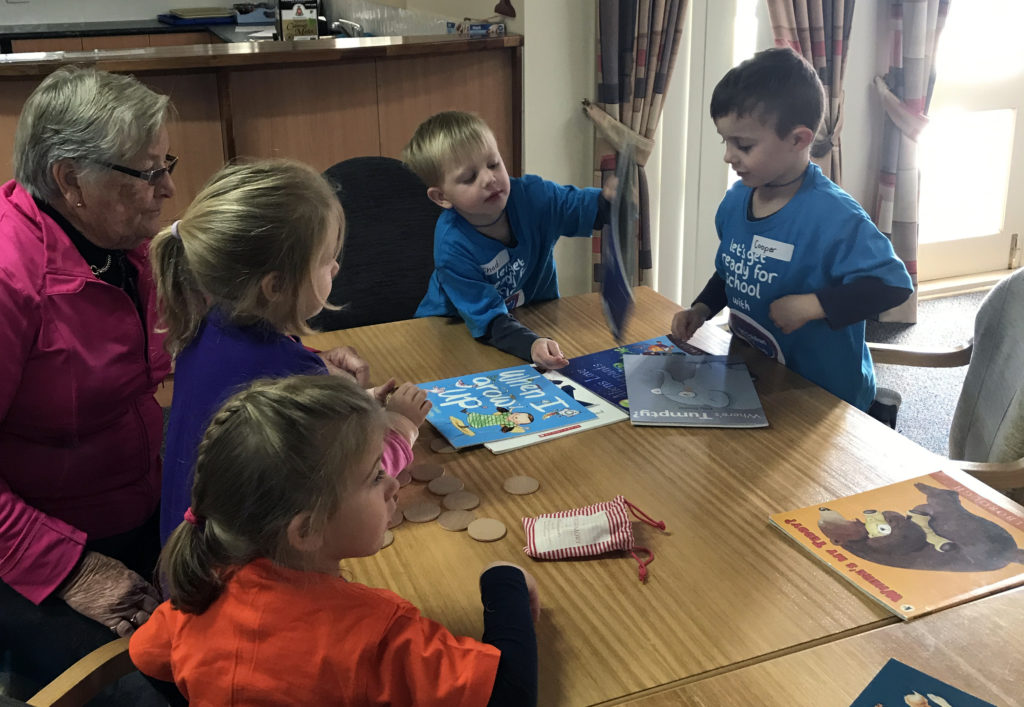
“We take over some books, memory or card games, small puzzles, or drawing materials, and at Easter we took over some biscuits the kids had made.”
The benefits for everybody involved are equally straightforward, “it’s just a huge benefit for both the residents and the kids,” explained Lane.
Older people are able to feel a sense of accomplishment or success, and spending time with children decreases any feelings of social isolation.
It also help the kids to learn how to interact with older people, to slow down and play in a more calm and gentle way. And while they foster more social and emotional skills, they enjoy all the extra attention they are receiving.
“They both get a lot out of it, and it’s really special as a lot of our kids don’t have grandparents or extended families, and it’s nice for residents to have people visit them as well.”
Having the elderly and children play and care for each other is a union of future and past generations and bring value to human interactions, “it’s positive all round!”



5