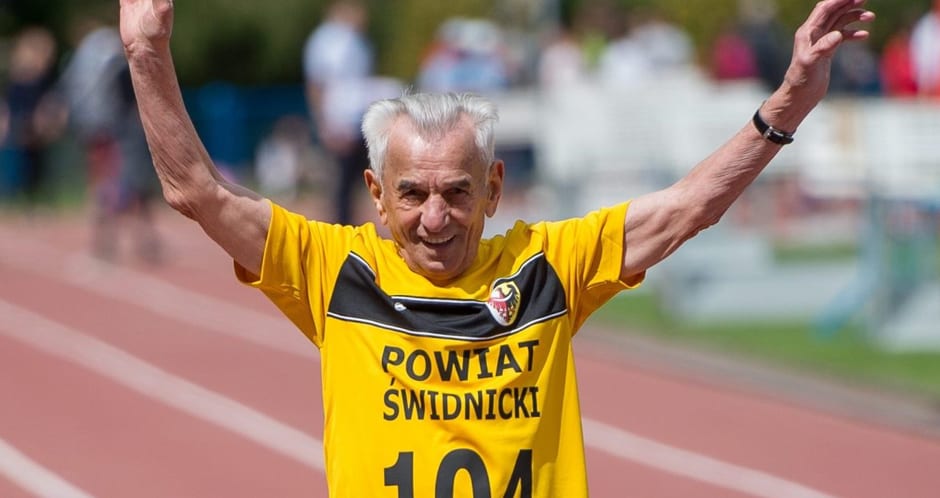
At the ripe age of 104 years, Stanisław Kowalski, has become the oldest person in Europe to run a 100m race. Graciously taking the title off his predecessor a 96 year-old gentleman, to become the oldest person in Europe to run a 100m race.
Mr Kowalski said he has spent his life ‘doing everything he wants’, which is a life lesson we could all consider for ourselves. Advice on living longer as reported by Poland’s Gazeta Wyborczaon was ‘do not overfeed and do not eat at night. Sometimes you can drink 50 grams, but not every day.’ Advice every dietitian would no doubt agree with.
It’s always inspiring to hear stories like this. Too often media portrayals of older people are reflective of a negative cultural attitude towards ageing and age. However through growing awareness and social platforms there is shift towards challenging the status quo of negative newsworthy stories to feel good positive ageing stories, as seen with Mr Kowalski. Allowing older people to defy the social norms, conveying the fullness of their life experiences and their significant contribution to society.
Part of the hindrance into society’s understanding of ageing is that until it’s something we have personally experienced then we will never completely get it. With a real understanding coming from direct experience rather than myths and assumptions. Older people have a wealth of knowledge, experience and there is much we can all learn if we take the time to listen.
To celebrate this positive ageing message The World Health Organisation (WHO) is running an Instagram photo campaign inviting people to post pictures of older people embracing life. Hashtag #YearsAhead to join in the conversation.
Instagram campaign #YearsAhead and help combat ageism (WHO, 2015).
#Ageism is extremely common. Do you know what it is?
Combat ageism!https://t.co/lhKm3VcVWv #YearsAhead #UNIDOP pic.twitter.com/nEVKmsHSeI— WHO (@WHO) October 1, 2016



5