The Royal Commission into Aged Care Quality and Safety has been in Canberra this week, hearing about the adequacy of health care access for people in the aged care system, and looking at ways to improve the interfaces between the aged care and health care systems.
On Monday, Rhonda McIntosh told the royal commission her father, Allan Sheldon, tried to tell staff he was having chest pains and thought he was having a heart attack.
“He said ‘I’m having a heart attack, I’m having chest pains’,” Ms McIntosh told the royal commission.
“He said, ‘I’m telling everybody, everybody who will come in, everybody I can tell, I’m telling them.”
But Ms McIntosh said her father’s complaints were dismissed by the facility’s staff, who told him he was just “anxious and paranoid” and “there was nothing to worry about”.
Mr Sheldon had had a heart attack previously and told staff he knew what a heart attack felt like.
The facility did not call an ambulance, and only gave Mr Sheldon Panadol.
Eventually Ms McIntosh took Mr Sheldon to an external GP, who told him he was having a heart attack and called an ambulance.
Ms McIntosh said her father shouldn’t have to “beg” to see a doctor.
“He still should be able to see a doctor when he wants to or when he needs to. He shouldn’t have to beg staff for it, or he shouldn’t have to wait until we’re able to advocate for him.
“We put him in the aged care facility because he needed complex care and we thought that he would get it there, but it appears that… they really just house you and feed you, and any type of care that you need is the family’s responsibility.”
Ms McIntosh told the royal commission her father is now living in a different facility, and the care he receives is “like chalk and cheese” in comparison to the previous facility.
The royal commission also heard from Kristine Stevens. Ms Stevens’ mother and father lived in three different residential aged care facilities in regional New South Sales.
Ms Stevens’ mother, Nina Stevens, entered residential aged care in July 2017, and later that year contracted a urinary tract infection that was not diagnosed. After spending five days suffering, confused and delirious, Nina was sent to hospital by ambulance, where doctors made the correct diagnosis.
Ms Stevens told the royal commission that Nina was relatively independent up to this point, but after the infection was bed bound and required full assistance.
In 2018, Nina developed a pressure wound. Staff did not keep the family properly informed about the wound, and in 2018, when Nina was moved to a new facility, the family discovered the wound had seriously deteriorated without their knowledge.
When a family friend, a nurse, saw the wound, she immediately called an ambulance and Nina was taken to the emergency department. Hospital staff told the family Nina had a life-threatening stage four pressure wound that was likely to be causing her great pain.
Ms Stevens told the royal commission it was only once her mother was in hospital that she received the care she needed. She was seen by a multi-disciplinary team that communicated with Ms Stevens about Nina’s condition and treatment.
However, Nina had to return to the aged care facility, despite the fact she would not have access to a clinical wound care specialist there.
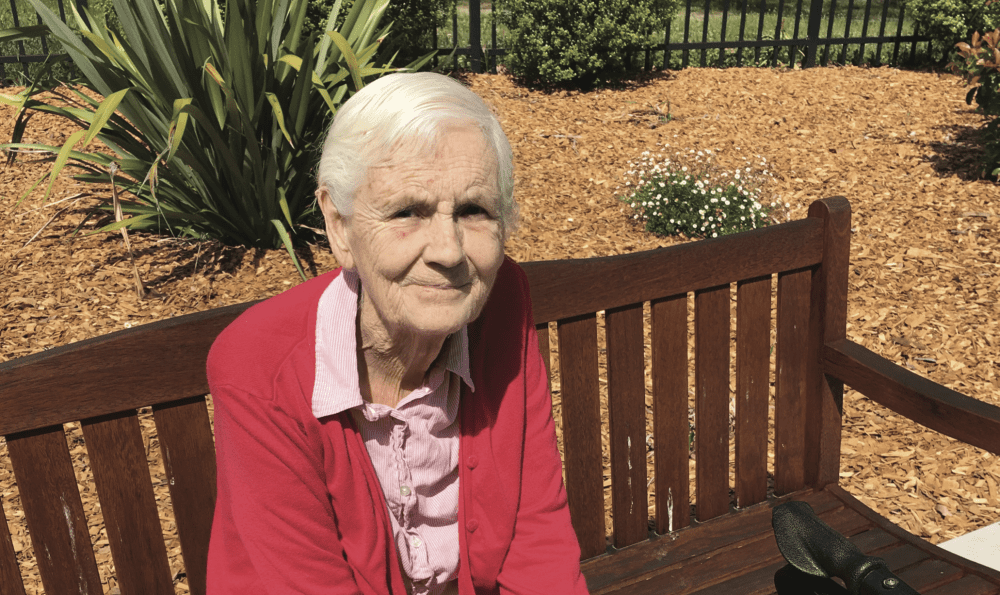
Jennifer Walton told the royal commission her mother experienced a number of falls while living in a residential aged care in the Australian Capital Territory.
Ms Walton told the royal commission her mother’s falls were largely caused by staff’s inability to cater for her dementia symptoms.
Her mother had to go to hospital unnecessarily which highly distressing to her due to her dementia, Ms Walton told the royal commission.
Ms Walton also told the royal commission her mother did not receive rehabilitation that could have improved her quality of life.
Monday’s hearings suggest there is a need for greater clinical skills in aged care facilities.
In his opening statement, counsel assisting the royal commission, Peter Gray QC, said ‘outreach’ programs can provide expert clinical advice to aged care facilities facing medical issues outside their area of experience. He said a multi-disciplinary approach was of great “importance” in these cases.
Image: Ms Walton’s mother. Supplied.


