Pressure ulcers, otherwise known as bedsores, are an excruciating skin condition that is common among aged care residents and affects one-third of frail people at the end of their lives.
Bedsores are caused by ongoing pressure and friction being applied to the skin, and there has been a lot of heated debate in recent years regarding the best way to prevent these injuries from occurring.
The repositioning of aged care residents every two-hours has been common practice for aged care and health care providers around the world for decades.
This process has also been called into question over recent years, but the Australian Wound Management Association’s guidelines still recommend repositioning and a high protein diet supplements as best-practice methods for combating this issue.
The repositioning of aged care residents and hospital patients is a manual process, but the invention of an automated-repositioning bed has the potential to provide care staff with extra time and lessen the impact on an individual’s sleeping patterns.
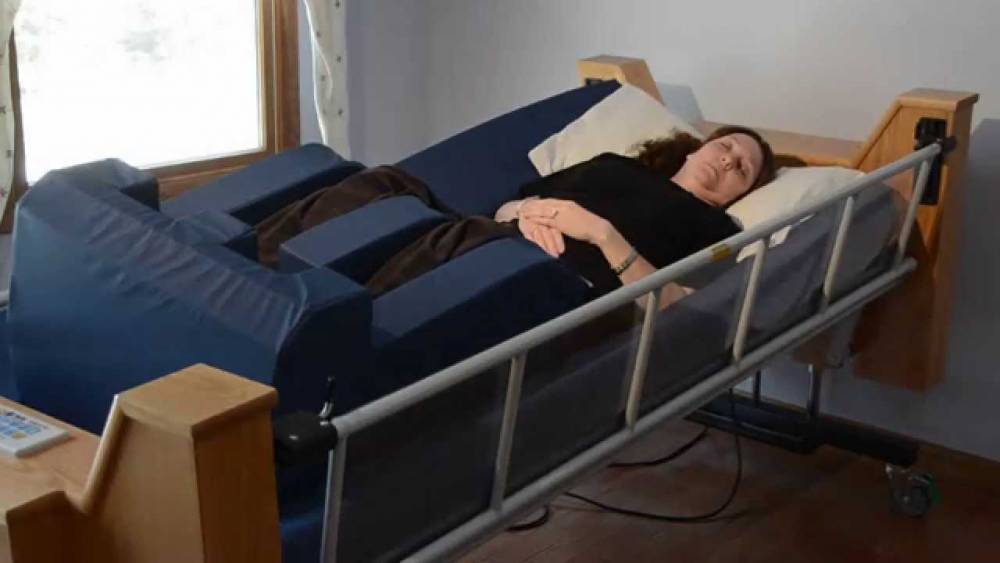
The Freedom Bed is a unique lateral rotational bed that is automated, programmable and voice controllable that was designed to meet the needs of an immobilised person with, or at risk of developing, pressure ulcers and other complications of immobility.
The bed can be programmed to turn the patient to any angle between 5 and 30 degrees per side, for a total range of rotation of up to 60 degrees.
Dwell times in each position can be set between 1 minute and up to 4 hours.
Although beds that provide incline elevation are commonplace in both aged care and hospital settings, a bed that provides lateral turning adds another valuable option for care staff and families looking to alleviate pressure on those that they care for.
Repositioning an elderly person at night time can be physically difficult and can cause major disruptions to the sleeping patterns of the care recipient and a family-carer.
Automating the repositioning process can reduce the impact that the manual process has on the care recipients’ sleep, and simultaneously provide valuable sleep to a family-carer.
The Freedom bed comes equipped with side rails, a back-up battery, programming lockout and sensors that assure safe positioning – and there is also a Patient Over-ride Button that lets the person in the bed control their own movements.
The bed utilises a specially designed multi-density foam mattress with a 2” visco-elastic topper.
Customised mattress densities and configurations are also an option, along with arm and leg bolsters that are made from memory foam.
Although the aged care sector has not been as quick to embrace new technology as other industries, new options that can improve the lives of elderly residents and those that care for them are welcomed.





how much is a freedom bed
Staff assisted (correctly)repositioning of patients helps relieve pressure, allows for reperfusion, allows for moisture management and equally important provides the caregiver an opportunity to assess the patients skin. This bed does none of that.
What a horrendous piece of kit. How can a clinician assess skin status on this device. An alternating or turning mattress would be a superior option to this device