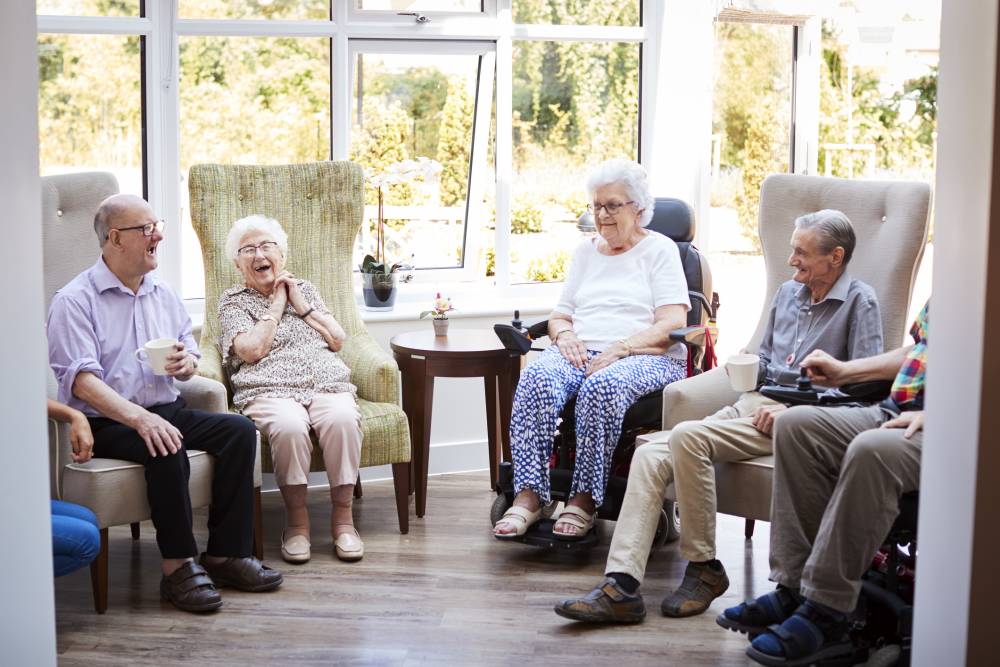
New research has shown that remaining socially active in your 50s and 60s lowers the risk of developing dementia.
While previous studies have shown that social connectedness can protect against dementia, earlier studies have only been conducted over relatively short periods.
This latest study by University College London was conducted over 28 years, making it the most robust research in this field.
AMA President, Dr Tony Bartone, told HelloCare people are living longer and the incidence of dementia is increasing.
He also said it has been well established that loneliness had a detrimental effect on health.
“Vivek Murthy, the former United States Surgeon General, called loneliness a ‘health epidemic’,” Dr Bartone said, adding that a 2016 Lifeline survey found that more than 80 per cent of Australians believe society is becoming a lonelier place.”
“Loneliness is experienced more often by older people, those who have lost or are separated from their partner or relative, people with a disability and their carers, those who are new to a local area, including migrants and refugees, and people who struggle to make social connections.
The researchers were interested in the question of whether social contact was linked to cognitive decline, after accounting for other factors such as education, employment, marital status and socioeconomic status.
The study used data from a previous study which tracked 10,228 participants who were asked on six occasions between 1985 and 2013 about their frequency of social contact with friends and relatives.
The same participants also completed cognitive testing from 1997 onwards, and researchers also used the subjects’ electronic health records to determine if they were diagnosed with dementia.
The study found that increased social contact at age 60 significantly lowers the risk of developing dementia later in life.
A person who saw friends daily at the age of 60 was 12 per cent less likely to develop dementia than someone who only saw one or two friends every few months, the study found.
There was also a strong association between social contact at the ages 50 and 70 and developing dementia.
The researchers aren’t able to exactly explain how social contact reduces the risk of developing dementia.
Senior author, Professor Gill Livingston, from the UCL Psychiatry faculty, said “People who are socially engaged are exercising cognitive skills such as memory and language, which may help them to develop cognitive reserve – while it may not stop their brains from changing, cognitive reserve could help people cope better with the effects of age and delay any symptoms of dementia.”
“Spending more time with friends could also be good for mental wellbeing, and may correlate with being physically active, both of which can also reduce the risk of developing dementia,” he said.
Dr Bartone told HelloCare social interaction engages the brain in many different ways, which seems to have a protective effect.
“It is clear that social interaction is a complex task for our brains. Interaction does utilise many nerve pathways. In simplistic terms, this regular activity of the pathways is like training, and seems to confer a fitness of sorts to the networks in question,” he said.
“It is well recognised that performing tasks like reading, crosswords puzzles, which require interaction of different parts of the brain, does keep our brains active and healthier as a result.”
Dr Bartone said doctors can help older people by encouraging them to exercise every day or to get a pet for companionship.
“Pets are wonderful companions and improve your mental and physical health,” he said.
Other ways older people can prevent loneliness include joining chat sites and forums to enable online participation, and volunteering and offering help and services to others.
“A regular family GP is extremely helpful in coordinating care and various pathways for older people, but loneliness is a whole of society issue, so doctors cannot tackle this on their own,” he said.
A spokesperson for the UK’s Department for Digital, Culture, Media and Sport told HelloCare the UK launched a ‘Loneliness Strategy’ in October 2018, and appointed a world first ‘Minister for Loneliness’.
“Loneliness is one of the biggest public health challenges our country faces,” the spokesperson told HelloCare. “We know it can have a huge impact on health and wellbeing.”
The UK’s Loneliness Strategy lay the groundwork for government to work with businesses, local authorities, health and the voluntary sector to tackle loneliness across the country. Through the program, the government has formed a network of employers to help tackle loneliness, with companies like Sainsbury’s, Transport for London, British Red Cross and the UK Government Civil Service helping to test how community spaces can support social connections.
Dr Bartone says Australia should monitor the effectiveness of the UK’s loneliness strategies, and consider its own policies in this area.



Carloline this is an excellent article (as usual) and why organisations like Mens Shed, U3A and Life Activites need to be funded to raise awareness and increase membership.