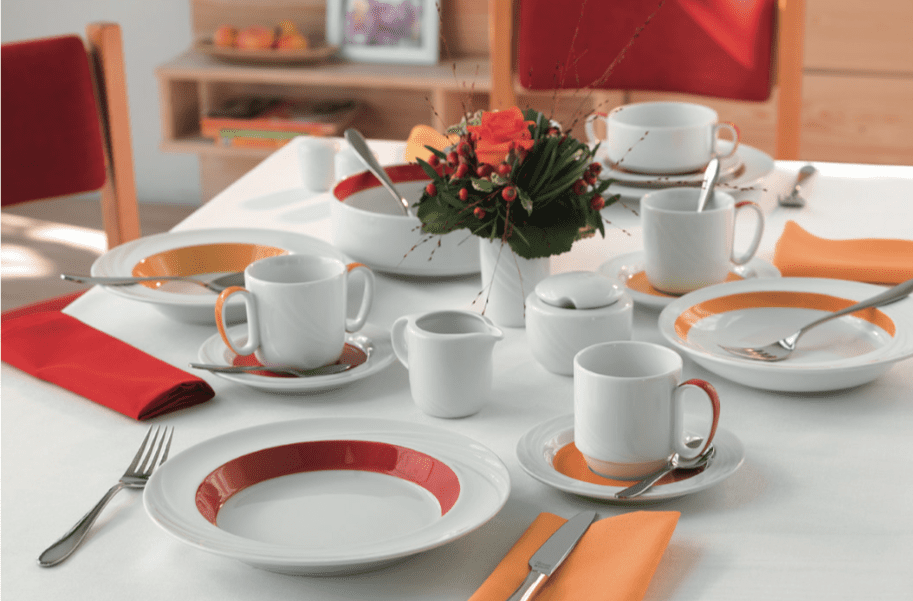
An aged care resident wept when staff at his nursing home served his meal for the first time on a plate he could eat from independently. No longer did he have to use the plate guards that had previously made him stand out from all the other residents.
At the Aged Care Royal Commission earlier this month, Lindy Twyford, hospitality manager with the Royal Freemasons’ Benevolent Institution, told this story, explaining how improvements in the way food is served in aged care can make a world of difference to residents, not only enabling them to retain their independence when eating, but also preserving their dignity and self-respect.
HelloCare reached out to Ms Twyford, to find out more about the plates, and her approach to serving meals at RFBI, where she has worked for 27 years.
Ms Twyford explained that sometimes plastic guards are put around plates for residents who need help eating their meals. These guards can leave residents who need them feeling stigmatized, embarrassed, and ‘different’ to the other residents.
But Ms Twyford said she has found a way around using the plastic guards with the specially designed crockery.
“We have found a comfort plate that is a bit higher at one end that allows the resident to feed themselves without looking different, without being singled out as having to have assistance,” she said.
“One gentleman, when he used it, he cried and said how he wasn’t different any more. He felt special,” she said.
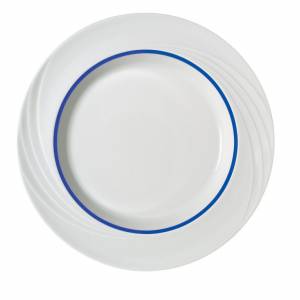
The plates are part of Tomkin’s Schonwald Donna Senior range, and they offer a range of different formats to address different needs in residential aged care. They have a wide rim which makes them easy to pick up, and the raised edge helps diners pick up food more easily, even if they have weak or unsteady hands. As well as having a lip on one side, they have a ring around the inside which helps residents see how much food is on their plates.
The plates are used throughout RFBI’s Lake Haven Masonic Village, where Ms Twyford works, and they have been so popular they have now been rolled out to other villages too.
The plates are made from good-quality china, which creates a sense of occasion around meal time and lets the residents know they are important.
“It’s made the lives of our residents really special for eating time,” Ms Twyford said.
The same range is used for all residents, so everyone feels the same, with modified plates used for those who need them – however, the difference is invisible, so there is no stigma associated with using them.
The modified crockery enables the residents to feed themselves.
Brooke Hutchens, representing the royal commission, asked Mr Twyford, “How important is it to those residents to be able to maintain the independence of eating through the use of those types of those aids?
“Very important,” Ms Twyford replied.
“Anything that improves and promotes independence is a great idea,” Cherie Hugo, dietician and founder of The Lantern Project told HelloCare.
“In a climate where there is pressure on staff, anything that promotes independence and reduces the burden on care staff sounds like a winner,” she said.
Innovations that promote residents’ dignity are always positive, she said.
“Plate guards have served their purpose, but to normalise dining sounds like a good innovation,” she said.
Ms Twyford told HelloCare she has also introduced other meal-time innovations at RFBI Lake Haven Masonic Village.
“I’m always looking for ways to improve their dignity,” she told HelloCare.
She has introduced new clothes protectors which are designed to look like shawls. Ms Twyford said she doesn’t like the look of the plastic bibs that are often used in aged care, and she said residents often become dependent on them.
In the same crockery range, RFBI uses cups that have coloured spots to enable sight-impaired residents to know where to put the cup so it won’t spill. The cups also have a higher lip.
She’s also looking for new cups, and would like to use glass. She said people use glass at home, so why shouldn’t they use glass when they’re living in a nursing home?
The innovations Ms Twyford has introduced at RFBI have contributed to her being nominated for – and winning – a number of high-profile awards.
She was the 2018 national winner of SoupedUp’s Hospitality Manager award.
In 2018, she also won first place at the Hospitality and Lifestyle Aged Care Awards for her outstanding commitment to improving the quality of resident care. She was also a finalist in the catering innovation category.
Of course, what works for one may not work for others, but Ms Twyford’s innovations are certainly improving the lives of residents at RFBI. By seeing where problems lie, and proactively setting about finding a solution, she is the changing lives of the aged care residents where she works for the better.
What successful innovations have you seen introduced at your nursing home?
Main image: Tomkin.



https://www.topshelfconcepts.com.au/media/brochures/pdf/TSC016_Aged_Care_Resort_Style_INNOVATIVE_Solutions_2019_Brochure_Email_Version.pdf
Aged Care is such an important topic!
The care, and the overall atmosphere can be improved with food and beverage offerings.