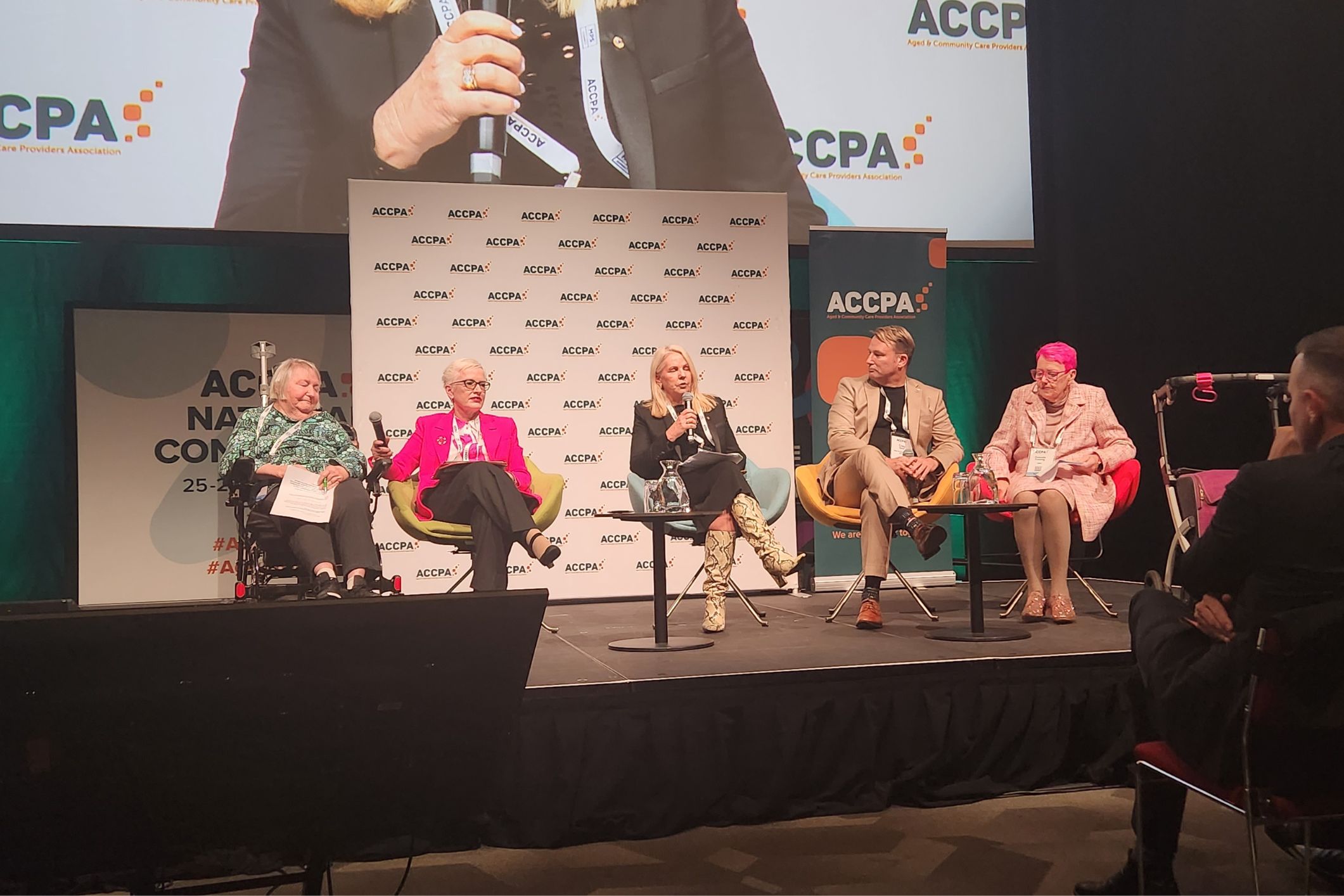
As over 2,000 representatives from the aged care sector gathered in Adelaide for the first day of the ACCPA (Aged & Community Care Providers) National Conference, a smorgasbord of topics were up for discussion. But they arguably saved the best for last as the conversation turned to trust and how it can be rebuilt and strengthened from the consumer’s perspective.
The speakers often touched upon how the Royal Commission into Aged Care and the COVID-19 pandemic heavily impacted the public’s perception of the aged care industry. Hence why building trust is so important and why consumers – aged care residents, home care clients, their families, friends and advocates – need to be at the centre of change.
Craig Gear, Chief Executive Officer of the Older Person’s Advocacy Network (OPAN), is an industry leader who advocates and promotes the voices of consumers who raised the point about the Aged Care Act having a new perspective which presents a great opportunity for the sector from 2024.
“[Individual] rights was something I was really passionate about and I was passionate to hear peoples’ voices coming through. And we’ve been working to build and bring forward the voices of older people, people using the system [to rebuild trust],” Mr Gear said.
“We are going to put human rights front and centre. We have this amazing opportunity to build back trust.”
Sitting at the centre of change is a desire for clear communication. Improving communication between aged care providers and consumers was highlighted by Mr Gear, but it was also a focal point for dementia advocate Gwenda Darling.
Ms Darling is a member of OPAN’s National Older Persons Reference Group and as someone who lives with dementia, she said communication, consistency and clarity are extremely crucial aspects that aged care providers need to deliver on.
“We need good clear written communication from the case managers who support us, the providers in promotional material… and the support to be flexible and person centred. The person you’re supporting needs to be leading the care in the guidelines,” Ms Darling said.
She requested more initiative from the care providers: staff who could contact residents to check in on them and ask if they need support at a specific time, rather than waiting for care recipients to call just when something goes wrong.
The need for more effective and clear communication was echoed by Ms Darling’s fellow Reference Group member, Lesley Forster.
“It’s the little things that cause the most anxiety, like taking a shower in the morning and not discussing that you don’t have to get up. Or the worker doesn’t turn up to clean. Miscommunications that can be dealt with at the ground level but very quickly blow out into big issues unnecessarily.”
Ms Forster also likened becoming a consumer to starting a new job. There is a lifestyle change where older people suddenly receiving care and support services have to accept that things may not be done in the way they want and that they can no longer live the life they had. However, this doesn’t mean they should lose sight of who they are, and nor should service providers ignore the consumer’s wants and needs.
“Being a consumer is almost like being in a job. It’s a whole change in lifestyle. I hate the way the cleaner does the dishes but you have to get it done and I put up with it because I like the way she does other things,” she explained.
“Someone comes in and they do things differently and it can make you quite angry at times… It’s a job to learn to be a consumer. But don’t give up who you are… but don’t argue every little thing.”





