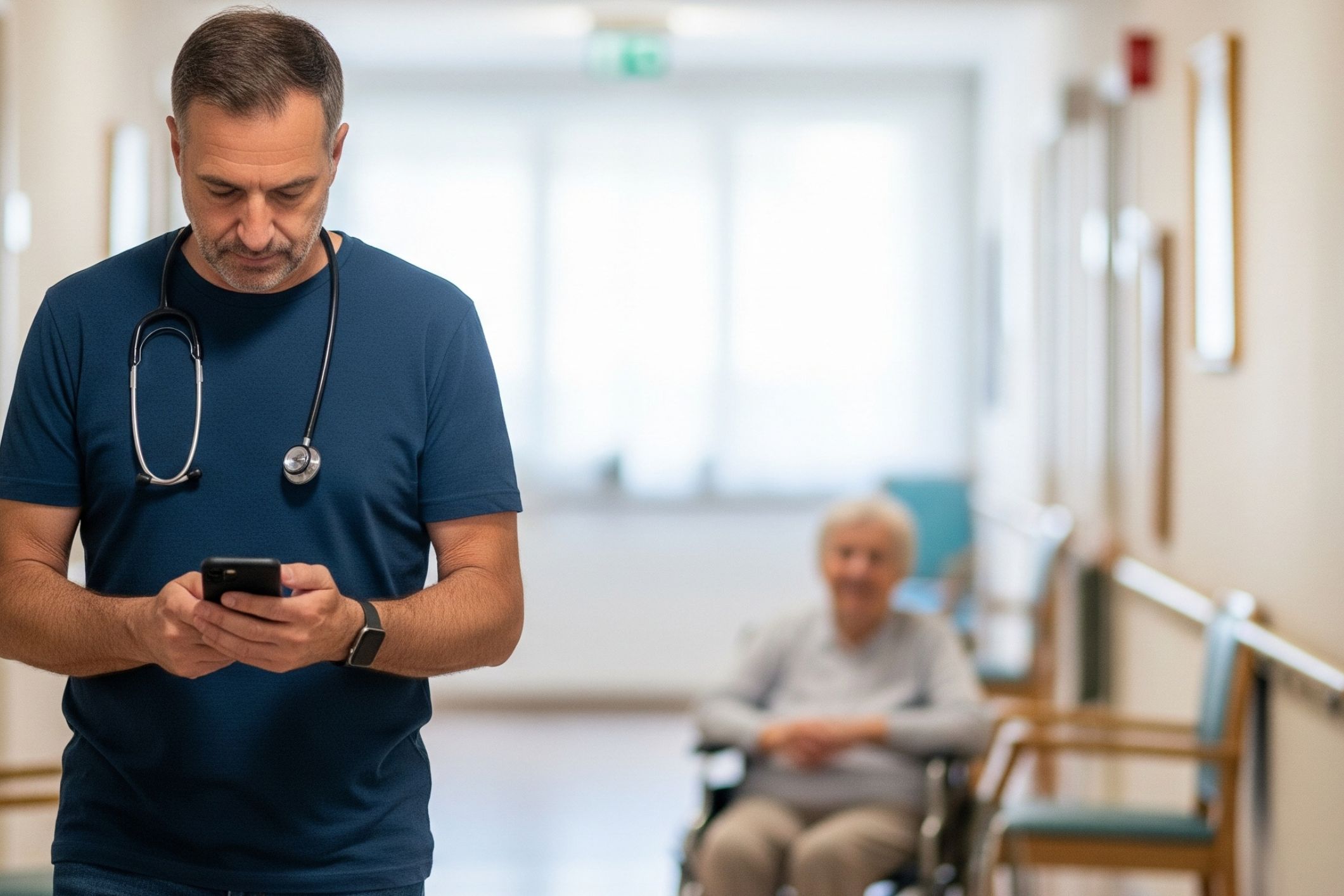
Aged care residents deserve thorough, compassionate medical care – particularly after an incident like a fall or sudden illness. But increasing reports suggest that some home visiting doctors and locums may be delivering far less than what’s required.
One granddaughter recently shared her concern after a doctor visited her grandmother out of hours following a fall. “They didn’t even check her temperature or blood pressure,” she said. “It was a quick in-and-out, with barely a word said. Then they handed over a Medicare form to sign and left.”
Unfortunately, this isn’t an isolated incident. A night duty nurse at a residential aged care home told HelloCare that she’s witnessed similar behaviour — locums turning up late at night, doing a “visual once-over” and leaving without performing any physical examination or basic observations.
“It was like they couldn’t wait to get out of there,” she said. “We had a resident with stomach pain and no one palpated her abdomen or checked her vitals.”
Paid to show up, not to stay
Under the current Medicare Benefits Schedule, a home visit to a residential aged care facility can attract rebates of up to $151.20 per patient in after-hours situations – with higher amounts applicable if it’s deemed urgent or complex.
In some cases, multiple patients are seen in one visit, increasing the billings for the provider. While most clinicians aim to deliver appropriate care, these figures raise ethical questions when assessments are rushed or incomplete.
Is a glance enough to justify a claim, and more importantly, is it enough for the safety of the resident?
Quality slipping through the cracks
This isn’t about vilifying locum doctors, many of whom are working under significant time pressures, often covering large regions or responding to last-minute call-outs due to the sector’s workforce shortages. Access to GPs in aged care remains one of the most persistent challenges.
But when locum visits fall short, with no documentation, no baseline observations, and minimal engagement with the resident, the impact on care is significant.
Aged care staff are then left to manage risk, residents may deteriorate without proper medical follow-up, and families are left in the dark.
What needs to change?
We know aged care homes are under pressure. So too are the GPs and services trying to support them. But residents and their families deserve to feel safe — not short-changed — when the doctor walks in the door.





TALKS CHEAP ,BUT WHO IS GOING TO FIX IT ??
We have the same problem. We have had 2 residents die, 1 he would not give a death certificate for because the gentleman was a new patient to him. All the staff knew he should of been on palliative when he went into the facility, but that was never discussed and all his S8 drugs for pain were taken off him by that said Dr on the first visit. It infuriates me as a carer. Not the first time it’s happened with this Dr either. He died a few days after that faithful visit. In pain. Not good enough. Same with our second. She had an “event” likely a brain bleeding. Begain leaning to the left. Dr didn’t do anything. She died 2 weeks later. Im sad that can’t get the drs care that they deserve.
Hi Shazza, I think it disgusting that the elderly (of which I am one) are not given their appropriate pain relief S8 meds ( of which I am also one) when entering care. I will never enter care because of this I would be screaming in pain because of severe spinal stenosis!! This whole business is completely screwed and the government could not care less regardless of what they are trying to spruik.