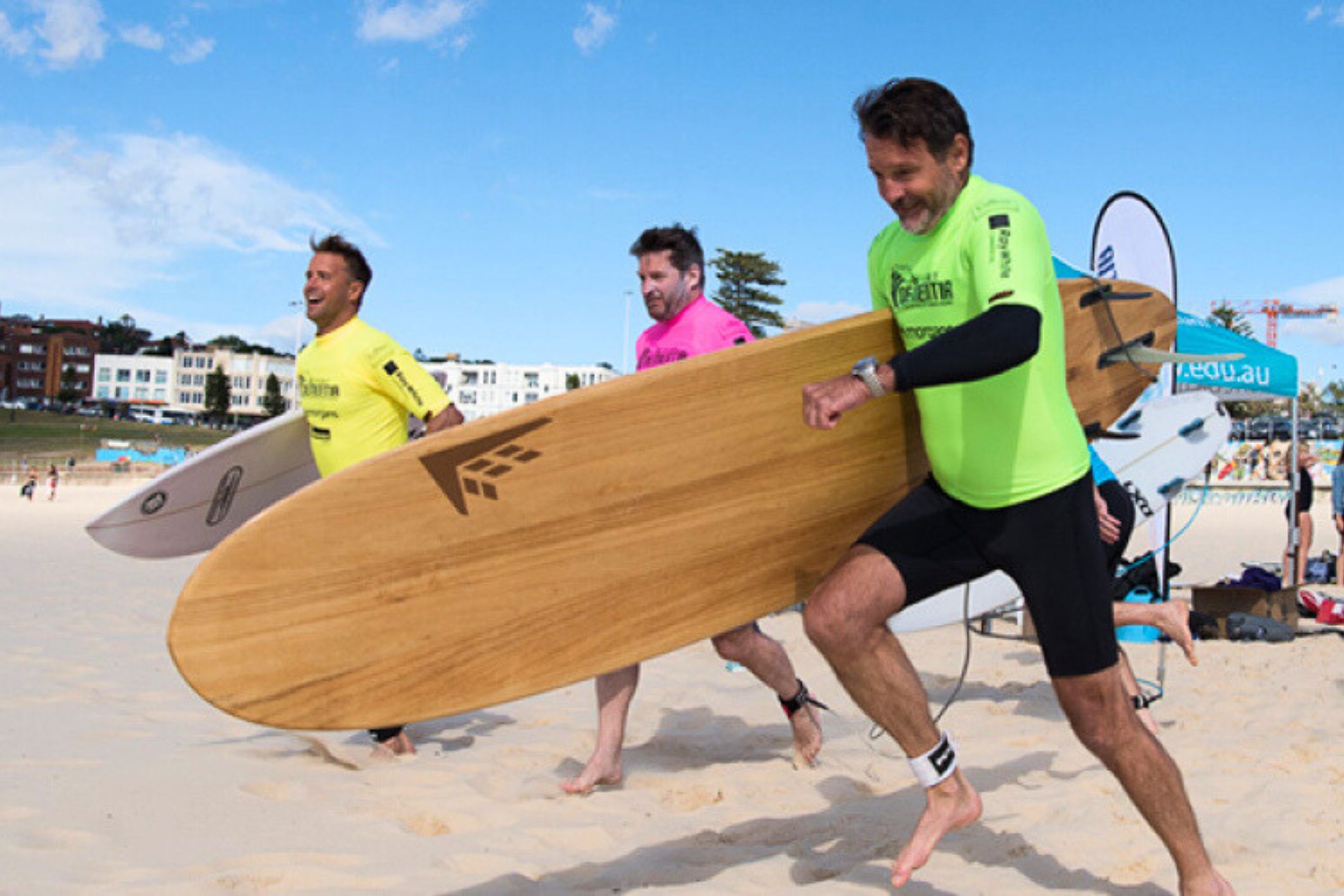
Surfing legends Owen Wright and Mark ‘Occy’ Occhilupo are teaming up with property industry executives to tackle dementia and its growing prevalence in our communities.
The Australian pro surfers will be hitting Sydney’s iconic Bondi Beach on April 5 to surf Wipeout Dementia and help advance research led by UNSW’s Centre for Healthy Brain Ageing (CHeBA).
This follows the release of new data from Dementia Australia showing the number of people with dementia is expected to nearly double by 2054.
It reveals that dementia rates will increase by 93% by 2054. Currently, more than 421,000 people are living with all forms of dementia in Australia and without a medical breakthrough, this will grow to 812,500 people by 2054.
2020 Olympic bronze medalist Owen Wright witnessed the start of his father’s decline to dementia not long after he suffered a traumatic brain injury from a heavy wipe out while competing for a world title at Pipeline.
“Dad was there for me when I needed him most throughout my recovery and life,” said the recently retired professional surfer.
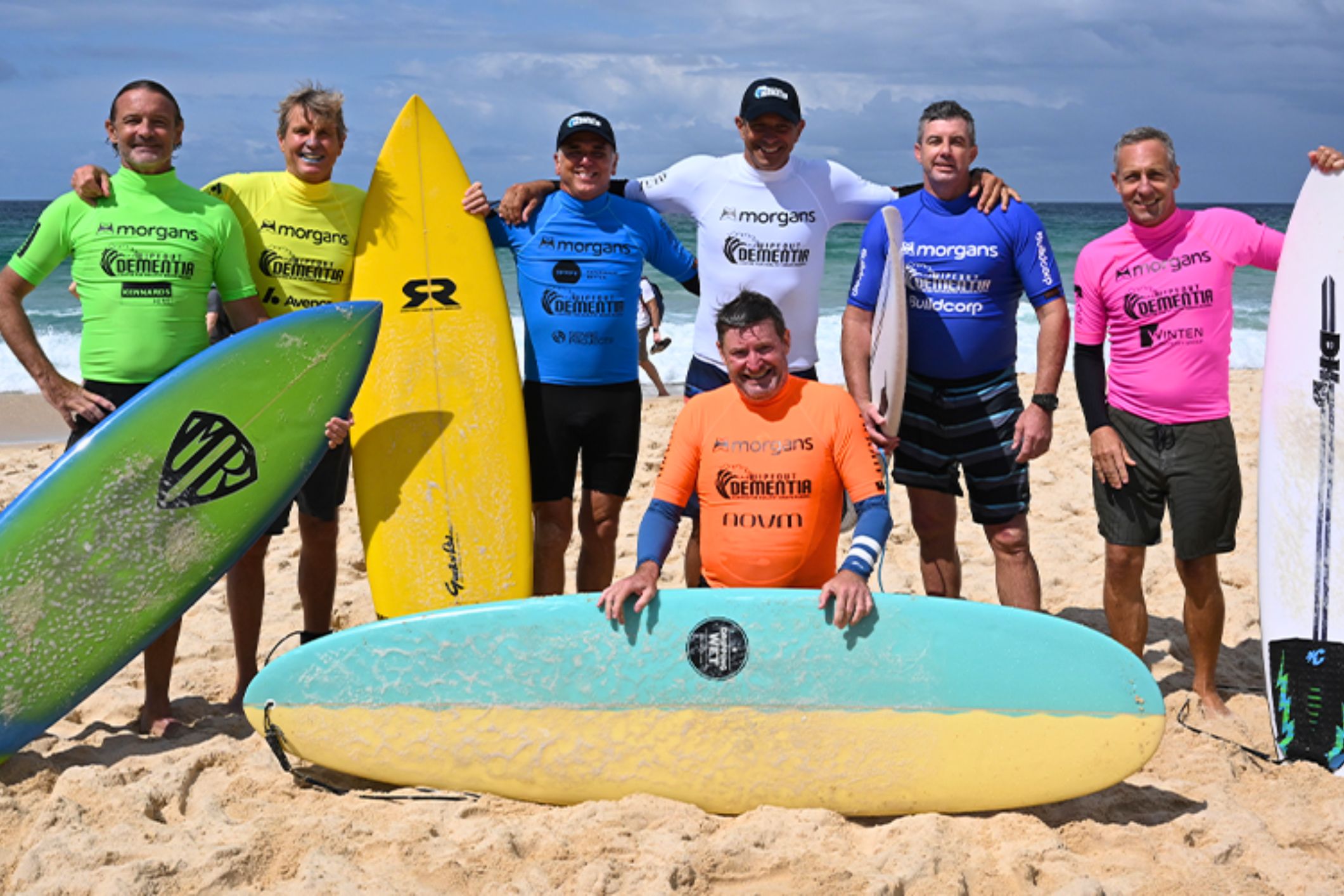
Over that time many of the surfers have lost a loved one to dementia or have had a family member diagnosed with the disease, including Steve Watson whose father – a life-long surfer – passed away from dementia in 2019.
“I lost my Dad to Lewy body dementia in 2019 and it was devastating to watch him being robbed of his vitality,” said Mr Watson.
Mr Occhilupo also added it was an “Honour to be an Ambassador for this worthy cause and in some small way help promote healthy brain ageing in this country.”
The professional surfers will join long-term Wipeout Dementia Ambassador and 1978 World Surfing Champion Wayne ‘Rabbit’ Bartholomew AM to drive key messaging around the need for physical activity throughout life to reduce the risk of dementia in late life.
Seven teams will surf off against each other at this year’s 13th Wipeout Dementia event, with 56 surfers across the property industry riding the social impact wave to advance large-scale research into the prevention of dementia and increase awareness about how to modify lifestyle behaviours to ward off cognitive decline.
The event has helped raise more than $2.5 million for the cause.
CHeBA Co-Directors Professor Henry Brodaty and Professor Perminder Sachdev said evidence suggests that the brain abnormalities that lead to Alzheimer’s disease start 20–30 years before any symptoms become apparent, indicating that our behaviours in young and mid-adulthood have a significant impact on our brain health in old age.
Vascular cognitive disorders represent a major healthcare burden on society as the second most common form of dementia after Alzheimer’s disease. Vascular cognitive impairment is a decline in thinking abilities caused by disease that damages the brain’s blood vessels.
CHeBA is ramping up its Vascular Dementia research focus to develop biomarkers for this disorder to make a more precise and early diagnosis possible. This will hopefully lead to treatment development that will stop cognitive impairment from progressing.
Since the first event in 2015, the number of Australians living with dementia has significantly increased and has become the leading cause of death in women – surpassing heart disease.
You can find out more information about the event and how to sponsor a surfer at the Wipeout Dementia website here.


