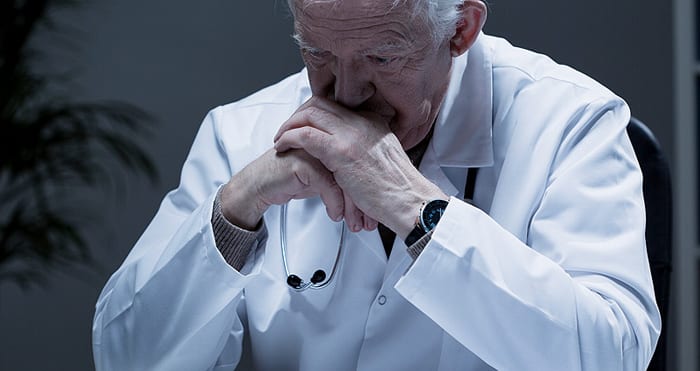
Doctors, nurses, specialists and other health care workers are meant to help people heal, to help prevent death.
And yet, in the past few months there has been an alarmingly high rate of suicide among doctors.
In the past few months alone, suicides of four young doctors in New South Wales have garnered attention from the media and has called for a review of mandatory reporting laws.
This includes the January deaths of Chloe Abbott, fourth-year doctor-in-training who was Sydney’s St Vincent’s Hospital and John Moutzouris, a doctor at Liverpool Hospital who was about to start special training in renal medicine.
A colleague of Chloe’s recalled that she was grappling with the death of another colleague, a young registrar who had also taken her own life.
Suicide and mental health issues are complex, and for families and loved one it can be unpredictable. However, there is a growing acknowledgment that the demands of medicine can be burdensome on professions and that there needs to be more support available.
Doctors hold large responsibility that can weigh them down, they are exposed to human suffering and on a daily basis they are expected to handle life or death situations.
Doctors are under a great deal of pressure; the shift work with long hours, shift work, some in postings that are away from family and friends, for many doctors there is ongoing training and exams that consume any spare time.
And there is also the hidden “dark side” of the medical field, the highly competitive culture, rife with bullying, harassment and sex discrimination. It doesn’t take much to be dismissed as “not being cut out” for medicine.
It’s no surprise that a 2013 beyondblue survey found doctors had higher rates of psychological distress and attempted suicide more than the general population.
The survey found that a quarter of doctors had had suicidal thoughts and 21 per cent had ever been diagnosed with depression.
According to Kim Arlington, who’s father was a physician that committed suicide, “it is unusual to find a doctor who has not lost a colleague – or several – to suicide.”
She explains that the “deaths often come out of the blue, and leave families shattered, patients devastated and colleagues and communities shaken.”
Of her own experiences, she says her father had told her mother of his depression, though without revealing its depths.
“It still pains me that he died alone. Had he been able to speak openly about his darkest thoughts, and given all of us who loved him every chance to help, he might be here now – a part of our lives, and still living his.”
“Eventually I came to understand that Dad had not made a choice to leave us. It wasn’t death he wanted, but relief. With more time and treatment, he could have found it.”
“There were far better paths than the one he took; lost in his despair, he just couldn’t see them.”





