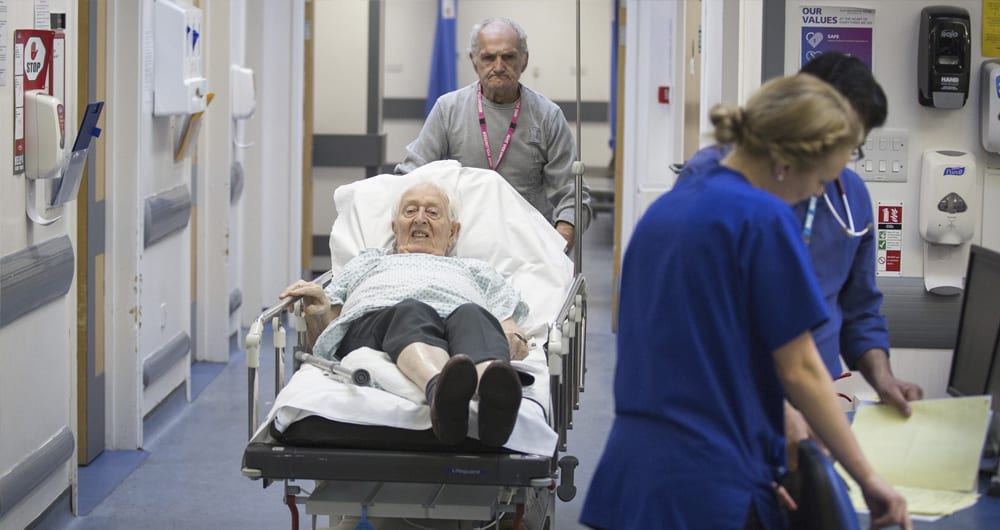
Emergency departments are stressful for any patient who finds themselves admitted to one.
But it can be especially challenging for older patients who may weak and frail, and may be confused and agitated in a busy emergency department where there are other distressed patients and medical staff rushing all around them.
According to the Australian Institute of Health and Welfare, approximately 41% of all hospital admissions were for people over 65. Many of these people are elderly, frail and may have other medical conditions, such as dementia.
People with dementia have a higher risk of finding themselves in the emergency rooms, do to increased risk of developing infections such as pneumonia and urinary tract infections.
However, despite frequent admissions of elderly people, these emergency rooms are not equipped to handle and manage patients who may have symptoms of dementia or other age related conditions.
Most hospital emergency rooms are busy places, with a lot of stimulation, bright lights and noises – that can disorientate and distress many older people who have some degree of impairment.
That is why it is crucial that emergency departments are able to be able to support older people if they are admitted to hospital.
In the UK, one hospital has taken it upon themselves to create a their own emergency department for elderly patients.
Norfolk and Norwich University Hospital will have the first specialist emergency department for people who are over 80 years old.
Next month, when the specialised department opens, the elderly will be admitted straight to the dedicated department when they arrive at the hospital.
The department would be fully staffed with a team of emergency doctors, geriatricians and specialist nurses who are across the board are trained in how to care for some of the nation’s most frail patients.
Dr Martyn Patel says that this will mean an improvement of care for the UK’s elderly.
“We’ve got to do something that no-one else has done before in the UK, to ensure our older patients are able to receive the best care most appropriate to their needs in a timely manner,” he said.
If this British hospital finds that having a separate emergency department for older patients is beneficial and efficient, similar practices could be seen around the world.
Australia has a rapidly increasing ageing population that could potentially see better care if they adopted the same initiatives. What do you think?
What do you have to say? Comment, share and like below.



Need to be very careful when categorising people as ‘elderly’.
If they had a ratio carers to patients there would be less falls etc, that would ease hospitals up. Aged care providers are only in for the money not residents.