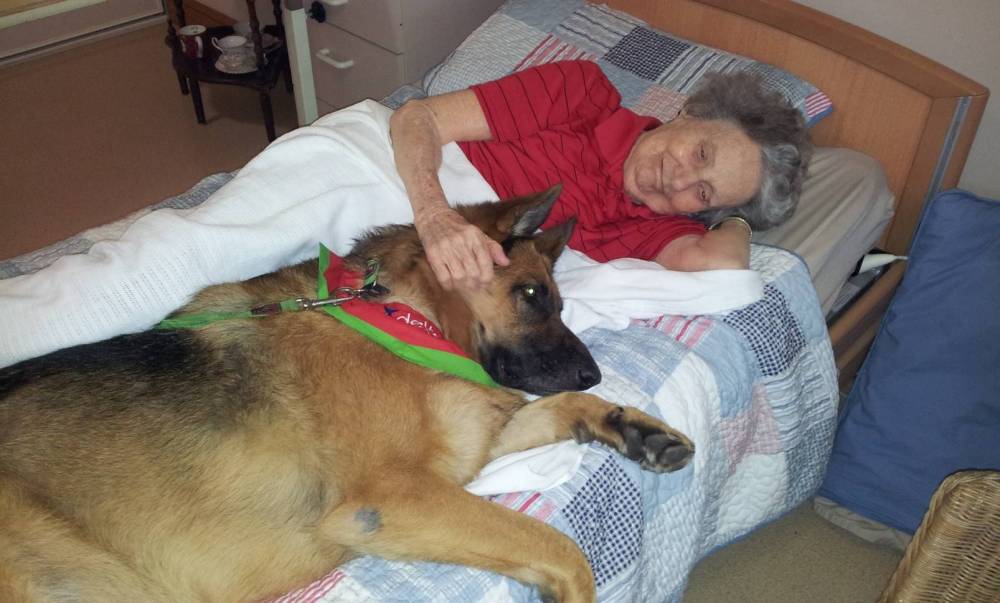
While there is certainly no shortage of weird and wonderful pets these days, there is a reason that dogs have earned the nickname ‘man’s best friend.’
Dogs can provide a sense of both joy and companionship to older people who are lonely, and it has been proven that interacting with animals, in general, can also have a profound impact on the lives of elderly people who are living with dementia.
Over the last few years there has been a definite increase in the number of aged care facilities that have begun to utilise animals as a way to stimulate their elderly residents, and one program that is having a big impact in the hearts and minds of many elderly people around the country is taking everyday Australians and their four-legged best friends – and turning them both into volunteers.
Not-for-profit organisation, The Delta Society, is currently combating issues of depression and loneliness in a number of hospitals and aged care facilities with their delta therapy dog teams that exist in every major city around the country.
Dog owners who volunteer have their own dog assessed based on their suitability for the program, and then if the dog is deemed successful, they receive accreditation to join other like-minded volunteers in sharing the joy of a pet with elderly people in aged care facilities and hospitals.

Delta Society’s Communication and Engagement Specialist, Deborah Rodrigo, spoke with HelloCare and highlighted the positive effects that these dogs are having on a number of lucky aged care residents.
“We see a variety of different reactions but one of the things that really stands out is that the dogs can have a really calming effect on elderly residents but there is also the engagement aspect as well,” said Deborah.
“We know that aged care facilities do a lot in terms of activities but the dogs actually provide a really healthy distraction from any other issues that residents may have with their own health. It could be 5 minutes, it could be 10 minutes, but there have been a number of occasions where we have seen tears of happiness from people interacting with the dogs.”
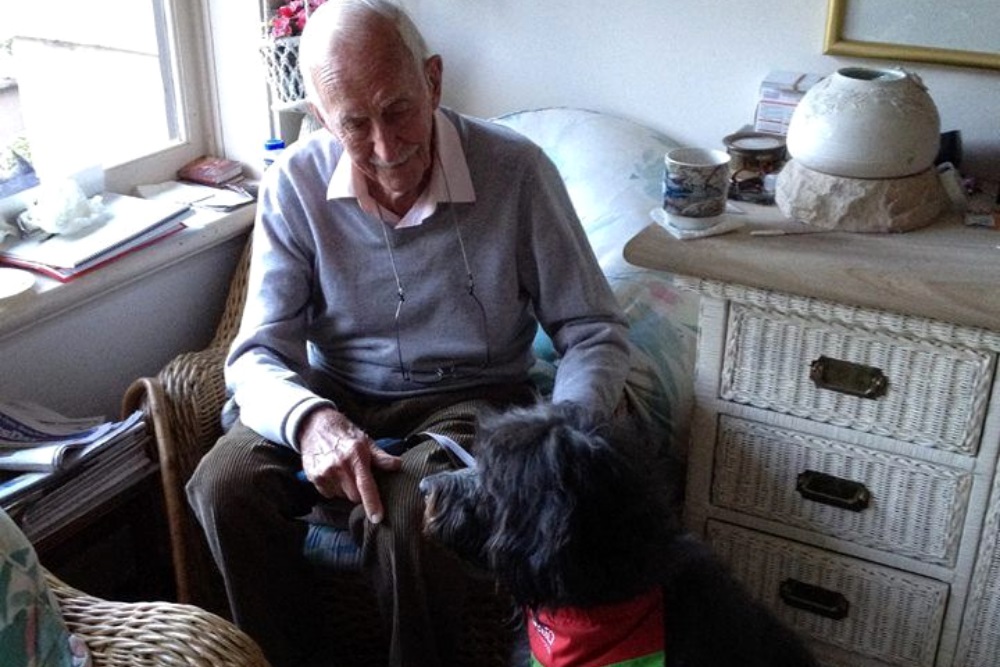
“Some residents are from a generation where they aren’t familiar with seeing dogs inside the home, so sometimes you get a little bit of resistance, but our volunteers often report that people who have had this initial resistance actually look forward to seeing the dog again. In fact, residents don’t even have to physically interact with a dog to receive positive benefits from a visit., seeing others interacting and observing the dog can still be a very positive experience.”
“There are other positive outcomes that we didn’t necessarily expect initially, like the support that staff gets from interacting with the dogs and the fact that the dogs are a great conversation starter when there are family members visiting.”
Delta Society does not discriminate in terms of the breed of dog being used to volunteer, and Deborah was quick to point out that being eligible for this program comes down to temperament and the relationship that the dog has with its owner.
“We don’t have specific breed or preference, there are some breeds that we are more cautious about but it really comes down to temperament, all dogs with the right temperament that have that bond and meet all the other requirements can be a therapy dog,” said Deborah.
“Will they enjoy meeting new people all the time? Can they handle things happening around them in a calm manner? Do they have a strong bond with their owner? These are the things that we look for.”
“We have all types of dogs, from Chihuahua’s all the way through to big St. Bernards.”
“Greyhounds are a beautiful dog that match really well with our program, firstly for practicality – they stand about the same height as bed level which means that patients or residents don’t have to bend down to pat them.”
“Secondly Greyhounds are extremely calm. Even though these dogs are involved in racing, it actually goes against what their temperament prefers, they actually prefer a very relaxed and calm environment, and that suits a lot of elderly aged care residents perfectly.”





