The world has suddenly closed in on the residents of aged care facilities. In Australia, the prime minister has announced tight controls on who can visit and when, and social distancing and infection control measures mean the opportunity for physical and personal closeness is disappearing.
Similar restrictions are in place in aged care homes all over the world.
For those living in aged care, the restrictions must be deeply upsetting. Similarly, for those with loved ones living in aged care, it’s a distressing and worrying time.
Not being able to spend time with a loved one can lead to feelings of isolation and despair, especially at this difficult time when there is so much worry about the health and vulnerability of older people.
But hope can rise from adversity, and some families have found creative ways to remain in close physical contact with their loved ones in ways that comply with all the necessary restrictions and bans but allow the sharing of good times while at the same time keeping loved ones safe.
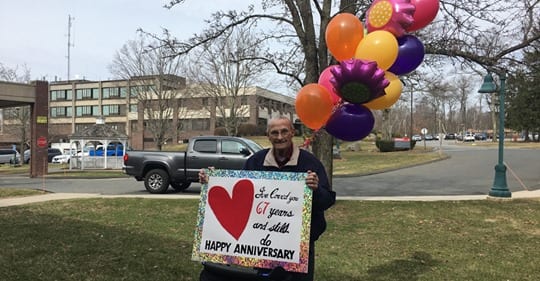
Bob Shellard was forced to spend he and his wife’s 67th wedding anniversary apart. His wife, Nancy, lives in a nursing home and is living with dementia. Coronavirus restrictions mean Mr Shellard is restricted from visiting his wife, so on the weekend he turned up outside her window with balloons and a sign.
‘I’ve loved you 67 years and still do. Happy anniversary,’ the sign read.
Ms Shallard waved from her second-storey window and blew kisses to her romantic husband below.
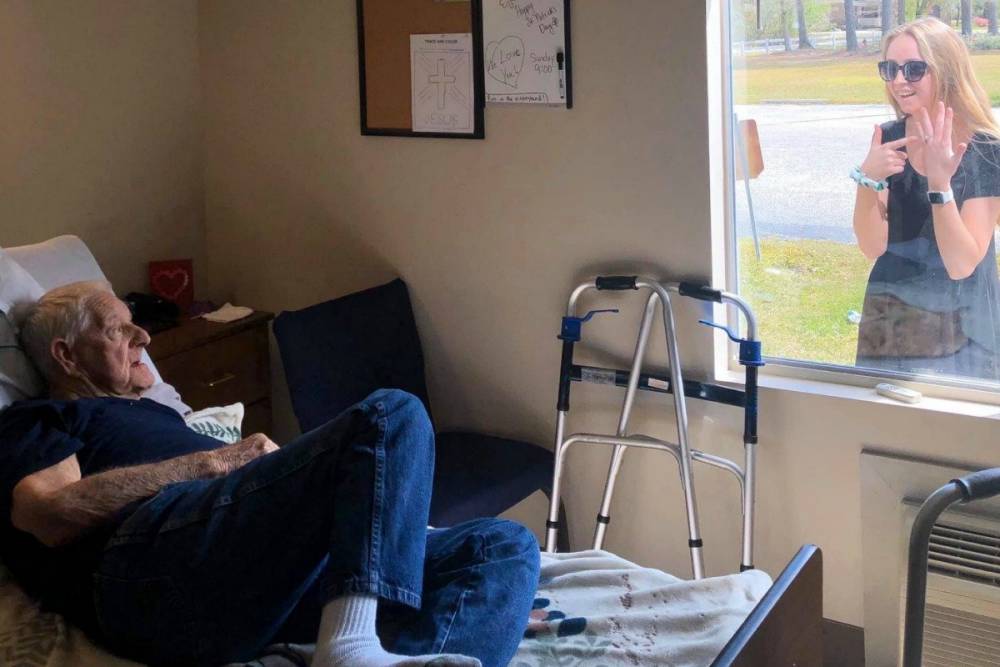
Carly Boyd got engaged a few days ago, but when it came to sharing the news with her friends and family, there was one special person she hated to see missing out – her grandfather.
Ms Boyd’s grandfather is living with dementia and lives in a care home.
With the help of the staff at the facility where he lives, Ms Boyd was able to share her happy news with her grandfather.
Standing outside his window, she pointed to the ring – and a staff member captured the moment in this lovely photo below.
Sandy Hamilton, an aged care worker from Minnesota, shared a picture on Facebook of a father and son sharing special times together despite a lock down at his father’s aged care facility.
The son has parked a chair outside his father’s window, and put his feet up. The two speak on the phone facing each other through the window.
The image has been shared more than 840,000 times and received more than 20,000 comments.
“Where there’s a will there’s a way” one commenter wrote, which just about sums it up.



Hello Caroline
Following on for this article it would not take much for staff to ring family member on agreed phone at a arranged time of the day when the patients was at their likely best state of health and mind so that a comforting call could be made.