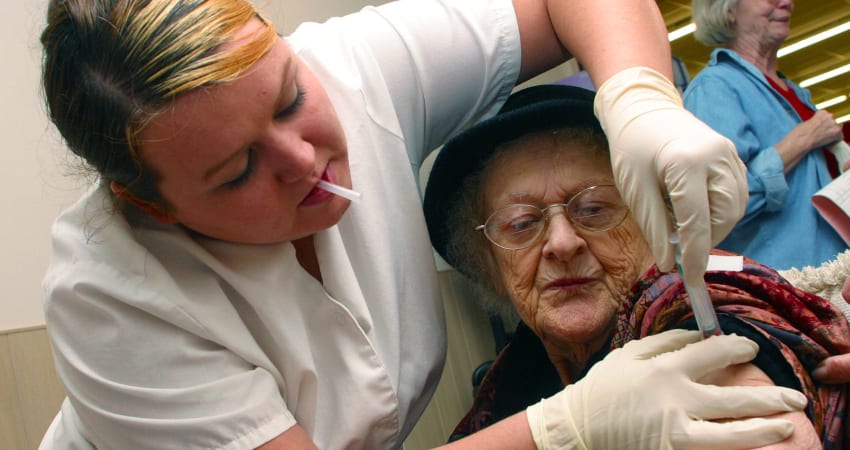
Over 90,000 cases of influenza have been reported this year, which is two and a half times the amount recorded in the same period last year.
The elderly have been particularly vulnerable this flu season after the outbreak lead to the deaths of seven residents in a Victorian retirement village and six in nursing homes across Tasmania.
The Federal Government are looking into ways to boost vaccination rates among workers in aged care facilities, including making the flu vaccine compulsory, following an increase in deaths this winter.
Health Minister Greg Hunt has requested Australia’s Chief Medical Officer, Professor Brendan Murphy, investigate ways to ensure all aged care workers are properly vaccinated against flu.
“I will work with the medical authorities, health care workers and the aged care providers on how we can make it compulsory for those working in aged care facilities,” Minister Hunt said.
“We cannot continue to have a situation where people, whose immunity is already low, are at risk from others who may be infected.”
“Our job is to protect those who need our care,” Minister Hunt said.
Currently, there is no requirement for aged care workers to be vaccinated under law, however providers have a duty of care to provide the safest possible environment for their residents and carers.
Under the National Immunisation Program, those eligible for a free flu shot include people aged 65 years and over, most Aboriginal and Torres Strait Islander people, and those who suffer from chronic conditions.
Aged Care Minister Ken Wyatt has instructed the Australian Aged Care Quality Agency to conduct an urgent review into the practices of all aged care facilities.
“Older people are always vulnerable to the flu, but the many deaths this year are unacceptable,” Minister Wyatt said.
Leading seniors’ advocacy body, COTA Australia, has welcomed the government’s announcement with their Chief Executive, Ian Yates, saying he was concerned that rates of flu vaccination among aged care staff, and even among doctors who visit facilities, were unacceptably low and inconsistent between facilities.
“Vaccination is less effective among very old people; which makes them more susceptible if exposed to others with symptoms, and many residents have other health issues that make them more vulnerable,” Yates said.
“Keeping flu out of aged care homes is also critical because it can spread so quickly from resident to resident.”
“Aged care providers have a legal obligation to achieve optimum physical health for care recipients and the ensure they live in a safe environment… this includes ensuring that staff are not carriers of the flu virus into nursing homes.
“In some parts of the country health authorities have worked successfully to require that all staff are vaccinated, but this is not a universal requirement and it should be,” Yates said.
Pat Sparrow, CEO of Aged & Community Services Australia has said that ACSA will also work with Government to ensure older Australians are protected from the spread of ‘flu
“We extend our sympathies to those grieving families who have lost loved ones due to influenza this Winter,” said Sparrow.
“We understand community concerns about the spread of flu, particularly amongst older Australians living in aged care facilities, and want to see as many residents and staff as possible protected.”
Aged care providers already proactively encourage staff to be immunised by offering paid-for or subsidised immunisation programs, adhering to Guidelines issued by State Departments of Health to safeguard residents and staff.
“We understand that vaccination alone does not prevent the spread of infectious diseases and other prevention measures are important,” said Sparrow.
“Common sense plays a part and, in the context of a close community environment such as a residential aged care facility, the most important thing is to stay away from a facility if you are unwell – something that applies to families, visitors, staff, indeed – anyone coming into contact with older Australians particularly vulnerable to the spread of infection.”
What do you have to say? Comment, share and like below.



If the vaccination creators had managed to predict the correct strain and include it in this years jab then the death rate would have been less. Greater than 60% of influenza patients I received in hospital had received this years vaccination. Blaming staff is very very shortsighted as even if they had been vaccinated it may not have helped..
Once again you have published an old article from Sept 2017!