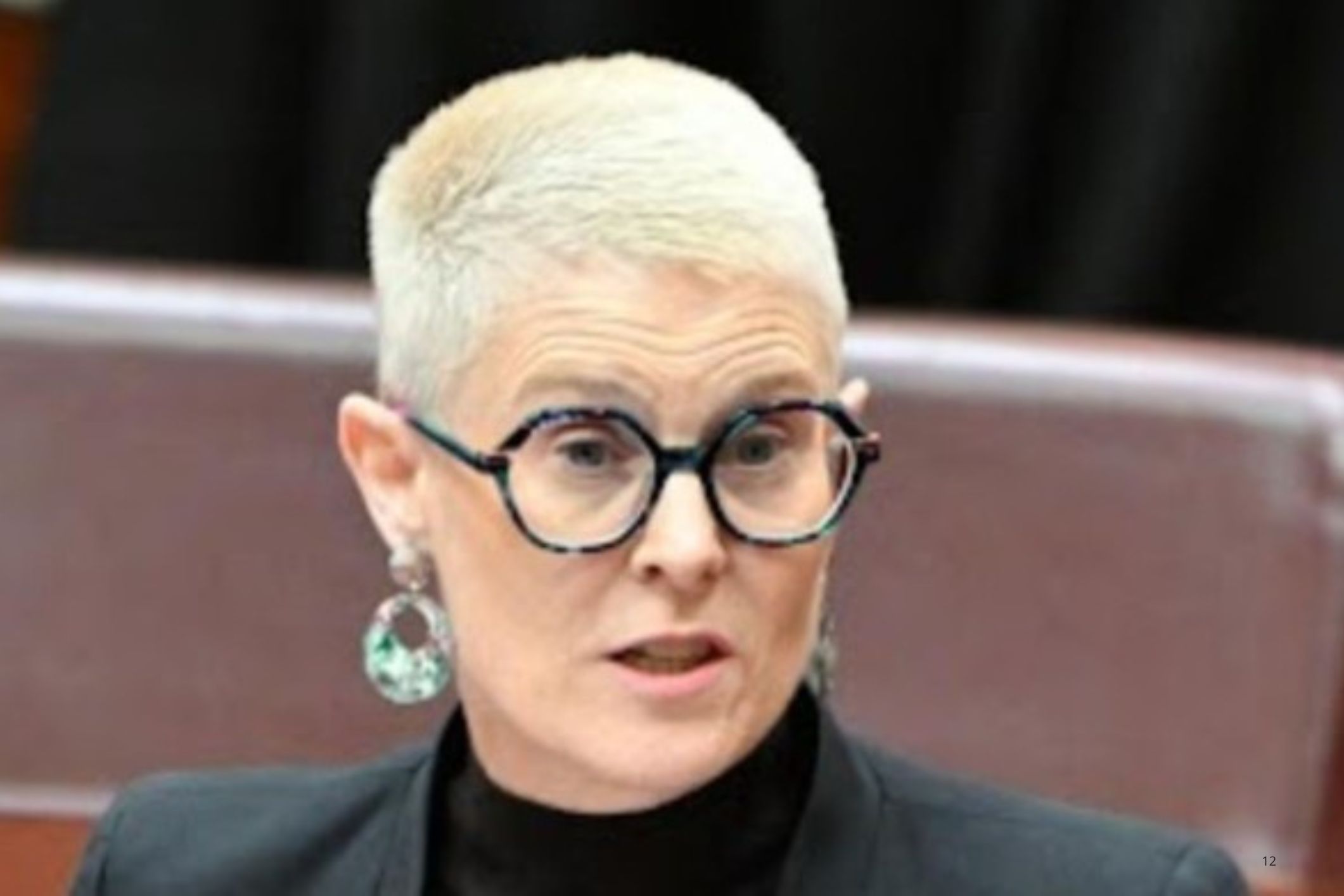
Senator Penny Allman-Payne has delivered a scathing assessment of the Albanese Government’s aged care reforms, describing them as a profound betrayal of older Australians who have paid taxes their entire lives in the expectation of support when they need it most.
In a wide-ranging interview, the Queensland Greens senator spoke candidly about how Labor campaigned strongly on aged care after the Royal Commission but, she said, ignored its central funding recommendations and instead engineered a system that has pushed many seniors into debt and stress.
“It’s really woeful,” Senator Allman-Payne said. “In a wealthy country like Australia, it’s appalling that people, most of whom have paid taxes their whole lives and thought that their country and their government was going to look after them, have really been thrown under the bus at the time that they need the government most.”
The government has repeatedly promoted the new Aged Care Act as delivering a rights-based framework. Senator Allman-Payne dismissed this as empty rhetoric. The legislation includes a statement of rights, but the very next section declares that nothing in it gives rise to any recourse in a tribunal or court of law.
“That tells you everything you need to know,” she said. The Greens tried to amend the bill to make the rights enforceable but were blocked by the Coalition and providers. “Older people are the ones who bear the brunt of decisions that are being made really in favour of the people who are profiting off aged care.”
Under the new Support at Home program, self-funded retirees without a Commonwealth Seniors Health Card now face co-payments of up to 80 per cent on everyday living services. Some are already forgoing basic care.
Senator Allman-Payne recounted a conversation with a Brisbane provider about older men in hostel-style accommodation who need daily showers. “In order for them to get showers every day, which many of them need, it would cost them an additional $298 a week. And they’ve just turned around and said, that’s not a service we can afford anymore.”
She warned this is a false economy. “If older people who need assistance with showering don’t get it, there are going to be flow-on impacts in relation to their overall health. And that’s just going to cost the system more.”
The senator pointed to chronic rationing, a direct rejection of the Royal Commission’s core recommendation to end it. At the end of last year, more than a quarter of a million older Australians were waiting for care, including those awaiting assessment or CHSP services. The government plans to release only 83,000 home care packages this financial year.
Compounding the crisis is the planned transition of the Commonwealth Home Support Programme, which supports around 800,000 people, into Support at Home no earlier than July 2027. Senator Allman-Payne questioned how the system could absorb that influx when it cannot clear existing backlogs.
“We’ve got unnecessary hospital admissions. We’ve got people dying waiting for care,” she said. “Yet we have one in three big corporations in this country that doesn’t pay tax at all. And rather than have the courage to go after the big corporations and the billionaires who actually should pay their fair share, they go after vulnerable older people.”
The senator was particularly critical of the closed-door negotiations between Labor and the Coalition that shaped the financial elements of the reforms. Both parties, she said, were “on a unity ticket” when the legislation passed in late 2024. Now the Coalition is trying to distance itself from the consequences.
Senator Allman-Payne’s call to renationalise aged care is grounded in the sector’s own past. Before the Aged Care Act 1997, introduced under the Howard Government, which deregulated the industry and opened the door to large-scale for-profit providers, care was delivered primarily by government and not-for-profit organisations. Staffing rules were stricter, with fixed portions of funding required to go directly to care rather than profit, and long-term employees received ongoing training.
The for-profit share of residential places rose sharply after 1997, from about 27 per cent in 2000 to over 40 per cent today, while public provision fell from 10 per cent to around 4 per cent.
Data from the Royal Commission and independent studies consistently show government-run facilities deliver higher quality care. Residents in government homes are far less likely to be hospitalised for falls, one in 15 versus one in 8.6 in for-profit homes, or pressure injuries.
During COVID-19, state government-run facilities experienced dramatically better outcomes, with very few cases and no deaths in some jurisdictions, in contrast to widespread outbreaks in many private homes.
Senator Allman-Payne said the evidence is clear. “If you turn something into a profit-driven system, somebody’s got to make money out of it. Wouldn’t we be better off pulling it back, renationalising aged care? Like it used to be delivered before John Howard, aged care was delivered by government and it was the best that aged care ever operated. You had long-term employees, people getting ongoing professional development and training.”
The senator’s message is unambiguous. The Greens are the only party consistently calling for the removal of for-profit providers from aged care.
“We need to get rid of this for-profit system of care. We need to completely undo this financialisation and profiteering in the aged care sector and get back to what governments are supposed to do, and that is redistribute wealth so that we have the capacity in our budgets to look after people and give them the care that they need at the time that they need it.”
She has secured two Senate inquiries this year, one into the CHSP transition, with hearings starting soon, and a longer one into Support at Home, to build evidence of the reforms’ failures and pressure the government to reconsider co-payments and the profit-driven model.
For older Australians and their families, the senator’s words carry a simple but powerful warning: the current path is unsustainable, and only a return to a fully public system can restore the dignity and security seniors were promised.



There never was a government-run system. What is the Senator even talking about?
Wasn’t the Home Care Service run by the government? They then flogged it off to someone who was willing to take it on, but that went semi-pear shaped as well.
In NSW we had ADHC – Dept of Ageing, Disability, and Home Care. That was government and it worked better than this.
The senator shows her ignorance of the system and it’s history. In recent times there has been no universal government operated system in residential aged care. Community nursing and home care was provided but with much smaller capacity. We are a for profit home care provider and we provide high quality and caring services to our clients. We are generally lower in cost than our not for profit colleagues. I find the senator’s comments as ill-informed and an absolute insult to our entire operation.
Please give her my contact details. I would love to chat with her!!!
We’re also a private Support at Home provider, and I completely agree with you. We found the Senator’s comments both disappointing and insulting to the many dedicated providers delivering high-quality care every day.
There has not been a universal, government-operated residential aged care system in recent history. While community nursing and home care programs have existed, they operated at much smaller capacity and relied heavily on private and not-for-profit providers to deliver services. The current system is intentionally structured as a mixed-market model because it enables choice, flexibility, innovation, and responsiveness to individual client needs.
As a for-profit provider, we are proud of the high standard of care we deliver. Approximately 90% of our clients come to us through referrals, which reflects the trust families and professionals place in our service. We are also often more cost-competitive than some of our not-for-profit counterparts, demonstrating that quality care and financial sustainability can coexist.
We also disagree with the current co-contribution approach. While sustainability of the system is important, shifting additional financial burden onto older Australians risks creating barriers to access and undermines the principle that aged care should be equitable and needs-based. Any reform must carefully balance fiscal responsibility with fairness and accessibility.
Constructive discussion about aged care reform is essential, but it must be grounded in an accurate understanding of how the system operates and the critical role responsible private providers play in supporting older Australians.
The support at home system has to be trashed and we go back to a system that actually works for us oldies. The government wanted us to live longer and mostly we are but we really need help. We paid our taxes all our working life and we deserve help now. I don’t think it’s much to ask for, let us have a bit of dignity,
Agree!!! Domestic care and district nursing gave an excellent service
Oh yeah smart idea then we can turn the car park into ramping..
Obviously ignorance is part of the greens policy.
Work in the industry and then you will understand.
It’s not that easy and her facts are incorrect as well.
The co payment system needs to be reviewed to stop penalising the people that have saved money and ensure that everyone is able to be cared for with dignity.
I thought the old HACC was run by the State, not the Commonwealth.
Let’s not forget that the Oakden facility which was at the start of the investigation into aged care that led to the Royal Commission was owned and operated by a state government.
That goodness for Senator Allman-Payne going for de-privatisation. Otherwise it’s just tinkering at the edges.
Thank to Hello care too for being the key media voice on the utter mess that is aged care in Australia
Albanese has let us down – he is better than the opposition but only because he is the best of the worst. The previous opposition leader Dutton had financial interests in aged care. These politicians don’t care about the average Australia senior or those Australian in need of assistance. They will be okay when they get old because they have been living off the Government purse for years and will retire very wealthy on generous Government super and allowances . Albanese admitted his own mother lived in state housing (same house 30 years) with a pension paid for by the Government, but he hasn’t provided same for those who voted him in with the trust that he would uphold his promises before the election re housing/aged care and education. As a lifetime Labor voter and someone who cared for a mother with Alzheimer’s for 11 years without any Government assistance as I worked full time from home as well (4 in a care facility that was so shocking and expensive – I still had to go there three times a day so she was toileted on time and fed decent food all at the cost of 1,000 a week) Albanese promised to change all this with the Aged Care Royal Commision – what a joke!~~!!! I am so disappointed in Albanese – Unfortunately if there is no other party to challenge him other than the fish and chip lady and sweaty drunk philanderer- the choices are dreadful.
Oakden Aged Care home was government run and was shut down due to serious mistreatment and systemic failures. The greens are advocating a return to a discredited system!
Thank you senator,all you say is true..what a mess they have made of it.one wonders if the new rules have been written by juniors.if I can help,I’m your man.
Question is how would government acquire the facilities at anywhere between $500K and $700K per resident for the capital costs (not including land). NGOs have funded out of their other equity sources and donations, for profits out of private venture capital. Retention amounts on RADs and the DAC also become capitalised.
For background on funding history – worth reading the papers that came out 22 years ago as part of the Warren Hogan review. Copy and paste this link into your browser: https://www.researchgate.net/publication/322305918_Historical_perspectives_the_evolution_of_the_Australian_Government's_involvement_in_supporting_the_needs_of_older_people
HACC, by the way, was funded 60% CW and 40% states and territories. Different delivery arrangements in different states and territories.
After quite some time, it is encouraging to hear a thoughtful and responsible stance on the aged care sector and the exploitation faced by vulnerable seniors at the hands of profit‑oriented providers.
We must keep pushing for reform—every voice matters, and real change will only come if we speak up and hold the system to account.
Thank you, Senator Payne. Let us continue urging policymakers, regulators, and providers to prioritise dignity, fairness, and genuine care for older Australians.
Well done hello care and Jacob for engaging with Senator Allman Payne. Many grassroots advocates of aged care are continually lobbying and trying to get the really terrible things that are happening to the media and politicians too.
But it’s very challenging to get heard, or layout the issues. Even at senate inquiries we do not have many lived experience witnesses versus Providers . And what will happen to the senate reports of the inquiries? Will this drive the Government to change? We need to have hope that change will come, because it’s exhausting and many are suffering with few if any enforceable consequences to Rights being breached. Hoping Hellocare will pick this issue up.
About time someone has the intestinal fortitude to stand up for those of us that cannot !! Let’s see IF government (any government will do ) has the same human kindness to do just that. I watched my mother languish in A HUGE FOR PROFIT PRIVATE CARE FACILITY” Staff could not speak English / cleaning was with WATER ONLY” & the food was disgusting!! I’m 74 & don’t want to go anywhere near a so called nursing home. I would love to print the name of the dump my mother was in “but” there is an onus of proof !