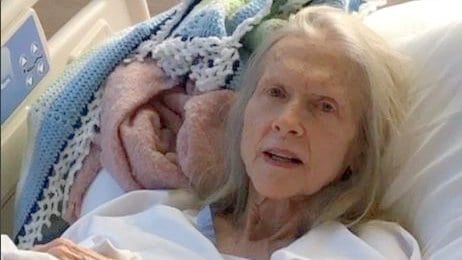
As the mystery continues around the older woman who was found walking alone along a rural Sunshine Coast road, advocates have questioned why no one has stepped up to claim her yet.
The mystery woman, who was left at Nambour Hospital on September 6th, has been unclaimed and unidentified for three weeks, despite national media coverage. The woman, believed to be in her 80s, has been able to communicate to hospital staff as her condition has improved, but is yet to be able to identify herself or give consent to medical tests.
“I find it quite distressing that three weeks after this woman has been left at a hospital we appear to be no further advanced in either identifying her or getting into place some appropriate guardianship arrangements,” Mr Rowe, chief executive of Aged and Disability Advocacy (ADA) Australia told the ABC.
“As a community, if we were dealing with a three-year-old that had been left at the hospital, we would be outraged.
“While I’m sure there’s been good quality care provided to this woman, my concern is that there has been little done to progress this woman’s long-term care arrangements, or to even get resolution about who she is and where she’s come from.”
Mr Rowe explained that in a situation where a patient is unable to make decisions, the hospital would begin organising guardianship arrangements. This means that either an appropriate carer of the Office of the Public Guardian would make accommodation and healthcare decisions, and the patients administrative and financial matters would be dealt with by the Public Trustee.
In the mystery woman’s case, this would require an application to the Queensland Civil and Administrative Tribunal (QCAT), who would then grant guardianship. In a statement to the ABC, Sunshine Coast University Hospital, where the woman is currently receiving care, refused to answer whether they had submitted or intended to submit an application to QCAT.
“We cannot provide any information about this patient’s care without consent. At this point in time we do not have consent,” a spokeswoman said.
With no guardianship, and still lacking the ability to give informed consent to medical teams, the woman has ‘stalled’ in hospital. Mr Rowe said that until the woman is able to give her own consent, putting guardianship orders in place is crucial to her future care and human rights.
“Those decisions [by a guardian] will allow police to take DNA, if that’s the next step that the police are looking at,” he said.
“And it will also allow a decision-maker to make decisions regarding her long-term care and long-term living arrangements, particularly if we continue this current situation of not knowing who she is.”
While the mystery woman continues to sit in hospital with no idea of what her future may hold, advocacy groups are becoming increasingly interested and concerned by her case. And as the mystery begins to run dry, police have said that they may step back and let others takeover as her case will no longer be a police matter.
After running police press conferences, releasing photos of the woman and a gold ring she was wearing to national press, taking information from the public and cross checking missing persons’ files, Queensland Police Acting Inspector Matt Robertson has said that there’s not much more the police can do.
If the mystery woman’s situation continues as it has, Mr Rowe has offered the services of Aged and Disability Advocacy Australia to the woman as an independent advocate if it is required.
“Often the systems that have been put in place to protect people end up being barriers to resolution … people won’t share information because of the Privacy Act, people won’t make decisions because the person has a cognitive impairment and is not capable of making a decision,” he said.
“But we end up just going round and round in circles without getting resolution, so while we’re trying to protect the older person, what we see is that our actions actually harm the older person.”





The woman has spoken to police and wishes to remain private. I do hope she will get the help needed. But she is not the only elderly person who is lost and has maybe no family. Yes it is sad when this happens.