




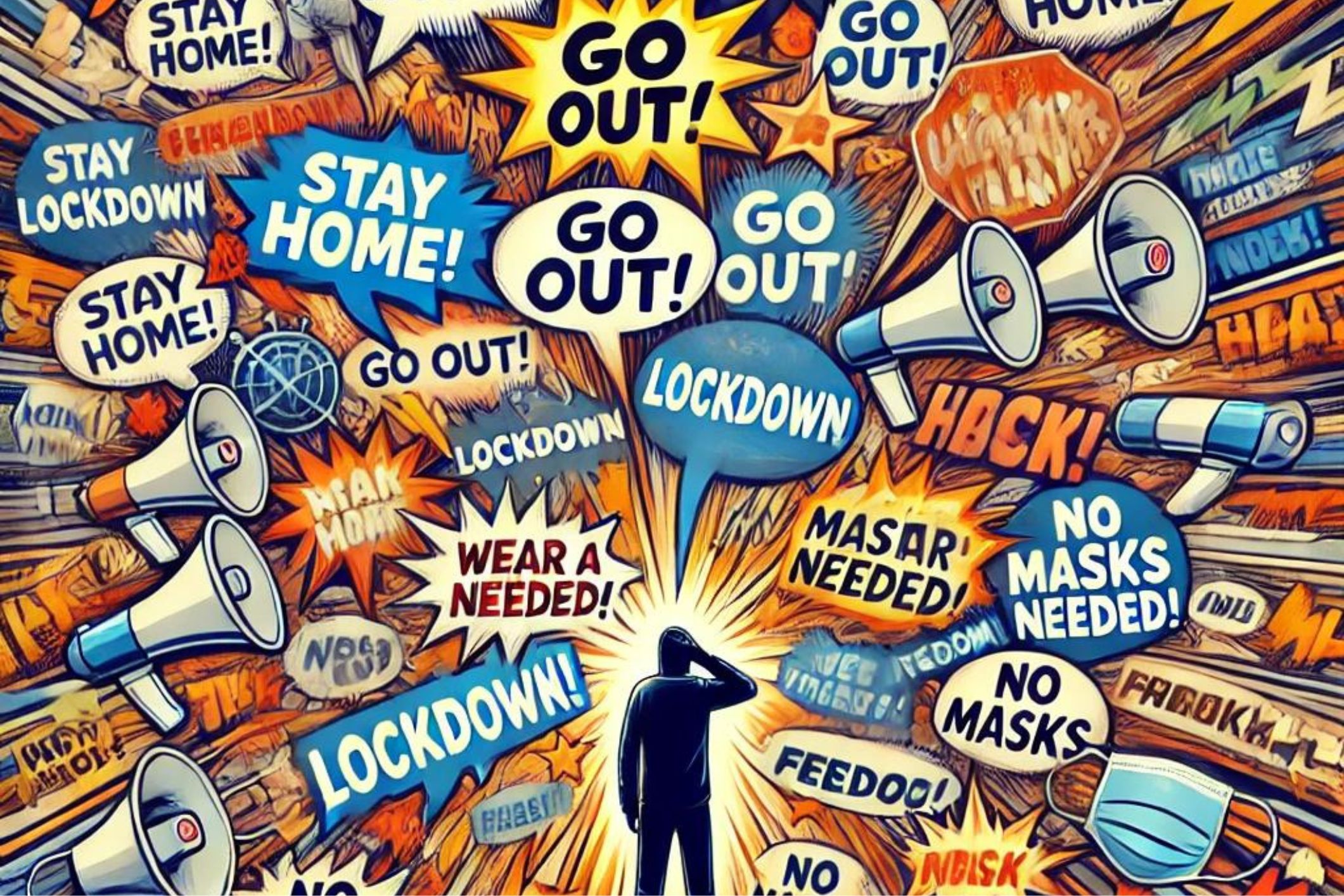
There’s a common thread linking our experience of pandemics over the past 700 years. From the black death in the 14th century to COVID in the 21st, public health authorities have put emergency measures such as isolation and quarantine in place to stop infectious diseases spreading.
As we know from COVID, these measures upend lives in an effort to save them. In both the recent and distant past they’ve also given rise to collective unrest, confusion and resistance.
So after all this time, what do we know about the role public health communication plays in helping people understand and adhere to protective measures in a crisis? And more importantly, in an age of misinformation and distrust, how can we improve public health messaging for any future pandemics?
Last year, we published a Cochrane review exploring the global evidence on public health communication during COVID and other infectious disease outbreaks including SARS, MERS, influenza and Ebola. Here’s a snapshot of what we found.
The importance of public trust
A key theme emerging in analysis of the COVID pandemic globally is public trust – or lack thereof – in governments, public institutions and science.
Mounting evidence suggests levels of trust in government were directly proportional to fewer COVID infections and higher vaccination rates across the world. It was a crucial factor in people’s willingness to follow public health directives, and is now a key focus for future pandemic preparedness.
Here in Australia, public trust in governments and health authorities steadily eroded over time.
Initial information from governments and health authorities about the unfolding COVID crisis, personal risk and mandated protective measures was generally clear and consistent across the country. The establishment of the National Cabinet in 2020 signalled a commitment from state, territory and federal governments to consensus-based policy and public health messaging.
During this early phase of relative unity, Australians reported higher levels of belonging and trust in government.
But as the pandemic wore on, public trust and confidence fell on the back of conflicting state-federal pandemic strategies, blame games and the confusing fragmentation of public health messaging. The divergence between lockdown policies and public health messaging adopted by Victoria and New South Wales is one example, but there are plenty of others.
When state, territory and federal governments have conflicting policies on protective measures, people are easily confused, lose trust and become harder to engage with or persuade. Many tune out from partisan politics. Adherence to mandated public health measures falls.
Our research found clarity and consistency of information were key features of effective public health communication throughout the COVID pandemic.
We also found public health communication is most effective when authorities work in partnership with different target audiences. In Victoria, the case brought against the state government for the snap public housing tower lockdowns is a cautionary tale underscoring how essential considered, tailored and two-way communication is with diverse communities.
Countering misinformation
Misinformation is not a new problem, but has been supercharged by the advent of social media.
The much-touted “miracle” drug ivermectin typifies the extraordinary traction unproven treatments gained locally and globally. Ivermectin is an anti-parasitic drug, lacking evidence for viruses like COVID.
Australia’s drug regulator was forced to ban ivermectin presciptions for anything other than its intended use after a sharp increase in people seeking the drug sparked national shortages. Hospitals also reported patients overdosing on ivermectin and cocktails of COVID “cures” promoted online.
The Lancet Commission on lessons from the COVID pandemic has called for a coordinated international response to countering misinformation.
As part of this, it has called for more accessible, accurate information and investment in scientific literacy to protect against misinformation, including that shared across social media platforms. The World Health Organization is developing resources and recommendations for health authorities to address this “infodemic”.
National efforts to directly tackle misinformation are vital, in combination with concerted efforts to raise health literacy. The Australian Medical Association has called on the federal government to invest in long-term online advertising to counter health misinformation and boost health literacy.
People of all ages need to be equipped to think critically about who and where their health information comes from. With the rise of AI, this is an increasingly urgent priority.


Alina Kruk/Shutterstock
Looking ahead
Australian health ministers recently reaffirmed their commitment to the new Australian Centre for Disease Control (CDC).
From a science communications perspective, the Australian CDC could provide an independent voice of evidence and consensus-based information. This is exactly what’s needed during a pandemic. But full details about the CDC’s funding and remit have been the subject of some conjecture.
Many of our key findings on effective public health communication during COVID are not new or surprising. They reinforce what we know works from previous disease outbreaks across different places and points in time: tailored, timely, clear, consistent and accurate information.
The rapid rise, reach and influence of misinformation and distrust in public authorities bring a new level of complexity to this picture. Countering both must become a central focus of all public health crisis communication, now and in the future.
This article is part of a series on the next pandemic.

Shauna Hurley, PhD candidate, School of Public Health, Monash University and Rebecca Ryan, Senior Research Fellow, Health Practice and Management; Head, Centre for Health Communication and Participation, La Trobe University
This article is republished from The Conversation under a Creative Commons license. Read the original article.


