Key points:
With Halloween fast approaching, we can all appreciate the joys of dressing up. This year, like many others, there will be people dressed up as an “old person” and it’s no new concept – think Jackass’ film Bad Grandpa and the numerous themed dress-up parties we see on social media.
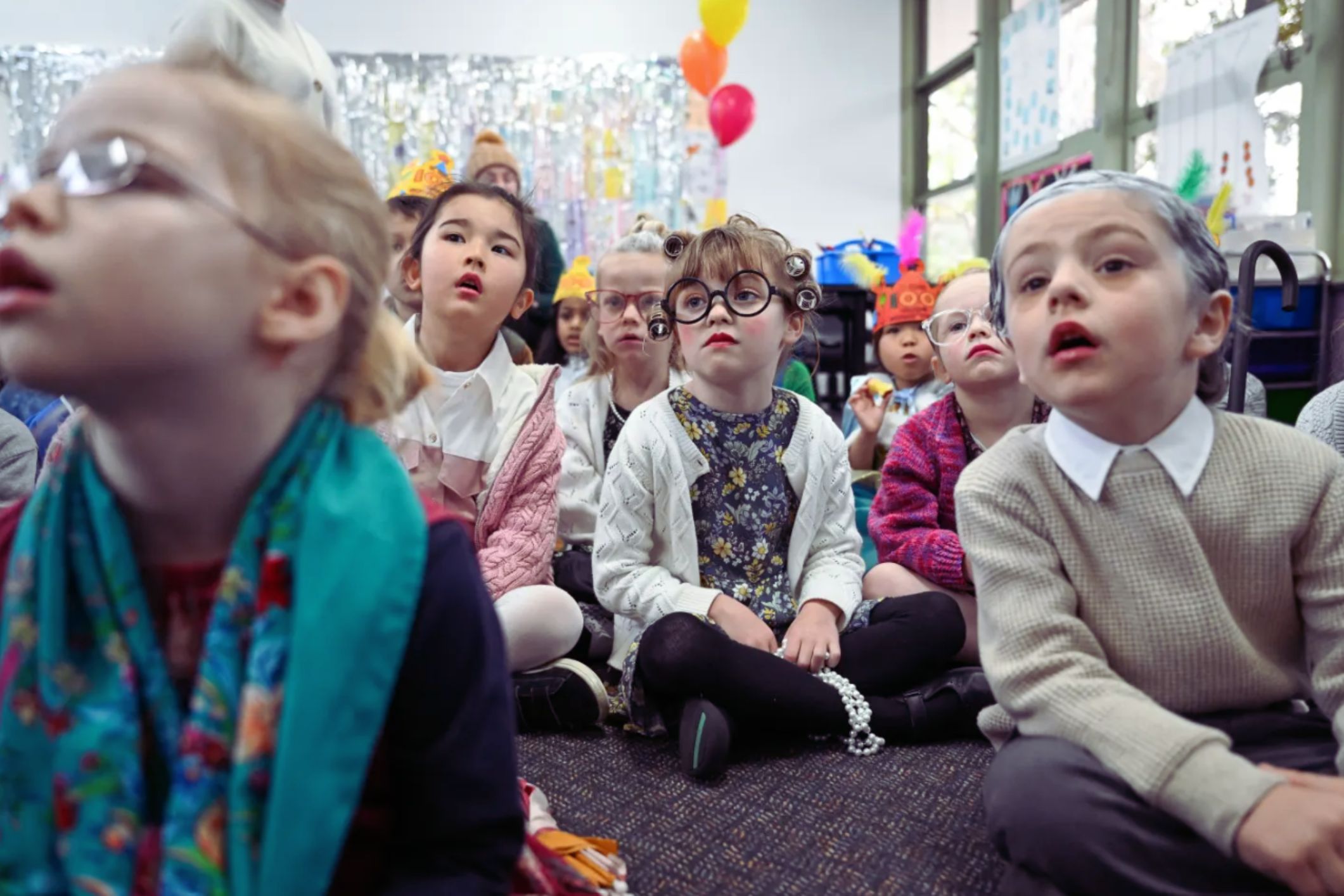
More kids around the country are dressing up as older people too thanks to the popular children’s cartoon Bluey and events like 100 Days of School. But is it appropriate? Or is it ageist?
Geriatrician at Deakin University, Lisa Mitchell, described the stereotype of what an older person “looks” like.
“Waistcoats, walking sticks, glasses and hunched backs are the key. If you’re a ‘granny’, don’t forget a shawl and tinned beans. You can buy ‘old lady’ wigs or an ‘old man’ moustache and bushy eyebrows,” she explained.
Bette Ann Moskowitz, 82, an American advocate and author of the book Finishing Up: On Aging and Ageism saw a Pinterest photo of a child dressed up as “old” for a 100 Days of School celebration and said dressing up this way is not only belittling but represents the kind of casual ageism found all over the world.
“What bothers me so much is that I believe that ageism, this kind of minor treatment, is the gateway drug to real ageism, to real elder abuse. This kind of minor stuff is just a stepping stone.”
https://www.tiktok.com/@rubyfaughlin/video/7143792081452928258
It isn’t just little ones dressing up, high school and university-aged young people are also participating in the trend. [Source: TikTok]
The argument of whether dressing up as an older person is ageist or perpetuates a stereotype has caused much debate, but what we do know is ageism negatively impacts this demographic and stereotypes are often a part of that. Children are particularly susceptible to absorbing stereotypes, a process that starts in early childhood – potentially continuing the cycle of ageist thoughts and behaviours into another generation.
Ageism isolates older people and compounds loneliness and depression which reduces health and life expectancy and thus costs our healthcare and hospital systems billions each year.
Earlier this year, Australia’s Age Discrimination Commissioner called on organisations providing services to older people to deliver ageism awareness training to their staff, with new research showing it can be highly effective in shifting their attitudes towards their clients.
In 2021, the World Health Organization (WHO) released their Global Report on Ageism as part of four action areas for its Decade of Healthy Ageing initiative (2021–2030). The report showed ageism impacts all aspects of older people’s health – shortening their lifespan, worsening their physical and mental health, hindering recovery from disability, and accelerating cognitive decline.
Ms Mitchell said this may be due to a “stereotype threat” – when an older person performs less well because they’re worried about acting “old” as well as “stereotype embodiment”, where people absorb negative stereotypes throughout their lives and come to believe decline is an inevitable consequence of ageing. This leads to biological, psychological and physiological changes that create a self-fulfilling prophecy.
“Then, they stop going out, stop exercising, stop seeing their friends.”
WHO suggests we can reduce ageism through laws, policies and education but we have also seen stereotypes dissolve with the benefits of older people and younger people coming together for intergenerational contact.
Popular TV series Old People’s Home for 4 Year Olds and Old People’s Home for Teenagers have showcased how these interactions make a difference and normalise what should become common practice – younger people spending time with their older relatives, neighbours and friends.
Educating children to view and treat older people just like everyone else is key to ensuring cycles of ageism stop.





This is the most woke and ridiculous article I have ever read! Just another woke mob that would shut down all the actors in the world I suppose. It is only dress-up for God sake. Get a handle! People in the west have too much precious time on their hands. You know the old saying… The idle mind is the Devil’s playground!
No one is trying to shut down Bluey – just having conversations about some of its failings. Bluey just reflects our broader culture (which is, and always has been, really messed up). But there’s nothing’s wrong with having talks with kids about prejudice & stereotypes. And there’s nothing wrong with trying to create a better world that doesn’t exclude & insult people. In fact, if you don’t , you’re part of the problem. God willing, you’ll be “old” someday & research shows that will happen a lot sooner if you hold ageist beliefs.
Proponents of kids imitating old people mean well I’m sure, but I wouldn’t say I like it.
I don’t particularly appreciate getting old. I don’t want to be old. I understand the argument that many people didn’t have the privilege to get old and I should be grateful.
I quote Ms Mitchell – “I have seen this in my clinic with people who do well, until they realise they’re an older person – a birthday, a fall, a revelation when they look in the mirror,” she said.
“Then, they stop going out, stop exercising, stop seeing their friends.”
That’s me she’s referring to.
Interesting concept as most dress up is for figures who are admired – Batman, Wonder Woman and other superhumans.
Much needed commentary although I don’t think this message is reaching the general public. Bluey has ageist commentary sprinkled throughout, not just the “grannies.” For example, when playing airport, Bandit exclaims “old people!” in response to an imaginary older woman moving slowly in front of him. My granddaughter looked at me & laughed & my response was sarcasm “ those darn disabled people- they’re so annoying.” She got quiet because she knows better than to make fun of disabled people. But that’s essentially what Bandit was doing.