As of mid-May this year, only 14% of all of Japan’s coronavirus deaths had occured in aged care homes. This compares to many western countries, where care home deaths make up well over 40% of coronavirus deaths. In Australia as at yesterday it was 69%, a number highlighted by Peter Rozen QC at the Royal Commission into Aged Care and Safety (and reported by HelloCare in August) as one of the highest in the world.
You’d think the country with the world’s oldest population would have been hit particularly hard. But Japan, which has more than 28% of its population over 65, has some of the fewest aged care coronavirus deaths in the world. The reasons for how so few aged care residents have passed is surprisingly simple, and has its roots in acting quickly to install the most basic of hygiene principles.
One of the major aspects that lessened the effects of coronavirus on the aged care sector in Japan was a quick reaction time. After watching the events unfold in Wuhan, China, Japan responded immediately in February before the virus took hold.
Coupled with a high level of cultural respect for their older population, aged care homes were quick to respond to the crisis, swiftly tightening controls on both staff and visitors of facilities.
Further, the health and hygiene of residents is a main priority for care facilities, many homes already having day-to-day precautions in place to prevent any kind of infection spreading through facilities, whether that be the common flu, or more serious viral infections. Japan’s recent experience with SARS meant these controls were robust.
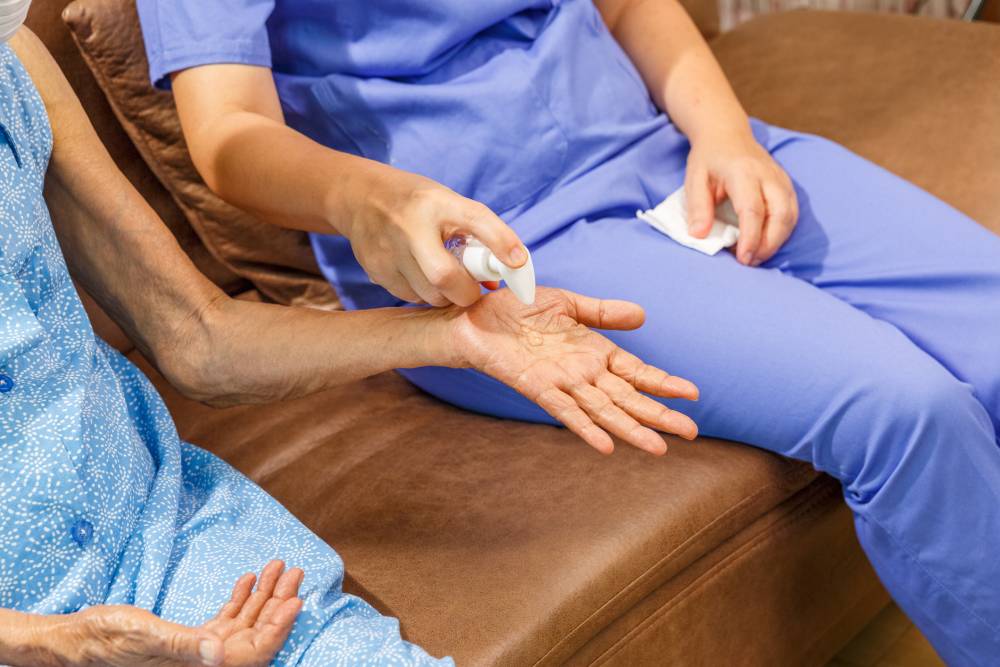
Japan’s care facilities have healthy hand washing practices.
“The very basic principle of elderly care is washing your hands at each step of your work: Take care of someone, wash your hands, do another job, wash your hands. But now it is even more thorough,” chief caregiver at Cross Heart home in Kawasaki, south of Tokyo, Chihiro Kasuya, told the Washington Post.
Strict health controls for all staff and visitors were implemented more quickly than they were in Australia.
At the Cross Heart home, before anyone is allowed into administration areas, visitors and staff must disinfect their hands, have their temperature taken and fill out forms about their recent medical history.
As for access to the resident’s living facilities, admission is closely monitored, with close family members excluded, except when the resident is close to death. These restrictions have been in place since early February, and have left the facility’s residents in good health.
“Because we work in this type of facility every day, we are always aware of the risks of norovirus or influenza, and we became conscious of the impact of coronavirus pretty early on,” said Kasuya.
What may be most surprising though is that in many homes, aged care staff don’t wear masks when they’re in the facility. Masks can make it difficult to interact with older residents, especially those living with dementia, so the idea is that instead of preventing the virus from spreading inside the facilities, it is kept out in the first place. This has required an astonishing level of cooperation from staff. Wearing masks, however, is common practice in Japan in public spaces.
Carers “have hardly been anywhere else except here, and just commute between their homes and work,” said Takao Furusawa, manager of the Life & Senior House Ichikawa.
“They have taken their responsibility very seriously. That’s humbling to me.”
Australia also has a committed and responsible aged care workforce. It would be interesting to know how Australia may have fared had we responded more rigorously in February too.



Have to think there is more going on here than just hand washing or even early isolation. There are significant cultural and other differences. For instance, Japan features a much lower incidence of obesity compared to most English-speaking countries. (Obesity is a prime COVID morbidity risk factor in addition to age.) Cause and effect are remarkably hard to untangle. But this is a very interesting observation.