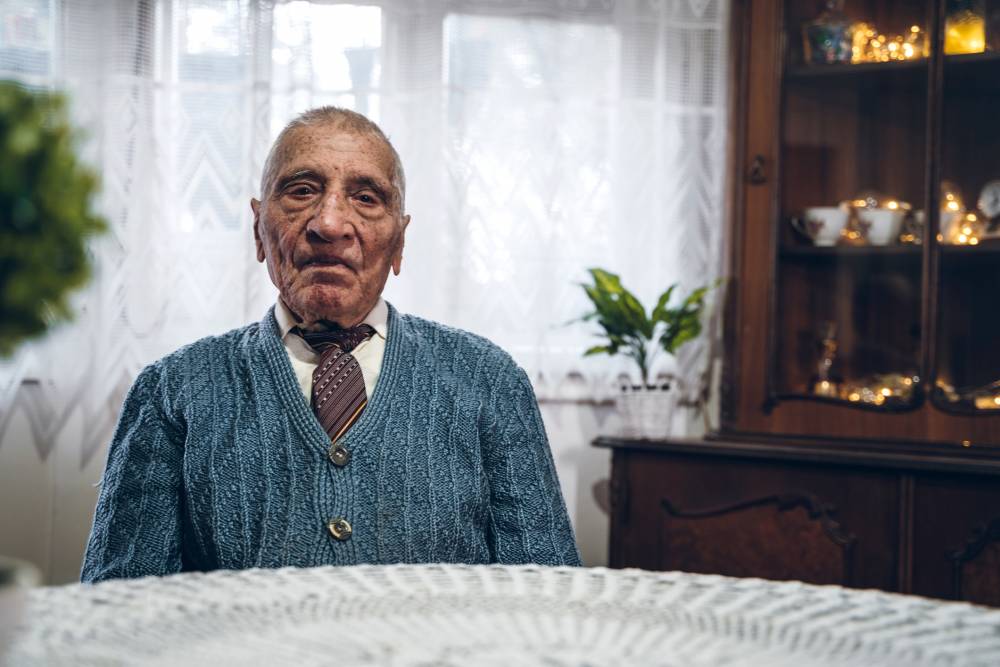
Older people with dementia who remain living at home may suffer more pain, anxiety and poor health than their counterparts living in nursing homes, according to new research.
In a new study out of the United States, researchers compared 728 adults over the age of 65 years who were living with moderately severe dementia in three settings: the person’s own home, residential facilities with support, and nursing homes, where residents receive help with basic daily care.
The findings, which were published in the Journal of the American Geriatrics Society earlier this month, showed that even though the participants who lived at home were, on average, four years younger than the nursing home residents, they had a higher number of chronic conditions, were more likely to have experienced pain, and had fallen in the last month or were worried about falling.
Those living at home were also more likely to have experienced anxiety and to have recorded fair or poor health.
Dementia Australia CEO, Maree McCabe, told HelloCare there was no equivalent research in Australia so she could not say definitively if the situation was the same here.
However, Ms McCabe said most people living with dementia have a range of complex health needs.
“According to Australian Institute of Health and Welfare (AIHW) data, many people in Australia who are living with dementia, no matter where they live, may have other health conditions and many of these people need high levels of care,” she said.
The latest data, which was collected by the AIHW in 2009, found people living with dementia aged 65 and over, had a higher average number of health conditions than all people in that age group.
A study by Prof Sube Banerjee, Professor of Dementia and Associate Dean at Brighton and Sussex Medical School, found that only 17 per cent of those with dementia are living with only that condition.
With more Australians choosing to stay at home as they age, the research raises the question, is staying at home the best option for those living with dementia?
The authors of the study say the findings are not a call to move people living with dementia out of their homes.
“Rates of nursing home use are declining because they are expensive and people generally prefer the familiarity of home,” said first author of the study, Krista Harrison, PhD, of the University of California San Francisco, Division of Geriatrics.
“Nursing homes may offer more people to help with medical and social needs, but that might mean sharing a room with someone with different daily habits or distressing behavior symptoms,” she said.
“People with dementia benefit from consistent and predictable environments and caregivers,” Ms Harrison said.
Ms McCabe told HelloCare there are advantages and disadvantages to both remaining at home and living in residential care, and every individual circumstance is different.
She agreed that residential care can be prohibitively costly for some, and the move into care can be stressful.
“Living at home can help the person living with dementia maintain independence, to pursue personal interests, remain connected to their community and to help maintain the family unit and live in an environment that is comfortable and familiar to them.”
“Moving into residential care generally occurs at a time when the person living with dementia is physically frail or they are no longer able to be supported in a home environment. They are entering residential care at a time of change and adapting to this change can be difficult,” she said.
Ms McCabe said Australia should be doing more to support people living with dementia at home.
“It is a priority for Dementia Australia to ensure all Australians have access to quality dementia care, whether that be in a residential setting or at home,” she said.
“The cost of dementia and dementia care is increasing and we need appropriate government funding to help provide all kinds of appropriate care.
“In 2018, it was estimated that dementia cost Australia more than $15 billion. By 2025, the total cost of dementia is predicted to increase to more than $18.7 billion in today’s dollars, and by 2056, to more than $36.8 billion.
“We need to ensure there is appropriate funding to cover the costs of dementia, especially when it comes to providing quality dementia care, no matter where that care takes place,” she said.
The research casts the government’s home care waiting list of 129,000 people in a new light, and highlights the importance of quality care in the home.
“In June 2019, the Home Care Packages Program Report stated that there is now 129,000 older Australians waiting to receive home care packages,” Ms McCabe said.
“Dementia Australia would like to see action taken to help people living with dementia who are waiting on home care packages.”


