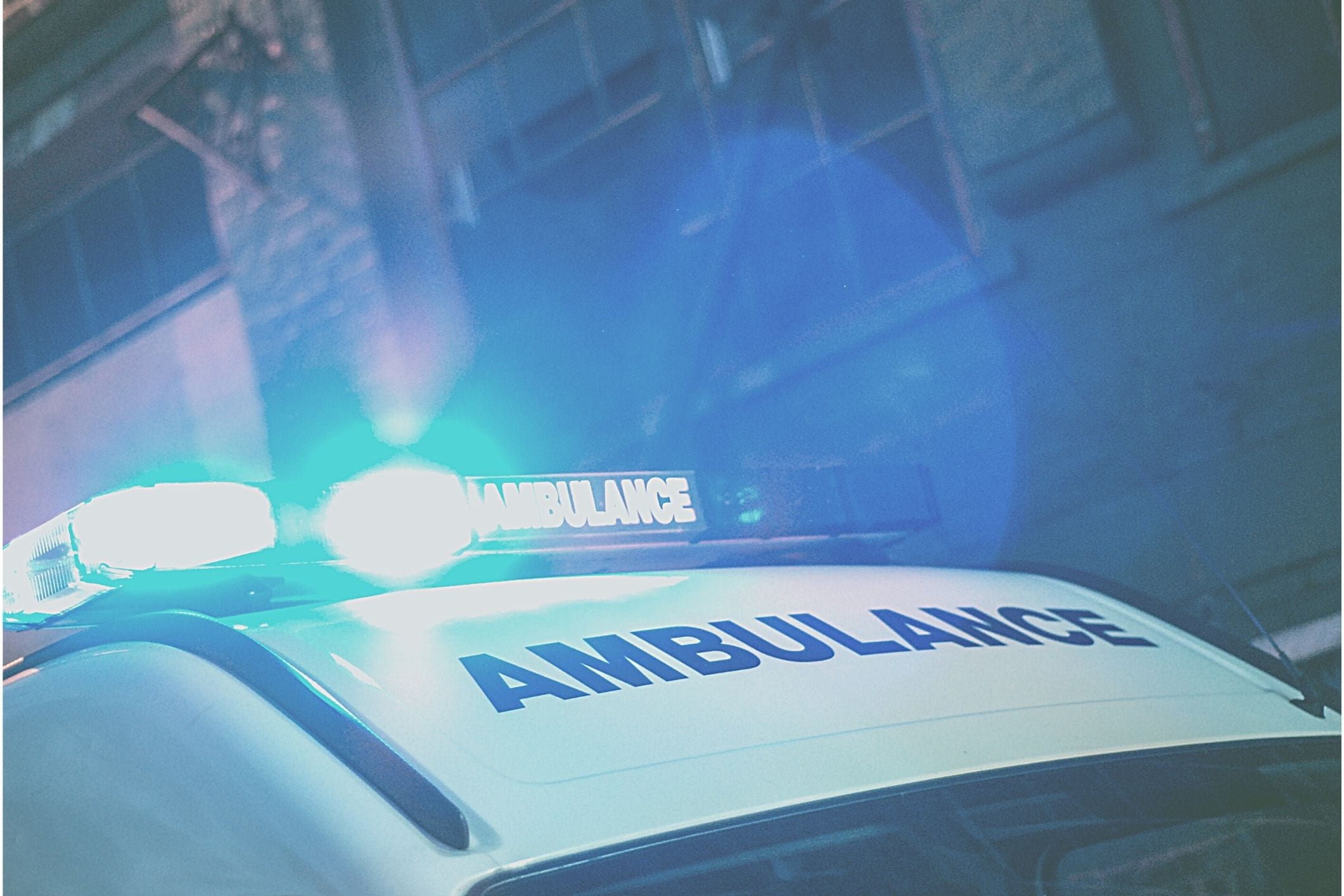
Despite living just five minutes away from the hospital, Diane Couder was left waiting for assistance while three ambulances were unable to get to her home. Her husband, Stephen Couder, told 9News that they waited together for the ambulances, but when one never arrived, he watched his wife of 46 years die in his arms.
Having called for an ambulance three times, the drivers were being sent to the wrong address, leaving the couple without assistance. According to Mr Couder, the pair had moved to Logan, Queensland, to be closer to the hospital while his wife was living with increasing medical issues.
However, Mr Couder said it was their move to Edward Street, Loganlea, that caused problems accessing an ambulance.
Diane was experiencing renal failure and was being prepared to receive dialysis. This preparation caused fluid to rapidly build up around her heart, requiring swift treatment.
“She had those episodes before. The ambos were here on time. They gave her things that caused that fluid to disperse,” Mr Couder told 9News.
On December 15, Mr Couder recalled the ambulance originally being sent to Elizabeth Court, several blocks away from their home in Edward Street.
“When they did eventually get her to hospital … she was very near death,” Mr Couder recounted.
After a stay in hospital, Diane was discharged. But on January 2, the grandmother experienced a second episode, prompting Stephen to call triple zero again. Once more, paramedics became lost on the way to the house and Mr Couder lodged a complaint.
“When they took her to the hospital, I accompanied her in the ambulance in the front seat … I saw on their monitor the address they’d been sent to and it wasn’t this address,” he said.
“So, she ended up passing away in my arms right there, and I can’t get that vision out of my head,” said Mr Couder.
According to the Queensland Ambulance Service (QAS), the issues were not due to their mapping system, QAS IT. Rather, council mapping services repeatedly sent ambulances to Elizabeth Court, formerly Edward Court, a similar name to the Couder’s residence on Edward Street.
“Maps are provided by the relevant local council to all emergency services on a quarterly basis. The next quarterly update is due to be provided by council in the next fortnight,” QAS said in a statement.
“An ambulance arrived within 30 minutes of the original call in all three instances.”
Stephen said that he has spoken to a QAS investigator about the issues, however, he has yet to see any report regarding the circumstances of his wife’s death.
“I’ve heard nothing from anyone from anywhere. The health department, the ambulance department, anyone except that investigator,” Mr Couder said.
In a country like Australia, older people should not be left to deteriorate or die while waiting for an ambulance or hospital treatment.
Recent pictures of ambulances backing up at Ipswich Hospital, Queensland, and reports of 15 calls to emergency in South Australia in one night for which no ambulances were available, are also evidence of a breakdown in our nation’s hospital and emergency services.





Readers may take a look at a free app being used in many countries, “What 3 Words” this will locate you wherever you are in 3 square metres anywhere in the world. You do not need to be connected to a mobile service, simply have power on your mobile. When the icon is pressed, three words will appear on the phone which can be relayed to the emergency operator on 000. This app is being used in many places around the world for humanitarian purposes where there is no address. Supplies can be delivered to the 3 sq metre box.
How awful . Should not have happened. Lost for further comment 😪😪😪
Terrible terrible service. Someone has to be accountable and take ownership for these mistakes losing people’s lives. Three lost ambulances is no excuse.