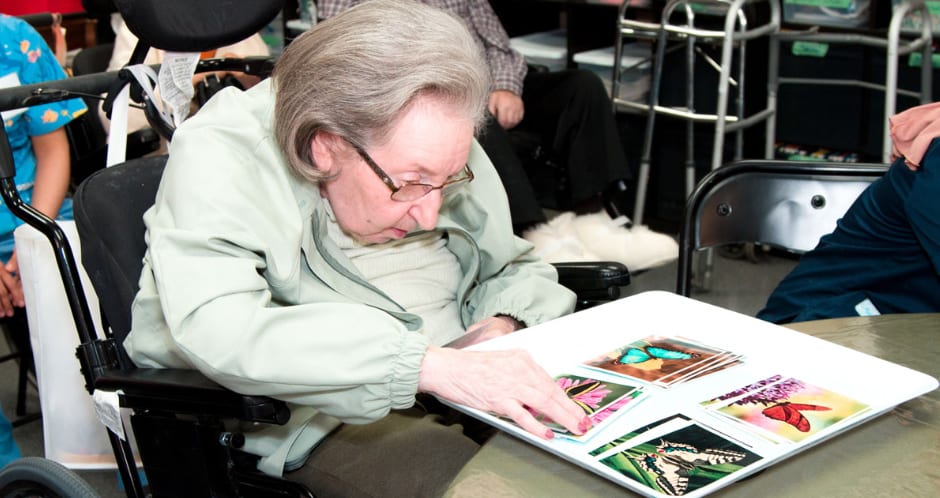
In the past few years, there has been great evolutions in dementia care. Nowadays there is more focus on patient centered care, alternative treatments for dementia symptoms, and a better understand of how to treat and communicate with people who live with dementia.
One innovative method that has taken off is Montessori – a framework that was originally created for childhood education – that has been found to have philosophies that can be adapted to dementia care.
What the Montessori approach recognises is the importance of engagement that is tailored to the interests and abilities of each unique person.
It takes into account “what do they like to do?” and “what are they able to do?”, and then giving them activities to engage them.
This can be something as simple as doing a puzzle, sorting buttons, sensory boxes or following simple instructions, like “making a cup of tea”.
As caring for people with dementia often includes cognitive and/or physical impairments, Montessori allows for people to “reconnect with a world they’re losing access to”.
By re-engaging people to their memories, their loved ones and their senses, this approach leads to an increase in the quality of life of people living with dementia.
Research has provided clear evidence of decreases in responsive behaviours and increased levels of engagement and participation in activities when Montessori approaches are implemented.
Montessori isn’t about reversing the symptoms of dementia, as there is yet to be any cure or treatment for any form of dementia. What this approach is about is allowing people living with the condition to be able to make meaningful contributions to their community, and engage in meaningful activities.
Omnicare Alliance recently held their inaugural regional dementia conference, The RED Conference – A Regional Experience in Practical Dementia Care with great success.
The change revolution theme was inspired by keynote speaker Dr Cameron Camp, an American Montessori for dementia expert, who said the Montessori approach to dementia care and how the community embraced this approach would lead to a change revolution in dementia care.
“I don’t think there was one person in attendance who didn’t leave yesterday’s conference with a new sense of purpose and drive,” said Omnicare Alliance Joint CEO, Raymond Gouck.
“Dr Cameron Camp, and in fact all of our incredible speakers and workshop presenters provided attendees with a new way of approaching living well with dementia and in how they support someone living with dementia – be that in their own home or where they work.”
“The Montessori approach to dementia care focuses on developing meaningful and purposeful roles and activities for people living with dementia. It’s about enabling and encouraging independence; but more importantly meeting the needs of the individual person”.
Over 200 people from across Australia attended the conference on Wednesday, October 11.
The day featured speakers – Dr Cameron Camp, Julie Dunn, Dr Jim Donnelly, Andrew Hanna, Dr Matthew Kinchington and Suzanne Towsey; and workshops presented by Dr Cameron Camp, Dr Jim Donnelly, Lisa Hort, Yvonne Kiely, Jade Sinclair, Cath Manuel, Greta Warner, Lynette Murphy, Mitchell Nicholson, Alison Sherratt, Margaret Allen and a number of carers and people living with dementia.
What do you have to say? Comment, share and like below.



5
1
2.5
Great to see Cath Manual there from Soil to Supper. Cath is amazing in cocreating edible and sensory gardens, as well as encouraging us all to touch the soil, grow our own food and reap the health benefits of immersing in the garden.