The new 2020 year dawned for most of us with a little extra hope and perhaps a little more optimism. There was a feeling the year could be a catalyst for renewal and that a determined mind could make this year better than the previous ten.
Many around the nation have their parents alive and still with them. Advances in medical treatment and assistive technologies allow us to enjoy an extended life expectancy.
But I found myself in my mid-30s with both parents having neurological impairment and degeneration. Dementia is a truly wicked disease inflicted on an increasing percentage of our population – and not just the very elderly. Dementia is the game-changer for us all as we age.
At that time, Oakden was the only Primary Older Person Mental Health Facility in South Australia, and for 30 years it housed those with neurological disorders.
The facility was the stereotypical, 1920s-style ‘nut house’, and was stigmatised and secretive.
Despairing South Australian families, as recently as the early 2010s, with loved ones in the grip of dementia, saw their previously strident, life-loving husband/father/mother/wife struck down, even in their early 60s, and often their only option was Oakden.
In April 2017, that chapter of institutionalised systemic abuse came to an end when the decision was made to close Oakden. But an even bigger story was beginning to develop.
A groundswell of stories began to come to light, revealing horrific mistreatment and abuse.
The Royal Commission into Aged Care Quality and Safety was, had to be, the game-changer.
Yet many now worry the royal commission isn’t stopping the abuse. It isn’t holding people to account. The function of it is misguided, and they worry the end result will achieve nothing.
All are valid reflections. It is natural to harbour more fear than hope things will change.
There were 6,000 reports of elder abuse in Australia between 2018–19. That’s the figure reported; the reality is probably much higher. There remain people hard-wired to do the wrong thing working in aged care – and that remains one of the sector’s biggest problems.
The commissioners and royal commission staff are, without question, at the pinnacle of their craft. I highly recommend reading the royal commission’s published works and transcripts of the commission thus far.
Yet at times we are met with the same old industry faces, pushing their requests for more funding, touting themselves as saviours.
Most infuriating, we have had a government returned to power with a new minister, at times ambiguous, at others, farcical.
What the royal commission must do – morally, legally and ethically – is have a well-communicated and enunciated determination that cannot be misinterpreted, ignored, dismissed or plundered. They must ask:
Quite simply, the politicians, bureaucrats and the industry leaders of yesterday will find any future system they design to suit themselves will quickly become defunct.
The hard work wasn’t becoming a voice for our loved ones. We must, as a society, ensure we forever afford the person next to us respect and offer the protection of a compassionate society.
We all could end up in care; most of us probably will. It’s in all our best interests to ensure we have a safe, fair system that has person-centered care and compassion at its heart.
Submissions to the royal commission close at the end of April.
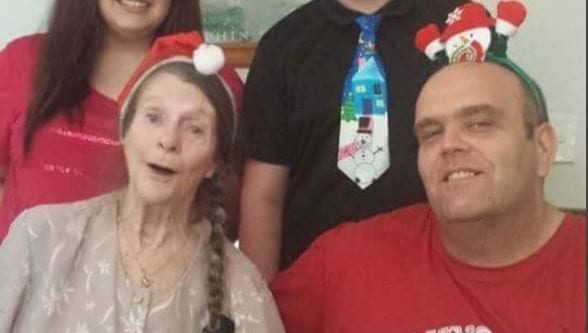
Image: Stewart Johnston and his mother. Supplied.





Sadly, I fear that the RC will only compel facilities who were already trying to improve to make changes. Those facilities that don’t care will just continue to hide the problems until there is a disaster. The facility I work at is, admittedly, not perfect & in our last on the spot check up we had one “not met” in administrative (all other areas were met), however we are working on fixing our administrative processes to make input to care plans more accessible for residents & their families. We had been working on this prior to the on the spot & the team who did the walk through acknowledged our efforts & said that once what we have started is in place we will meet the requirements & our deadline is well & truly on track to be achieved. Unfortunately, I have a few colleagues who work in other facilities who are struggling with managers & owners who have no intention of implementing long term improvement & only do the bare minimum to avoid sanction.