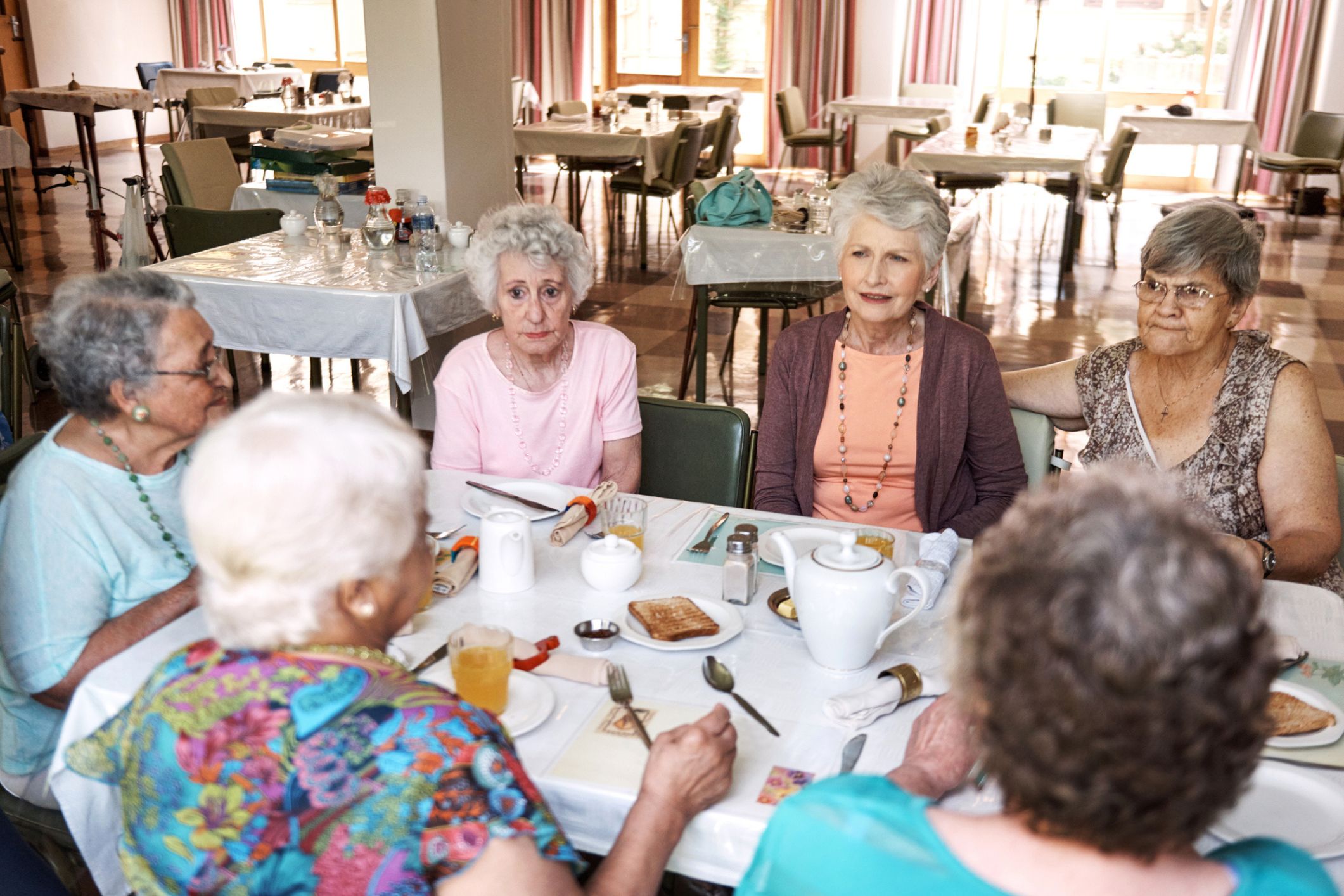
One aged care centre in Queensland is completely changing its approach to resident meals and dining. Following a long and arduous process, informed and dynamic management is introducing exciting innovations to food services – a highly welcomed move for the community.
This facility is completely reviewing its existing menu alongside a dietitian. Rowan Stewart, a visiting clinical dietitian who recently attended a meeting at the centre, noticed at a glance that the menu featured more than three days of salted meat and little else. There was hardly any protein, meals were unbalanced, and there were insufficient fruits and vegetables. Overall, the meals were not in line with National Guidelines.
There has also been a huge discrepancy between what’s written on the menu and what residents actually see on their plates. While the descriptions sound delicious (“Moroccan Chicken with Couscous and Cinnamon Yoghurt”), the presentation has fallen short. However, with an independent nutritionist stepping in to reshape the service, positive change is on the horizon.
Meals at The Cairns have already begun to improve. Rich, hearty, home-cooked stews are now appearing, alongside an array of fresh vegetables. Cod has also replaced basa on the menu, delighting both the residents and the chef.
Despite these improvements, some strange items remain.
For instance, “Grilled Sausage with Onion Gravy” translates to exactly one sausage, while a dinner might consist of a single ham and cheese croissant containing only half a slice of each ingredient.
Furthermore, items like a “Panache of Vegetables” leave residents wondering what exactly they’re eating. On a positive note, hot daily breakfasts are being introduced unexpectedly, and eggs are now available upon request.
To monitor the quality of the food, The Cairns will introduce ground-breaking, random individual food tastings – a strategy also suggested by Rowan Stewart. Staff, carers, residents, visitors, and families will be selected at random to receive a complimentary meal that reflects exactly what the residents are being served that day.
After eating, participants will assess the meal using a simple questionnaire. While Stewart suggested using a simple two-emoji system (one smile, one frown) to capture reactions, the clinical manager preferred a more direct approach:
The carers at The Cairns see daily how the residents dine and hold valuable, unspoken views about the meals. To leverage this insight, the provider has introduced morning briefings to train staff, many of whom come from Eastern cultures like Bhutan or Nepal.
This training helps them assist residents in choosing traditional Australian dishes and ensures fresh fruit is offered every day. Carers will also be surveyed regularly to gather their opinions on resident reactions to the food.
Historically, communication systems regarding meals haven’t worked: residents and staff didn’t know how to voice their concerns, and those who did found that nothing changed. The complaint pipeline running from residents to Registered Nurses (RNs) and up to management either never operated correctly or was too confusing for staff to use.
Because of cognitive decline or frailty, few residents have a strong voice, and there has traditionally been little contact between management and floor staff. The new individual tastings and an updated resident survey aim to fix this disconnect.
A definitive next step for the facility is a planned food wastage survey, which has never been conducted here before. Residents estimate that roughly 40% of the food is currently thrown out. This waste mostly consists of vegetables that, until recently, were frozen or packaged – notably the mashed potatoes and cubed vegetable mixtures.
The survey will address critical operational questions:
Standing proudly in a corner of the dining room is the new “Snack Station.” This black glass fridge allows residents to help themselves to baked beans, yoghurt, ice cream, fruit, and soup outside of scheduled mealtimes. The initiative is designed to foster independence to make sure no resident goes hungry.
Are these measures working? Partially, but there is still a long way to go to find long-term success.
The dietitian conducting the independent menu review needs to be qualified in geriatric dietetics and food services; otherwise, their recommendations lack the necessary clinical weight. Management has not yet promised this qualification.
Communication is already showing signs of breaking down. After just one week, carers stopped offering residents fresh fruit in the mornings because no one reminded them to do so.
The Snack Station is currently underutilised. Residents are largely unaware of it, and RNs and carers are not actively promoting it. Its position at the far end of the dining room means that residents – many of whom can barely leave their seats in front of the television – can’t physically reach it. A more vigilant, hands-on approach by management and staff is vital.
The complimentary meals used for quality testing mustn’t be curated or polished for show; they need to accurately reflect everyday dining, even when sausage rolls, boiled cabbage, packet mashed potatoes, or overly dry rissoles are on the menu.
On top of that, the new cooked breakfasts should avoid low-nutrient options like canned spaghetti or pikelets, favoring wholesome staples like eggs, bacon, sausages, and baked beans instead.
A few weeks ago, one of the managers remarked, “There’s nothing to be done about the food: it’s aged care.” Fortunately, the kitchen at The Cairns kitchen is cooking, and change is in the air.



Its really encouraging to see approaches like this being developed. My Mum was really turned off by the smell of the food – regardless of what was being served it all smelt the same. When I read about the Planetree program I see they include “smells” – let’s face it on a cold winter’s day the smell of a roast chicken cooking really wakes up your tastebuds. (I have never seen Planetree in action but have always been encouraged by its philosophy)
I am fortunate that the food in the residential facility where I work, always looks and smells good. However, that does not remove the feeling that the food is not nice. I work in a Memory Support Unit. We have a resident who enjoyed the food there, however, once they moved into the “other” area, they felt the food is not as good. It is the very same food! The only difference, is while in the MSU, they could see the food being served from the bain-marie, whereas now, the food is brought in on a tray. Same food, but resident FEELS it has changed. SO difficult to solve. I have invited resident “back inside” to choose his food and see it served when I am working. So far, that has not eventuated.