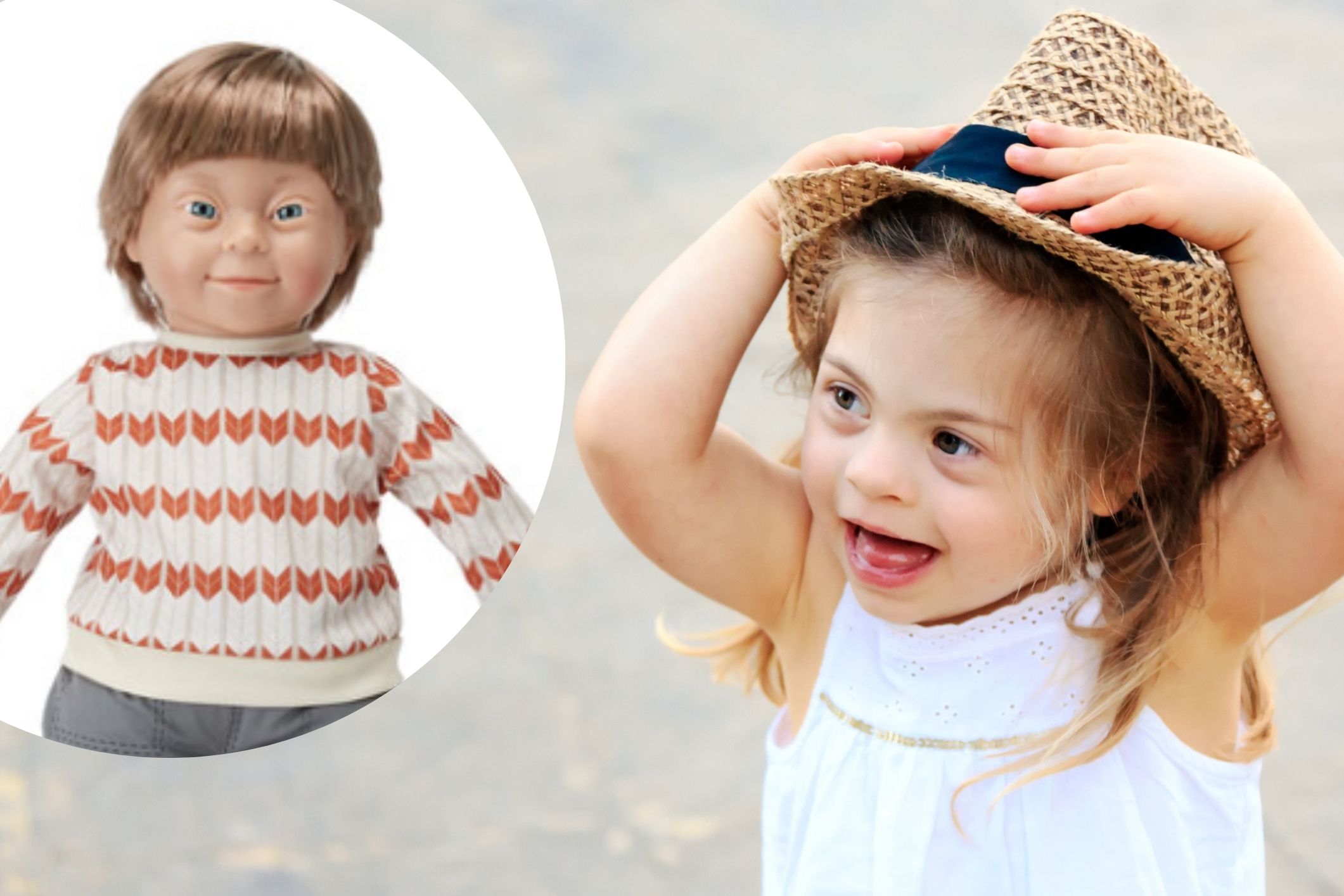
Now, however, small and large businesses are pivoting to the rising demand for diversity on the shelves.
Responding to the significant gap in the market, the ABC reports that businesswoman Simone Hubble set up her own Perth toy store called Happy Hubble.
She opted to fill that gap to the brim, while raising three children on the autism spectrum herself.
Selling disability-friendly sensory toys, Ms Hubble is dedicated and passionate. These sales in turn aid the varying needs of families caring for children living with autism.
She shares, “Without all three of my children all having autism, I would never have known this enormous need amongst the autism community.”
Ms Hubble added, “They are 100% my inspiration.”
The reaction from the autism community to her pop-up Happy Hubble shops has been beautifully positive.
Ms Hubble is unwavering in her belief that disability visibility is vitally important, especially as it has been almost impossible to find inclusive toys for decades.
“By launching these inclusive dolls, it has helped to start a conversation around disability and that these dolls help that person with a disability see themselves as represented,” she notes.
Using all her experiences to help her business thrive, Ms Hubble shares that bringing her particular experience of being a mother into the running of the business has been critical.
She has it all – an open and diverse production list spans from books all the way to fidget packs.
Big business is interested
As small operators have been leading the pack, big business has started to pay attention.
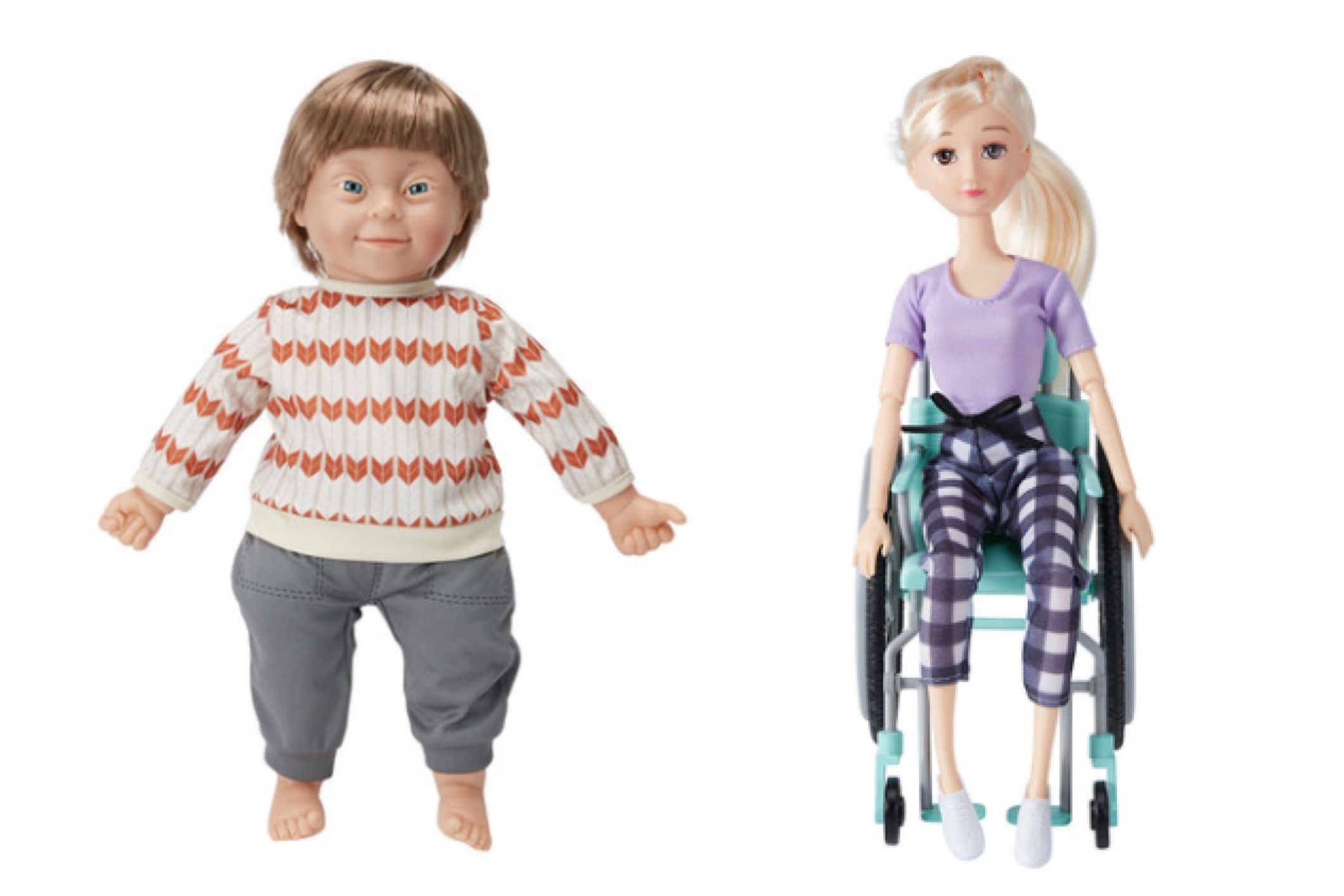
Marcelle Harrison, Kmart’s Head of Diversity and Inclusion, highlighted that the company commenced an inclusive doll range seeking to showcase the world’s “rich diversity”.
“We began introducing products with different body shapes and skin tones, and then expanding into dolls with different abilities and family dynamics.”
Adding, “We know that families come in all different shapes and sizes, and we want our product ranges to reflect and celebrate that and to more accurately reflect people of different ages, genders, ethnicities, abilities and sexual orientations.”
Ms Harrison mentions that the business took a year partnering with customers, designers and advocacy organisations to help develop the dolls.
“We want [people] to walk into our stores and see themselves represented in our product ranges,” she shares.
“Having dolls visually representing various disabilities helps children feel included, but it also helps them to learn more about people who may be different from themselves, normalising disability in real life.”
Feeling seen and heard is important for those with disabilities
Weighing in, clinical psychologist Suzanne Midford conveys that inclusive toys have always been vital to children living with a disability.
Ms Midford continues, saying that being seen and represented is a core matter to the disabled community.
“All these disabilities exist and don’t need to be hidden away,” she argues.
She adds, “Hiding away a disability was a long-time practice, which did nothing to help those children feel as if they belonged to the broader community.”
Commenting on the move of a national retailer stocking inclusive toys, Ms Midford agrees it is a positive change, and also wishes to see the range expand further.
“Research shows that inclusiveness results in greater self-confidence and belonging for disabled children and disabled adults,” she comments.
“Disability representation in toys is extremely important, as previously it wasn’t as visible and, to some degree, was non-existent.”
Ms Hubble says it has been a blessing to channel her day-to-day experience and lived knowledge of being a mum to three autistic children into a successful small business.
“The Happy Hubble has gone from being just a dream, which I thought was impossible,” she recalls.
“But yet, here I am running a functioning business and honestly it’s the best job that I have ever had,” she beams.





