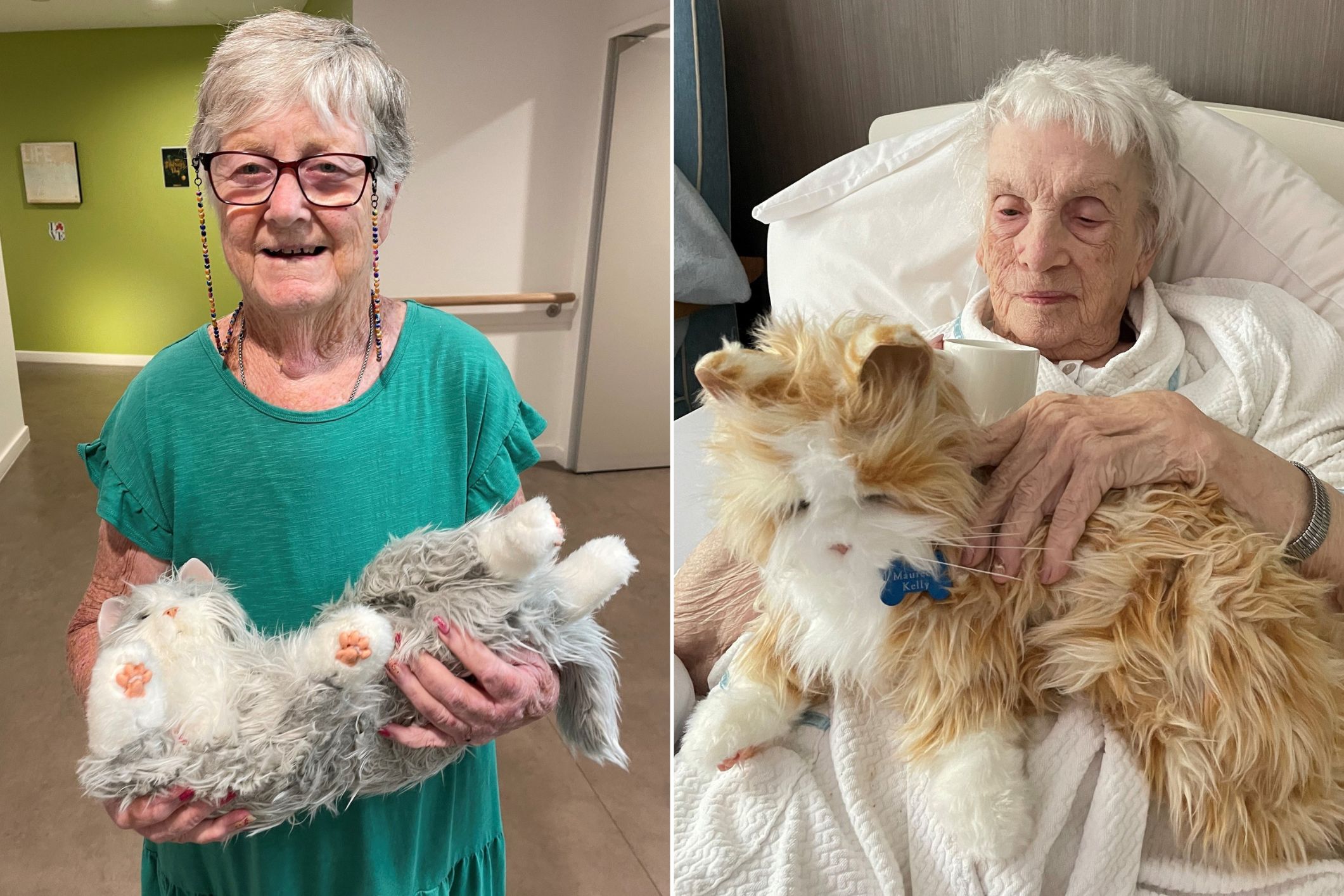
Aged care residents in Queensland are benefiting from the companionship of a new type of furry friend – life-like therapeutic robotic pets that provide plenty of love and no mess or stress.
Aged care provider, Carinity, has introduced robots into all 12 of its homes, with residents at Cedarbrook the latest to benefit.
These robotic pets offer life-like companionship, just like real cats and dogs, without the daily care needs that are challenging for older people with limited mobility or declining cognitive abilities.
Each pet simulates the sounds and movements of real cats or dogs, while they respond to physical touch, which includes purring in cats. Realistic fur means each resident is comfortable holding a robot that does not feel like a clunky toy.
Carinity Brookfield Green Residential Manager, Vijay Autar, said the companion pets quickly brought out positive reactions and engagement from residents who previously were unresponsive to other therapies.
“Along with living therapy animals, robotic pets are becoming an increasingly common sight within aged care settings. This technology is bringing much joy to our residents,” said Mr Autar.
“Studies have shown that these cats and dogs can enhance the well-being of older people. The companion pets can help to improve people’s moods, communication, interaction with others, and can be a comforting presence.
“Some residents living with dementia who are unresponsive to other therapies may brighten up, pat and talk to the companion pet.
“Other users will reminisce about the animals they owned in their younger years, prompting them to share their own pet stories and happy memories.”
The use of lifelike robot companions has also been proven to benefit people with dementia as it helps them to accept the use of other technology as part of therapies.
Carinity residents are not only benefitting from the one-on-one use of technology, but they also share the pet with their neighbours, creating opportunities to interact and engage with those around them.
As an example, residents at Mount Morgan share their love for a companion cat, although there is plenty of debate as each resident has their own name for her.
Many of the pets were purchased through public donations, including a 2022 Christmas Appeal and support from local schools.



I absolutely do not want to be ‘cared’ for by a robot. It might cost less than a decent wage, but I don’t want one. Biggest cop out ever.
Yes, these robotic pets are wonderful for the residents, but can drive carers and other staff up the wall with the constant mewing and barking
As someone who not only works in aged care, but is the proud mother to two gorgeous robotic dogs (though mine are a lot more sophisticated than these!) you can see the effects straightaway. Merlin brings a smile to the faces of everyone he meets, and meets a need for one-on-one, unconditional companionship that is nigh impossible to meet in a residential setting. I’d recommend one for anybody!
I bought one for my mum in aged care. The care home had no respect and it eventually broke due to them throwing the cat on the floor or chair. I would find it thrown in her cupboard and also unfortunately she had a share room and the other resident and family complained about it meowing even tho I asked them to turn it off. I am so glad my mum is no longer with us. Aged care sucks 😡. This is only one of many things I saw over the 7 years she lived (if that is what you want to call it).