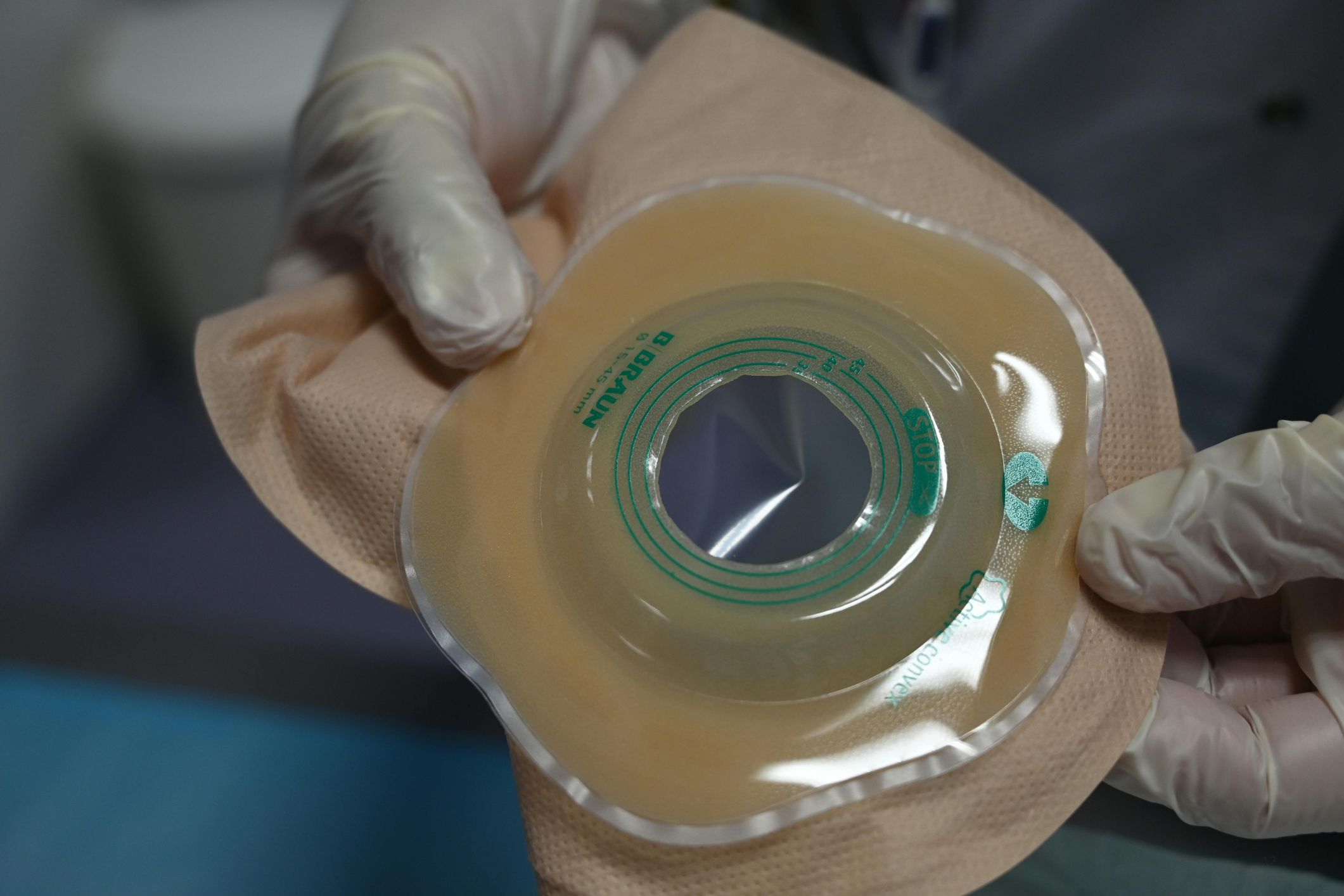
In Australian residential aged care facilities, the management of colostomy bags, also known as stoma appliances, is a common aspect of daily care for residents living with an ostomy. This involves either emptying the bag when it reaches one-third to half full or fully changing the appliance, which includes removing the old bag, cleaning the stoma site, and applying a new one.
A key question arises: should Assistants in Nursing (AINs) and Personal Care Assistants (PCAs), who form a significant part of the aged care workforce, be responsible for changing these bags, or should their role be limited to emptying them?
This discussion explores the legal and regulatory framework in Australia, followed by a balanced examination of the advantages and disadvantages, drawing on established guidelines and best practices to inform aged care providers, workers and stakeholders.
In Australia, the scope of practice for AINs and PCAs in aged care is not nationally regulated in the same way as for Registered Nurses (RNs) or Enrolled Nurses (ENs). These roles, often used interchangeably in aged care settings, involve providing support with activities of daily living under the supervision and delegation of an RN.
AINs and PCAs typically hold qualifications such as a Certificate III in Individual Support (Ageing) or similar, but they are classified as unregulated health care workers with no mandated minimum education or defined national scope of practice.
Their duties are guided by organisational policies, state-based frameworks, and the oversight of the Nursing and Midwifery Board of Australia (NMBA), which regulates nurses who delegate tasks.
According to the Australian Nursing and Midwifery Federation (ANMF), AINs can perform delegated aspects of nursing care, including personal care tasks, when determined to be clinically appropriate by an RN. This delegation must include direct or indirect supervision, with the RN remaining accountable for the outcome.
In the context of ostomy care, guidance indicates that non-clinical staff, such as those in home or aged care roles, can assist with emptying and changing stoma appliances, provided they follow proper procedures, obtain consent, use personal protective equipment and document observations. However, complex elements such as assessing skin integrity for infections or changes fall within the RN’s scope, as they require clinical judgement.
State-specific policies emphasise that AINs assist in patient care under nurse direction, but tasks like stoma management require competency training and RN oversight. The Aged Care Quality and Safety Commission reinforces that all care must align with the strengthened Aged Care Quality Standards, which prioritise safe, high-quality services supported by appropriate clinical governance.
For stoma management specifically, provider guidance highlights the need for clinical oversight by an AHPRA-registered RN, including documented care plans, progress notes and competency assessments.
There is no explicit legal prohibition on AINs or PCAs changing colostomy bags, but the task must be delegated appropriately, with training documented to mitigate risk. Failure to do so could breach duty of care obligations under common law or lead to investigations by regulatory bodies.
In practice, variability exists across facilities. Some organisations limit AINs and PCAs to emptying bags to minimise risk, while others permit full changes if competency is demonstrated. The NMBA notes that individual practice is influenced by setting, education and jurisdictional factors, underscoring the importance of facility-specific policies.
Permitting AINs and PCAs to change colostomy bags, when appropriately trained and supervised, can enhance care delivery in residential aged care.
One key benefit is improved efficiency and timeliness of care. Aged care facilities often face staffing pressures, with RNs managing multiple residents with complex needs. Delegating bag changes to AINs and PCAs allows for prompt responses to residents’ requirements, reducing wait times and promoting comfort and dignity.
Regular changes, typically every one to three days depending on the appliance type, help prevent leaks, odours and skin irritation, all of which can significantly impact a resident’s quality of life.
This approach also supports workforce development. With targeted training, such as additional units or structured workplace education, AINs and PCAs can build skills, increasing job satisfaction and retention in the sector. It aligns with models of care that distribute tasks based on competency, allowing RNs to focus on higher-level clinical assessments, including monitoring for complications such as infection or prolapse.
Effective delegation can also optimise resources, particularly in under-resourced aged care environments. From a provider perspective, using AINs and PCAs for routine tasks may reduce reliance on higher-paid RNs for every procedure, while maintaining safety through appropriate supervision. This is especially relevant in Australia’s aged care funding environment, which emphasises efficiency and value for money.
Despite these benefits, there are notable risks associated with expanding AIN and PCA roles to include changing colostomy bags, particularly in relation to training and clinical safety.
A primary concern is the potential for adverse outcomes if workers lack sufficient education or oversight. Changing a colostomy bag involves cleaning the stoma site, observing skin condition and ensuring a secure seal. If performed incorrectly, this can lead to skin breakdown, infection or leakage.
While emptying a bag is relatively straightforward, full appliance changes require an understanding of risk factors and early signs of complications. Without formal accreditation or consistent training, unregulated workers may not fully recognise these issues.
Training variability across Australia further compounds the problem. The Certificate III in Individual Support does not consistently include comprehensive stoma care, and additional modules are not mandatory. As a result, practices can differ significantly between providers, with some offering structured competency assessments and others relying on informal, on-the-job instruction.
This inconsistency can lead to uneven care quality for residents across different facilities and jurisdictions. Additionally, delegation places accountability on RNs, who must ensure tasks are appropriate for each worker’s skill level. If adverse events occur, this can strain supervisory relationships and expose nurses and providers to legal and professional risk.
Workforce shortages may also pressure AINs and PCAs to accept tasks beyond their comfort or competence level, increasing the likelihood of errors and contributing to burnout.
Ultimately, whether AINs and PCAs should change colostomy bags depends on the strength of training, delegation and supervision systems within each facility.
Best practice involves competency-based education, clear policies aligned with ANMF and NMBA guidance, and regular review of skills. Residents are best served when RNs conduct initial assessments and maintain ongoing clinical oversight, while delegated workers operate within clearly defined boundaries.
Addressing training gaps through improved education pathways and nationally consistent expectations could help reduce risk while supporting workforce flexibility. With strong clinical governance and a focus on person-centred care, aged care providers can ensure safe and effective ostomy management while supporting both residents and staff in an increasingly complex sector.



For stoma management as well as replacing catheter fitting , medical training is required, and our national high amount of infections resulting from incorrect management must surely be cause for improving the regulations. Would you allow a tradesman assistant to fix an electrical malfunction? Humans deserve better.
It all comes down to training, support and staffing levels. One RN on a shift can not mentor or support every PCA or AIN working on the floor. I wish Aged Care was included under the one umbrella of our health care system. Every one is in one Health Care System and not separated.
The focus on training is a huge issue. When tradies go to work they have a toolbox and support behind them . Are we providing the same support for our PCA’s and AIN’s , a toolbox, mentoring and backup ? Are we providing what we need to ensure the quality of care and best care of every single older adult that are part of our communities?
Stoma care and emptying colostomy bags are procedures that require clinical knowledge and demonstrated competency.
Until the PCA has been observed and deemed competent in the actual workplace by the Clinical RN Div 1 they do not do ANY of the procedures.
Stress related incidents due to incorrect procedure of emptying colostomy bags and cross infection must be avoided.
RNs need to be more actively engaged in face to face engagements with residents and retain clinical care oversight.
Indirect supervision is thwart with problems and not worth the risk – coroners court is not somewhere you want to be.
Provided the workers have the training, what’s the issue? If I can help with a family member’s stoma, having had no clinical training whatsoever, rather have been shown but a community nurse, why can’t a carer who at least has a certificate 3?
What you do in the home setting doesn’t necessarily transgress to a health care setting, be it aged care, rehab or transient.
There are clinical standards to be observed and no recourse for those who deviate from them.
I have worked in age care for quite a few years and have also been trained on how to change safe and effective ostomy management as a PCA , I am not impressed with the current view of PCA and EEN’s being asked to leave these to RN’s don’t RN’s have more on there plates as we discuss this matter.
RNs, be they Div 1 or 2 have the role and responsibility of clinical oversight, together with monitoring and supervising PCAs and AINs.
To think it is ok to delegate duties to less experience and qualified staff, yet be held accountable for their actions or inactions, is not something I have or ever will support.
There needs to be more active RN clinical practice on the floor where they can quickly assess, intervene and refer in a timely manner.
Current practice of care assistants performing stoma care in resident aged care exceeds organisational risk appetite across all critical domains of-
Resident safety, clinical governance, regulatory and accreditation, legal and liability, workforce culture and reputations risk.
These risks can not be mitigated through training and supervision or policy wording alone. The only effective control is registered nurse delivered stoma care supported by strong clinical governance.
Workforce pressures is not a defensible justification.
When I worked in aged care for 20yrs as. A cert 4 carer I was changing colostomy bags and doing peg feeds. The cert 4 ain’t was actually doing most of ENs job as most nursing homes did not hire ENs but training in this area should be completed
Yes they should, I have been involved in both cleaning and replacing, we change incontinence pads and clean away the mess, we are also looking for skin changes, so should be able to pick up any change in there skin surrounding the site. It is a personal care and I believe that’s what we are there for in care or home.